

Exploring the Disconnect Between Supply and Usage in Real World Asset Tokenization
A Market Milestone With a Catch
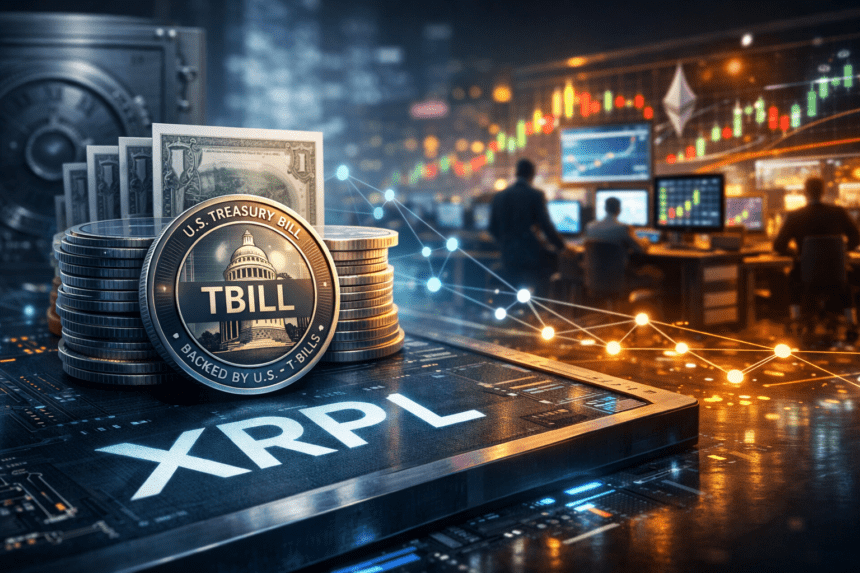
In the rapidly evolving world of blockchain finance, tokenized real world assets (RWAs) are becoming an increasingly important use case. These digital tokens represent traditional financial assets like US Treasury bills (T-bills) on a blockchain ledger. One of the most striking developments recently is the fact that the XRP Ledger now holds about 63 percent of the total circulating supply of a popular tokenized T-bill product called TBILL. That sounds like a major win for XRPL as a venue for institutional finance until you look deeper and realize that there is almost no trading activity happening on XRPL itself.
This situation raises an important question for investors and builders alike: is XRPL truly becoming a vibrant venue for tokenized assets, or is it simply a place where assets are parked without much usage? In this article, we explore what’s going on behind the numbers, why the disconnect matters, and what the future could hold for tokenization on blockchain networks.
What Tokenized T-Bills Are and Why They Matter
Tokenized assets are a way to represent real-world financial instruments on a blockchain. For example, a tokenized US Treasury bill is designed to mirror ownership of a short-term US government debt security in a digital, tradable form. This allows investors to trade and settle these assets much faster than traditional paper-based systems, potentially opening up huge new markets for global investors.
In the case of TBILL, the token is backed 1 for 1 by actual T-bills held in a secure vault, and the tokens are issued on multiple blockchain networks including Ethereum, Solana, Layer 2 chains, and XRPL. Because T-bills are among the safest financial instruments in the world, tokenized versions are expected to be appealing for institutional use as collateral, cash-like instruments in DeFi, and settlement tools across financial platforms.
XRPL Controls Most of the Supply But Not the Activity
Here’s where things get interesting. According to recent data, about 54.41 million TBILL tokens roughly 62.6 percent of the total supply are issued on XRPL, compared with about 32.02 million on Ethereum and smaller amounts on other chains. That suggests XRPL has become the primary issuance chain for this tokenized T-bill product.
But when we look at activity, things look very different. In terms of monthly transfer volume, XRPL accounts for just about 0.003 percent of all TBILL movements. Ethereum and Layer 2s like Arbitrum dominate the actual trading and transfer volume, with millions of dollars worth of activity each month.
In other words, XRPL is storing the bulk of the TBILL tokens, but almost none of the trades or transfers are happening on the ledger itself.
The Three Credibility Tests for Asset Tokenization Venues
Experts often evaluate blockchain networks as RWA venues based on three key factors: issuance credibility, distribution and usage, and financial utility. Let’s break these down.
1. Issuance Credibility
XRPL has secured interest from institutional players. For example, prominent asset manager Aviva Investors announced a partnership with Ripple to explore tokenizing traditional fund structures on XRPL. This signals potential confidence from regulated institutions in XRPL as a platform for asset tokenization, but it’s important to note that this is still a long-term effort and doesn’t yet involve live products.
2. Distribution and Usage
Although XRPL holds a majority of the TBILL supply, it does not capture the trading activity. Distribution is often confused with usage a token sitting on a ledger doesn’t necessarily mean people are engaging with it. Activity matters because networks become valuable when assets are actually transacted, traded, and integrated into financial workflows.
3. Financial Utility
True utility, especially in institutional finance, comes from use in settlement and collateral workflows. For example, a token that’s frequently used for trading, borrowing, lending, or collateralizing obligations provides real value. The low volume of TBILL transfers on XRPL suggests that, despite issuance, the tokens aren’t being used much for these purposes at least not yet.
Why Trading Activity Usually Matters
In most financial markets, liquidity and trading activity are key measures of a healthy ecosystem. They help price discovery, reduce transaction costs, and make it easier for institutional players to enter and exit positions. On major chains like Ethereum, there are already mature decentralized exchanges and liquidity pools where tokens can be traded seamlessly. This makes Ethereum a natural hub for activity even when token issuances happen elsewhere.
In contrast, XRPL’s decentralized exchange and token features are still growing. While XRPL supports efficient payment settlement and low-cost transfers, it hasn’t yet developed the same depth of trading infrastructure and financial tooling that Ethereum and its layer 2 networks offer. This could be part of the reason why TBILL trading hasn’t taken off on XRPL.
Potential Explanations for the Disconnect
So why would a large share of token supply sit where none of the activity is happening? There are a few plausible explanations:
Custody or Custodial Preferences
Institutions might prefer to issue and hold assets on XRPL because of compliance features or settlement efficiencies, but still use other chains for trading where liquidity is deeper.
Stablecoin Infrastructure
Stablecoins digital dollars act as the “cash leg” for asset trades. XRPL does support stablecoins, and its stablecoin transfer volume is rising, but it may still lag other ecosystems in terms of broad stablecoin liquidity.
Network Effects on Other Chains
Ethereum and certain layer 2 networks already have established ecosystems with automated market makers (AMMs), lending protocols, and traders who are familiar with those environments. Tokenized assets often follow where liquidity already exists.
What XRPL Would Need to Compete
To turn its large share of tokenized T-bill supply into real usage and activity, XRPL may need to see growth in the following areas:
Liquidity Pools and Trading Tools
Broader adoption of DEX features and integrations that allow TBILL tokens to be traded against other assets could help.
Collateral Use Cases
If tokenized T-bills can be used as collateral in automated financial protocols, that would make XRPL more attractive for institutions seeking to optimize capital efficiency.
More Issuers and Products
Additional regulated issuers bringing their tokens to XRPL could help diversify the ecosystem and attract both institutional and retail interest.
The Next 60 to 90 Days Could Be Telling
Observers are watching a few key indicators:
Monthly transfer volume share of TBILL on XRPL
Stablecoin transfer growth on XRPL
New announcements from issuers like Aviva about live products
Integration of trading and collateral tools directly on XRPL
If XRPL’s activity starts to rise meaningfully, it could signal a shift from being a token vault into a true hub for real-world finance. If not, it may remain primarily a place where assets are issued and held but not actively used.
Thoughts: A Narrative in Transition
The story of tokenized T-bills on XRPL is a compelling one because it highlights both the promise and the challenges of bringing traditional financial assets to blockchain. Issuance numbers alone tell an incomplete story; what really matters is whether those assets become alive in the market through trading, settlement, and use as collateral.
XRPL’s current position holding a big slice of the supply but seeing almost no trading activity suggests that the narrative of XRPL as a dominant RWA venue may be overstated at this point. But with steady development, growing stablecoin infrastructure, and institutional partnerships, that narrative could change.
In the end, the “venue war” for tokenized assets isn’t just about where tokens are issued it’s about where they move, trade, and create economic utility. XRPL’s challenge now is to prove that it’s not just a place to park assets, but a platform where value flows