

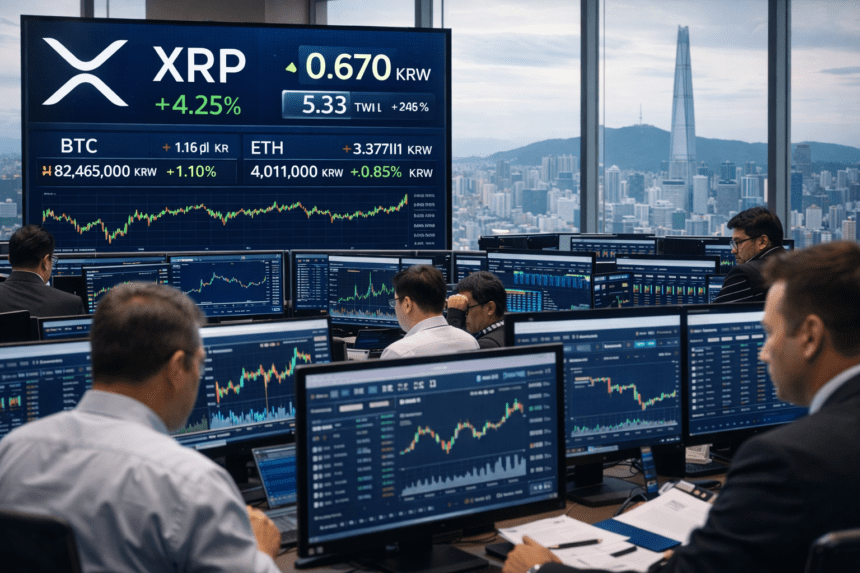
In the ever-evolving world of cryptocurrencies one of the most fascinating developments of 2026 has been the dramatic surge in XRP trading volume in South Korea. While Bitcoin and Ethereum typically capture headlines and institutional capital flows in most global markets XRP has taken center stage in Korea where it now dominates trading activity on major exchanges. This surge is not simply due to hype or price speculation it reflects how structural and regulatory factors unique to Korea’s crypto ecosystem have created a powerful niche that XRP has exploited.
The story is about more than just a single token’s popularity. It highlights how local laws shape market behavior how traders adapt to regulatory gaps and why certain assets can rise to prominence in specific regions even when global sentiment is focused elsewhere. For investors traders and anyone watching the global crypto landscape these trends are worth understanding deeply because they show how market structure influences liquidity demand price movements and trader preferences far beyond pure fundamentals.
Why XRP Became the Default Trading Asset in Korea
Unlike many countries that treat crypto trading under broad financial regulations South Korea operates under a spot-only exchange law that strictly limits certain financial products and derivatives but allows spot trading for most digital assets. This legal environment has created a unique set of incentives for traders and exchanges alike.
In Korea XRPP has emerged as perhaps the most attractive and liquid asset for retail traders for a few key reasons. First XRP tends to have very low transaction fees and extremely fast settlement times compared to many other cryptocurrencies including Bitcoin and Ethereum. For traders executing high-frequency buys and sells those characteristics matter a great deal. Second local exchanges such as Upbit the largest and most influential crypto marketplace in the country have listed XRP at the top of their trading offerings often promoting it as a go-to asset when market activity heats up. According to market data Upbit reported XRP as the most traded asset for 2025 with daily turnover eclipsing even Bitcoin and Ethereum.
But beyond these utility benefits there is a regulatory twist. South Korea’s law specifically affects exchanges’ ability to offer certain derivatives products which can limit how assets like Bitcoin and Ethereum are traded on leverage or via advanced financial tools. This means trading volume for many high-profile coins can be constrained within the domestic trading infrastructure. Meanwhile XRP has been able to sustain massive spot volume because it does not trigger the same restrictions and continues to be allowed for unfiltered high-speed trading. This legal gap has effectively made XRP the default trading chip for domestic traders looking to move in and out of positions quickly without running afoul of local regulations.
How Korea’s Trader Culture Favors XRP
Retail trading culture in South Korea is known for its high-velocity speculations and short-term decision making. Instead of focusing on long-term buy and hold strategies that might be more common in institutional circles traders in Korea are often seeking assets that offer quick opportunities to profit from price swings. For that kind of market environment assets with low friction high liquidity and rapid settlement naturally rise to the top. XRP checked all of these boxes which has helped it capture a massive share of trading activity.
To put this dominance in perspective estimates show that XRP’s trading volume on Upbit and other major Korean platforms exceeded $1 trillion for 2025, a benchmark figure that underscores how deeply ingrained the asset has become in the domestic trading ecosystem. This volume not only overshadows many other altcoins but surpasses major assets that traditionally lead in global spot markets.
Regulatory Structure and Its Unintended Consequences
The regulatory framework in Korea plays a central role in this narrative. South Korea has been actively refining its digital asset laws for several years and has historically maintained a cautious approach when it comes to financial products such as derivatives leveraged trading or products that mirror traditional futures markets. This cautious posture is designed to protect consumers and prevent risky exposure to volatile assets through complex financial instruments. But this approach can also create regulatory gaps unintended loopholes that savvy traders and exchanges can exploit.
In this case the “spot-only” rule effectively allows exchanges to list and trade most tokens freely so long as they are traded on a spot basis directly between buyers and sellers without additional financial layering. Because XRP fits neatly into this category and because it is exceptionally well suited for rapid trading the legal environment has inadvertently favored it. Other assets that might otherwise be attractive are constrained by the lack of derivatives tools or other market infrastructure that Korean traders cannot legally access.
Furthermore this situation has catalyzed a pattern where capital both retail and institutional moves rapidly in and out of XRP depending on market conditions. Even though market sentiment overall may still be driven by price action in Bitcoin or Ethereum globally the local Korean market has carved its own identity where XRP reigns supreme because of structural incentives.
The Broader Implications for the Crypto Market
While the surge in XRP trading volume may appear to be a regional phenomenon limited to South Korea it has meaningful implications for the wider crypto economy.
First liquidity concentration matters. With so much trading activity focused on XRP in one major market it can influence global price discovery and volatility patterns. High regional demand can lead to price divergences between markets which traders around the world often monitor for arbitrage opportunities.
Second the rise of XRP trading in Korea highlights how regulation shapes market structure. Even when laws are well-intended they can create incentives that alter trader behavior and market outcomes in unexpected ways. This is a lesson for regulators worldwide who are grappling with how to balance consumer protection with market innovation.
Third the situation might encourage other markets to rethink how they treat spot trading versus derivatives and advanced products. Some countries may see the Korean model as overly restrictive while others might adopt similar approaches each path creating different winners and losers among crypto assets.
Finally, for Ripple the company closely associated with XRP this trend could be a double-edged sword. On one hand high trading volume increases visibility and liquidity which can attract broader engagement from traders and institutions. On the other hand heavy reliance on a specific regional market driven by structural quirks rather than organic utility creates questions about sustainability if regulatory conditions change.
What Investors and Traders Should Watch
For those invested in or watching XRP there are a few key dynamics to keep an eye on:
Regulatory shifts: If South Korea updates its crypto laws to allow more advanced trading products or closes the spot-only loophole XRP dominance could diminish quickly.
Global market sentiment: Broader price action in Bitcoin Ethereum and major macroeconomic trends still influence XRP’s price globally despite local volume leadership.
Liquidity flows: Watch for changes in where and how XRP is traded if international exchanges begin to reflect similar volumetric patterns it could signal deeper adoption beyond Korea.
Institutional involvement: Spot ETFs and institutional products related to XRP could reshape how capital flows into and out of the asset globally.
These factors combined make the Korean market’s influence on XRP an important case study in how global crypto markets evolve in response to local laws trader culture and shifting financial landscapes.