

How Major Capital Shifted Into New Leaders and Redefined the Crypto Investment Landscape
In 2025, the long-held playbook for institutional investors in crypto was dramatically rewritten. For years, the accepted strategy was straightforward: allocate capital first to Bitcoin the flagship and largest digital asset and then to Ethereum, its premier smart contract platform. But according to year end inflow data, that hierarchy shifted as XRP and Solana emerged as institutional favorites, posting unprecedented growth in net new investment that reshaped the landscape of professional crypto allocations.
While Bitcoin remained the largest asset by volume and total capital under management, its allure to institutional allocators softened relative to other digital assets. Bitcoin investment products attracted approximately $26.98 billion in net inflows in 2025, but that figure actually represented a 35 percent decline from the momentum seen in 2024. In contrast, Ethereum products drew roughly $12.69 billion, marking a 138 percent year over year increase as institutions demonstrated heightened confidence in the second-largest asset.
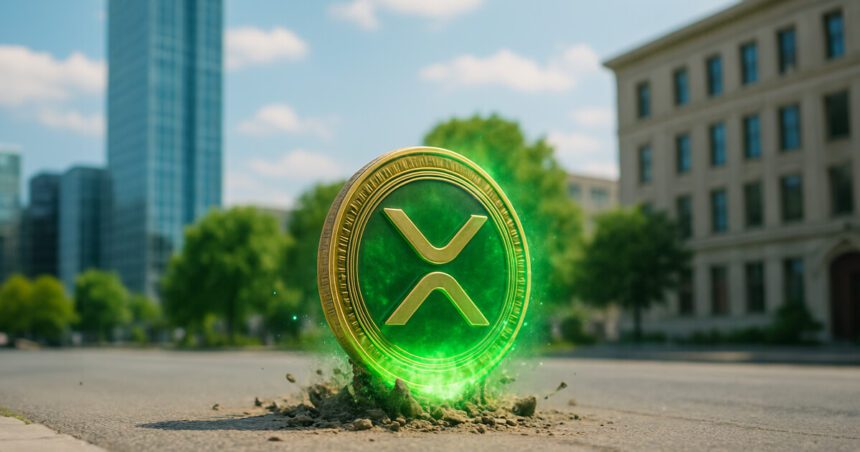
Yet the most striking story of 2025 was the velocity of capital pouring into XRP and Solana. Investment products tied to XRP absorbed around $3.69 billion in flows nearly *five times the level seen in 2024 while Solana’s inflows skyrocketed to about $3.56 billion, a tenfold expansion compared to the prior year. These growth rates weren’t just impressive; they effectively doubled the total assets under management for both tokens in a single calendar year, highlighting an intense wave of fresh institutional interest.
What makes this shift particularly notable isn’t just raw growth, but its implications for how institutional allocators now view risk and opportunity in crypto. Bitcoin’s relative slowdown suggests large investors are becoming more selective, diversifying beyond the once dominant “digital gold” thesis. Meanwhile, Ethereum’s maturation into a core holding rather than a speculative satellite to Bitcoin reflects growing comfort among professional portfolios that ETH deserves independent valuation based on its robust decentralized finance (DeFi) ecosystem and smart contract utility.
The leap by XRP and Solana into the institutional spotlight speaks to broader trends in investor behavior. Both assets have been bolstered by developments that increased confidence among sophisticated allocators. For XRP, improvements in regulatory clarity including the resolution of long running legal challenges and exchange traded fund applications gaining traction have helped rebuild institutional appetite. Analysts note that XRP’s ETF ecosystem alone has seen significant demand, with multiple products accumulating over $1 billion in net inflows, a powerful signal of advancing institutional adoption.
Solana’s narrative has likewise been driven by performance and utility: its high throughput, low transaction costs, and rapidly expanding real world asset (RWA) frameworks have positioned it as a strong candidate for institutional use cases such as tokenized bonds, equity derivatives, and global settlement layers. These characteristics have attracted professional capital that traditionally hesitated to allocate outside more established networks.
The realignment of institutional flows also points to a broader maturation of the crypto market itself. In prior cycles, retail enthusiasm and speculative narratives often propelled large altcoins into brief popularity before quick reversals. In 2025, however, institutions appear to have filtered through speculative noise and concentrated capital into assets judged on fundamentals like regulatory clarity, liquidity, and ecosystem robustness. This dynamic is illustrated by the stark contrast between the growth rates of the top tier (Bitcoin, Ethereum, XRP, Solana) and the rest of the altcoin category, which saw a contraction in overall inflows year over year.
Market watchers interpret these flows as evidence that crypto investment products are evolving toward a more concentrated, professionally managed structure, similar to traditional portfolios where capital is steered toward a smaller set of high confidence assets. The prominence of XRP and Solana in 2025 suggests that allocators are now comfortable placing sizeable bets on non BTC/ETH assets that offer differentiated value propositions whether that’s payments infrastructure, scalability, or specialized application networks.
It is also worth noting that the geographic locus of these institutional flows remains primarily in the United States, where crypto ETP and ETF products dominate global assets under management. U.S. listed crypto funds accounted for a significant share of total inflows in 2025, reflecting not only regulatory momentum but also deep liquidity and investor accessibility. European markets also showed pockets of recovery, particularly in Germany and Canada, but the U.S. continues to be the central engine driving institutional participation.
Overall, the 2025 data paints a picture of a crypto investment landscape in transition one where Bitcoin, while still foundational, no longer commands the entirety of institutional attention. Ethereum has solidified its status as a core allocation, and XRP and Solana have surged into the ranks of first-class crypto assets for professional capital. Whether this trend continues into 2026 and beyond will depend on ongoing developments in regulatory clarity, ETF product innovation, and real world applications that reinforce institutional confidence.