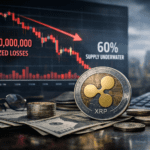



XRP has recently slipped toward the $2 range, but surprisingly, the token is seeing some of its strongest institutional demand in years. According to fresh ETF data, XRP has become one of the most heavily accumulated crypto assets by funds, even outperforming several larger tokens in net inflows. This contrast falling price but rising institutional interest highlights a new trend in the market: professional investors are prioritizing long-term positioning over short-term volatility.
The reason ETFs are piling into XRP is simple. Regulated funds want exposure to crypto, but they prefer doing it through secure, familiar investment products instead of handling tokens directly. XRP ETFs offer exactly that. They give institutions a low-risk structure to enter the market without worrying about wallets, private keys, exchange hacks, or operational complexity. So while retail investors may exit during price dips, institutions actually see these dips as opportunities to accumulate at cheaper levels.
Another factor behind XRP’s rising ETF presence is consistent inflow velocity. Even as the asset has pulled back, ETFs have added steady amounts of XRP for several weeks in a row. This suggests that fund managers view XRP as a long-term bet rather than a speculative coin that lives and dies with hype cycles. They prefer assets that are liquid, well-established, and backed by years of market presence and XRP fits that description well.
At the same time, price pressure continues because several large holders, often called whales, have reportedly been selling significant portions of their XRP. This creates downward movement that even strong ETF inflows can’t immediately offset. Broader market weakness has also contributed to XRP’s slide, with many altcoins losing momentum across the board. Even so, the ongoing accumulation from ETFs shows that institutional conviction remains intact.
What makes this moment interesting is the deeper structural shift in how XRP is being treated. Instead of being viewed primarily as a speculative token, XRP is now seen by major investors as a digital asset suitable for long-term allocation. When ETFs accumulate an asset, they tend to hold it, not day-trade it. This leads to a slow but meaningful transformation in how that asset behaves. Over time, ETF demand can stabilize price swings, reduce volatility, and create a stronger foundation for future growth.
Even though XRP’s price has weakened, ETF demand reveals the opposite story confidence is increasing. Institutions don’t typically chase hype; they move strategically, often positioning themselves during periods when prices are lower and market attention is elsewhere. For them, XRP represents a maturing crypto asset with long-term potential, especially as regulatory clarity around digital assets continues to evolve.
Of course, the road ahead for XRP is not without challenges. Whale selling must slow before the price can find stronger support, and global market conditions need to improve for the asset to regain sustained momentum. More importantly, investor sentiment needs time to recover after months of volatility in the crypto sector. Still, the ETF data shows that deep-pocketed players are willing to take those risks and commit early.
Ultimately, the rise of XRP ETFs demonstrates that institutional interest doesn’t always move in sync with price action. Instead, it often signals where the market could be heading months or even years from now. If ETF inflows continue at this pace, XRP could gradually shift from being just another altcoin into a core digital-asset holding for professional portfolios.
Despite short-term turbulence, the long-term picture looks increasingly supported by strong institutional backing. XRP may be trading lower, but the confidence behind the scenes is growing higher. And in crypto, that kind of support often matters far more than a temporary price dip.