

Separating political rhetoric from legal reality in America’s mental health debate
In recent months, a claim has spread widely across social media and political commentary that former President Donald Trump signed an executive order to “bring back insane asylums.” The phrase is dramatic. It immediately brings to mind images of early twentieth century psychiatric institutions, long term confinement, and dark chapters in mental health history. But is that what actually happened?
The short answer is no, not in the literal sense. There is no executive order titled “Bring Back Insane Asylums.” There is no formal federal plan to rebuild the large state run psychiatric institutions of the early 1900s. The phrase itself is rhetorical. It is political language used by critics and commentators to describe a shift in federal policy.
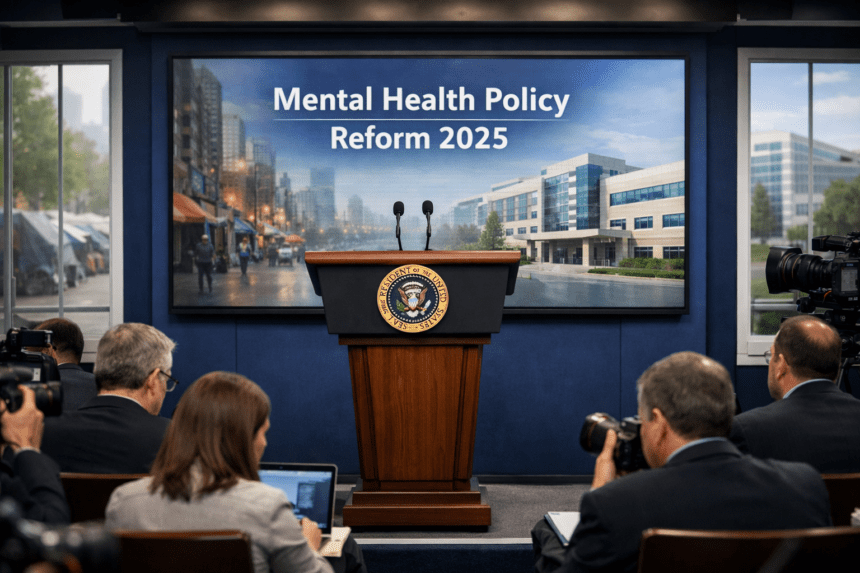
What did happen is this. In July 2025, Trump signed an executive order titled Ending Crime and Disorder on America’s Streets. The order focuses on homelessness, public safety, drug use, and serious mental illness in public spaces. While it does not recreate historic asylum systems, it does encourage expanded use of involuntary civil commitment and institutional treatment in certain cases. That is the source of the controversy.
Understanding the difference between rhetoric and policy is important. The debate is not really about resurrecting old asylums. It is about how the United States should respond to severe mental illness and visible homelessness in its cities.
What the Executive Order Actually Does
The executive order outlines several policy priorities that shift the federal government’s approach to homelessness and mental health.
First, it encourages expanded involuntary civil commitment. The order directs the Attorney General and the Secretary of Health and Human Services to review and challenge judicial precedents and consent decrees that limit when states can place individuals into involuntary treatment. It also calls for guidance to states on adopting more flexible civil commitment standards for individuals with serious mental illness who pose a risk to themselves or others or who are unable to care for themselves.
Civil commitment is not a new idea. It is a long standing legal process. Under civil commitment laws, a person can be required to undergo psychiatric treatment, including inpatient care, without their consent if they meet specific legal criteria. These criteria usually involve being a danger to oneself, a danger to others, or being gravely disabled and unable to provide for basic needs due to mental illness.
Historically, civil commitment has been limited by court rulings designed to protect civil liberties. Courts have required due process protections such as hearings, representation by counsel, and clear standards of proof. The 2025 order signals a desire to make it easier for states to use this tool more broadly.
Second, the order pushes states to change how they respond to homelessness in public spaces. Federal agencies are instructed to prioritize grants and funding for states and cities that enforce laws against open drug use, urban camping, loitering, and squatting. It also encourages states to use civil commitment or other legal mechanisms to move people with serious mental illness into treatment settings.
This aspect of the order effectively links federal funding to stricter enforcement policies. Supporters see this as restoring order and encouraging treatment. Critics see it as criminalizing homelessness and mental illness.
Third, the order redirects attention and potentially funding away from housing first and harm reduction programs. Housing first is a policy model that prioritizes getting people into stable housing without requiring them to complete treatment or sobriety programs first. Many researchers and advocacy groups argue that housing first has strong evidence behind it in reducing chronic homelessness.
The executive order calls for reviewing and potentially defunding programs that do not emphasize treatment or that focus on harm reduction approaches such as safe consumption sites. This shift away from housing first toward treatment first models is one of the most controversial elements of the policy.
Why People Use the Word Asylums
So why are people saying this brings back asylums?
The answer lies in history and symbolism. In the late nineteenth and early twentieth centuries, the United States operated large psychiatric hospitals often called insane asylums. Over time, many of these institutions became overcrowded, underfunded, and associated with abuse and neglect. Beginning in the 1960s and 1970s, a movement known as deinstitutionalization sought to close many of these facilities and move patients into community based care.
For decades, American mental health policy has leaned toward community treatment, outpatient services, and strict limits on involuntary confinement. The 2025 executive order signals a partial reversal of that trend. It promotes broader use of involuntary commitment and supports the expansion of institutional treatment settings.
Critics argue that this shift could lead to long term confinement in psychiatric facilities reminiscent of past systems. They worry about erosion of civil liberties and the risk of repeating historical mistakes. Because of these concerns, some commentators use the phrase bringing back asylums as shorthand for a return to institutionalization.
However, it is important to be precise. The order does not mandate the construction of massive state hospitals. It does not abolish due process protections. It does not eliminate existing legal standards overnight. The asylum language is a political and rhetorical framing of the policy direction, not a literal description of the text of the order.
Supporters’ Perspective
Supporters of the executive order argue that it addresses a visible and urgent crisis. Many American cities have experienced rising homelessness, open drug use, and untreated severe mental illness in public spaces. Families of people with serious mental illness sometimes struggle to access care for loved ones who refuse treatment.
Proponents say expanded civil commitment can provide a pathway to care for individuals who are clearly unable to make safe decisions due to psychosis or other severe disorders. They argue that leaving people on the streets in extreme distress is not compassionate. In their view, treatment first approaches can stabilize individuals and ultimately lead to better long term outcomes.
Supporters also frame the issue as one of public safety. They argue that cities have become less safe and less orderly due to visible mental health crises and drug use. By linking funding to enforcement and treatment, they believe the federal government is encouraging accountability and action.
From this perspective, the order is not about punishment. It is about restoring balance between civil liberties and community safety, and between autonomy and care.
Critics’ Perspective
Critics view the policy very differently. Mental health professionals, civil liberties advocates, and homelessness organizations have raised serious concerns.
One major concern is that expanding involuntary commitment could violate constitutional protections if not carefully implemented. Civil commitment already allows the government to deprive someone of liberty without a criminal conviction. Critics argue that loosening standards or encouraging states to challenge judicial limits could lead to overreach.
Another concern is that the policy criminalizes homelessness. By tying federal funding to enforcement of anti camping and anti loitering laws, critics argue that the government is punishing people for being poor or unhoused rather than addressing structural causes such as lack of affordable housing.
There are also worries about stigma. Linking homelessness closely with mental illness and crime can reinforce negative stereotypes. Many people experiencing homelessness do not have severe mental illness, and many people with mental illness are not homeless or dangerous.
Finally, critics argue that redirecting funds away from housing first and harm reduction could undermine programs that have shown measurable success. They believe stable housing is often the foundation for recovery and that treatment is more effective when people have a safe place to live.
What Involuntary Civil Commitment Really Means
To understand the debate, it is important to clarify what civil commitment actually is.
Civil commitment is a legal process, not a new type of building. It allows a court to order mental health treatment for a person who meets specific criteria. Typically, the person must be diagnosed with a serious mental illness and must pose a danger to themselves or others, or be unable to meet basic needs because of that illness.
The process usually involves an evaluation by medical professionals, a petition to a court, a hearing, and representation by counsel. Standards of proof vary by state, but they often require clear and convincing evidence.
Commitment can be short term, such as a seventy two hour emergency hold, or longer term if a court finds it necessary. Even in long term cases, periodic review is generally required.
The key tension lies in balancing individual liberty with safety and care. Democracies are cautious about allowing the government to confine people without criminal charges. At the same time, there are situations where untreated mental illness can lead to severe harm.
The executive order signals a shift toward making this tool more available and more widely used. Whether that leads to better outcomes or unintended consequences will depend heavily on how states implement the policy and how courts respond.
The Broader Context
The debate over this executive order reflects deeper questions about American social policy. Over the past several decades, the United States has struggled to build a comprehensive mental health system. Many state psychiatric hospitals closed during deinstitutionalization, but community based services were often underfunded or fragmented.
At the same time, housing costs have risen sharply in many urban areas. Affordable housing shortages have contributed significantly to homelessness. Substance use disorders, particularly involving opioids and synthetic drugs, have added another layer of complexity.
In this context, policymakers face difficult tradeoffs. Should the focus be on housing first, treatment first, or a combination of both? How much authority should the state have to compel treatment? How should civil liberties be protected while also addressing visible disorder and suffering?
The executive order does not resolve these questions. It represents one approach within a larger and ongoing national debate.
Bottom Line
Did Trump sign an executive order that changes how homelessness and mental illness are addressed at the federal level? Yes. The 2025 order encourages expanded involuntary civil commitment and greater use of institutional treatment settings for people with serious mental illness who are living outside.
Does the order shift funding priorities away from housing first and harm reduction models? Yes, it signals a move toward treatment first and enforcement based approaches.
Did it literally bring back insane asylums from the early twentieth century? No. There is no official program with that name and no direct mandate to recreate historic asylum systems.
The phrase bringing back asylums is rhetorical. It captures fears about a return to institutionalization, but it is not the legal title or literal structure of the policy.
The real debate is not about a word. It is about how society balances compassion, safety, liberty, and responsibility in responding to severe mental illness and homelessness. That debate is likely to continue long after the headlines fade.