


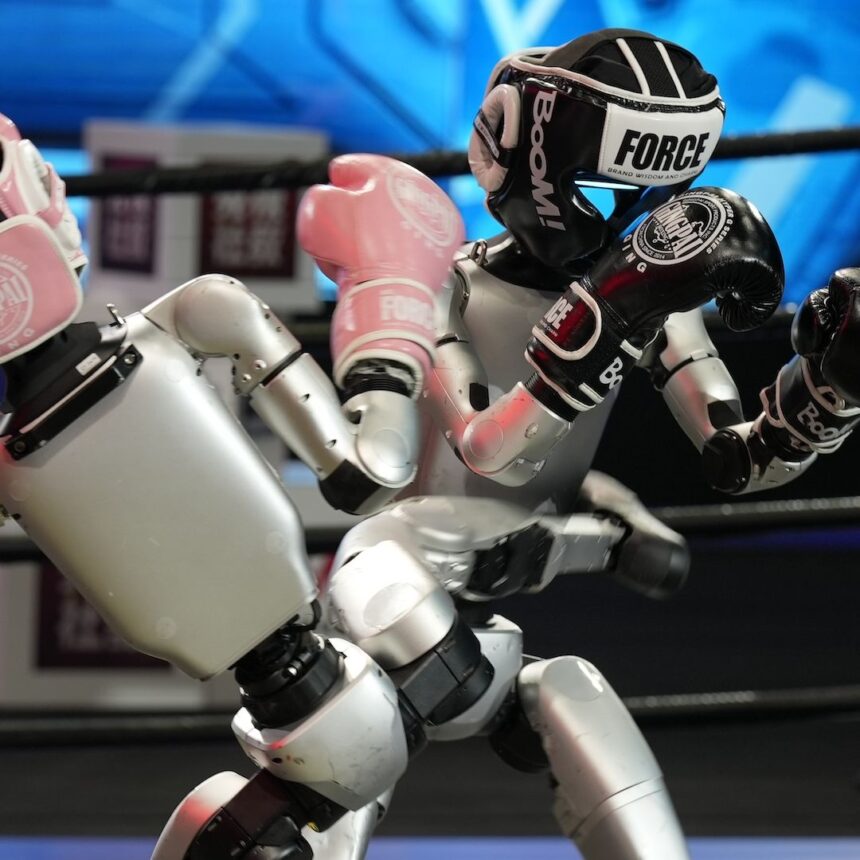
How humanoid boxing bots are captivating tech fans and changing the way we think about robots
Robots fighting in a boxing ring might sound like science fiction, or a scene out of Real Steel, but it’s very real today. Recent events in San Francisco and China have brought humanoid robot boxing matches into the public eye, drawing crowds, sparking debate, and offering a glimpse at how far robotics technology has progressed. Chinese robotics companies, especially Unitree, are leading this trend by supplying the humanoid robots that step into the ring, while innovators abroad are building leagues and entertainment around them.
The San Francisco Robot Boxing Phenomenon
In early 2026, a unique event in San Francisco attracted hundreds of spectators to watch robots square off in a boxing cage. The matches were organized by a Bay Area startup called Rek, and featured humanoid robots manufactured by the Chinese robotics firm Unitree. These robots weighed around 80 pounds and stood approximately 4.5 feet tall, with human like hands and dozens of motorized joints that allowed them to throw jabs, hooks, and blocks while navigating around the cage.
The atmosphere was deliberately theatrical: pulsing music, animated introductions, and even commentators narrated each bout. Although the robots were not autonomous athletes, but rather piloted via virtual reality and remote control by human participants, the crowd’s reaction suggested a genuine interest in this emerging form of entertainment. Plans are already underway to expand these matches into a regular league, featuring larger robots that could weigh up to 200 pounds and stand nearly 6 feet tall.
China’s Robot Boxing Landscape
While the Rek matches in the U.S. generated excitement, China has been pushing humanoid robot combat even further. Events in cities such as Hangzhou have seen robots from Unitree and other Chinese firms participate not just in boxing but in a variety of competitions, including races and sports demonstrations. These occasions showcase China’s rapid advancement in robotics, where humanoid machines are featured in competitions, games, and public spectacles.
Unitree’s humanoid robots, such as the G1 model and other variants like the H1 and H2, have been central to these developments. Originally designed with broader purposes in mind from research to entertainment and even household tasks these platforms are now being adapted for combat scenarios, challenging traditional ideas of what robots can do.
Humanoid Robots: From Labs to the Ring
The roots of robot boxing lie in advances made by companies like Unitree, which was founded in Hangzhou, China, and has grown to become a major player in the global robotics industry. Although the company is known for a wide range of robots, from quadrupedal machine dogs to advanced humanoids, its contribution to robot combat has captured public imagination.
Humanoid models such as the G1 are approximately human-sized and feature multiple joint motors that allow a range of motion, including walking, punching, and even performing acrobatic maneuvers. While full autonomy where robots make decisions without human control is still a work in progress, the current generation of bots is capable of impressive feats that blur the line between functional robotics and performance art.
The fight sequences at events like San Francisco’s Rek matches or the early competitions in China combine robotics engineering with human input, making them as much about the spectacle as they are about the sport. One robotics researcher has described these displays as “robot theater,” noting that the current technology still relies heavily on human operators rather than fully independent robot intelligence.
Why Robot Boxing Matters
At first glance, robots fighting in a ring may seem like nothing more than a novelty. However, these events reflect broader trends in robotics research and public engagement with new technology. They serve several important purposes:
Public Engagement and Entertainment: Robot boxing matches draw crowds and media attention, introducing complex robotics topics to a wider audience in an accessible and exciting way.
Testing Mobility and Control: Combat scenarios require robots to balance, react, and move dynamically areas where humanoid robots have historically struggled. These matches provide real-world data and challenges for improving balance systems and locomotion algorithms.
Human Robot Interaction, By using VR and remote control to pilot robots, companies learn more about how humans and machines can interact seamlessly, a key aspect of future applications, whether in rescue missions, manufacturing, or home assistance.
Cultural and Technical Showcases, Events like these elevate the profile of robotics in society and provide a platform for companies like Unitree to highlight innovations that might otherwise remain hidden in labs or research facilities.
The Challenges Ahead
Despite the excitement, there are limitations and challenges that come with robot boxing. Most notably, current humanoid robots are not fully autonomous and require human control to operate effectively in combat scenarios. This dependence limits the robots’ potential to make strategic decisions on their own, such as identifying openings, anticipating an opponent’s moves, or adjusting tactics mid-fight.
Additionally, while robots have become more agile and flexible, their movements can still appear repetitive or predictable to human observers. Experts remind us that what looks like intelligent behavior often masks a sophisticated but scripted set of responses guided by human operators.
Beyond these technical hurdles, there is also an open question about the broader applications of humanoid robots. While competitions offer compelling demonstrations, practical use cases such as service robots, industrial helpers, or companions remain far more complex and demanding. It’s unclear whether the skills honed in a boxing ring will directly translate to real-world functionality.
What’s Next for Robot Boxing
Looking to the future, both China and companies abroad are laying the groundwork for larger and more ambitious humanoid robot competitions. Plans for international matches and leagues suggest that robot combat could evolve into a formalized sport with global audiences. Organizers like Rek are already considering international expansion and the inclusion of full-height robots that better mirror human athletes.
Meanwhile, robotics firms continue to innovate behind the scenes. Research into autonomous decision-making, motion-planning algorithms, and advanced AI controls is ongoing, and breakthroughs in these areas could one day allow robots to fight without human pilots. Then, robot boxing would not just be an entertaining spectacle, but a true test of machine intelligence and agility against itself.
Thoughts
Humanoid robot boxing matches are more than novelty events. They represent a fascinating intersection of robotics research, entertainment, and human interaction. From San Francisco’s Rek-organized cage fights to larger competitions in China, robots stepping into the ring are capturing the imagination of audiences and pushing the boundaries of what machines can do. As technology improves, and as designers continue to refine both the hardware and software that power these robots, the sport might grow into something much more substantial possibly laying the foundation for new forms of competition and collaboration between humans and machines.
Whether it becomes a mainstream sport or remains a quirky footnote in technological history, robot boxing showcases how far robotics has come and points to an exciting future ahead.