

Higher prices. Slower growth. Tighter nerves.
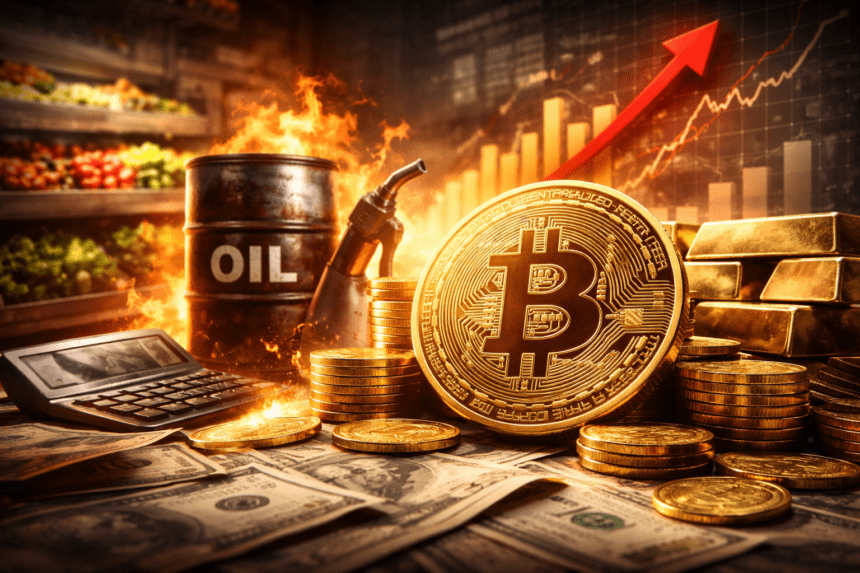
Stagflation sounds like one of those dusty economic words dragged out of a textbook whenever markets get uncomfortable. But in 2026, it has started creeping back into real-world conversations for a reason. Investors, central banks, and macro traders are all watching the same dangerous mix: inflation risks that refuse to die and growth outlooks that are starting to look softer than expected. Reuters reported this month that investors are increasingly bracing for a stagflation-style shock as war-driven energy disruptions push up oil prices while threatening growth, and the IMF has warned that a prolonged energy spike could lift inflation and cut output worldwide.
That does not automatically mean the world is reliving the 1970s. Federal Reserve Chair Jerome Powell has pushed back on that framing, saying today’s US economy does not meet the classic stagflation standard because inflation is only modestly above target and unemployment remains low. Still, even Powell acknowledged the uncomfortable policy tension created by higher energy prices and conflicting economic goals. In other words, the label may still be debated, but the pressure behind it is real. For Bitcoin holders, that matters more than it might seem.
What stagflation actually means
Stagflation is the ugly combination of sticky inflation and weak or slowing growth. Normally, central banks can fight inflation by keeping policy tight or support growth by easing. The problem with stagflation is that both goals start clashing. If prices are rising because energy, transport, and supply costs jump, but the economy is also losing momentum, policymakers can get trapped. Cut too early and inflation flares up. Stay tight too long and growth weakens further. Reuters’ latest market coverage has described exactly that kind of tension now building across several major economies.
Europe is already showing why this matters. The ECB has raised its 2026 inflation forecast to 2.6% from 1.9% because of higher energy costs, while also trimming its growth outlook. That is not full-blown stagflation, but it is a clear example of the same dangerous pattern: the wrong kind of inflation arriving at the wrong time. China is facing a different version of the same risk, with analysts warning that weak demand could collide with rising input costs and flip deflation into what Reuters called “bad inflation.”
This is why the term is suddenly back in the market vocabulary. Not because conditions have already become catastrophic, but because the direction of travel is uncomfortable enough that investors are starting to price the possibility.
Why Bitcoiners should care
Bitcoin does not live in a macro vacuum anymore. That era is over. A decade ago, Bitcoin could still be discussed mostly as a niche experiment, a censorship-resistant payments network, or a speculative tech bet. In 2026, it is also a macro asset. It trades alongside liquidity expectations, real yields, energy shocks, risk sentiment, and institutional portfolio decisions. That means when the market starts worrying about inflation staying high while growth weakens, Bitcoin gets pulled directly into the debate.
The reason is simple: stagflation changes what investors want. In a clean growth environment, capital tends to reward productive risk, tech expansion, and cyclical momentum. In a pure recession scare, markets usually run toward cash, bonds, and defensives. But in a stagflationary environment, neither playbook feels safe. Growth assets suffer, bonds can disappoint if inflation stays sticky, and fiat purchasing power starts looking less reliable. That is where hard-asset narratives get stronger. Gold usually enters that conversation first. Bitcoin increasingly follows. Reuters has already reported that central banks and investors are reacting to fresh inflation fears linked to war-driven energy costs, while bond markets and equities are trying to work out whether the inflation shock is temporary or something nastier.
Bitcoiners need to understand that this does not guarantee a straight-line rally. In the short term, Bitcoin can still behave like a volatile risk asset. If markets panic, liquidity gets tighter, or funds de-risk aggressively, BTC can get sold with everything else. But the longer the world sits in a regime where cash loses purchasing power, growth slows, and trust in traditional policy tools weakens, the more Bitcoin’s scarcity story starts to matter again.
The real 2026 setup
The 2026 backdrop is messy, and that is exactly why the stagflation conversation has legs. The IMF’s January outlook had pointed to steady global growth and declining inflation this year, helped partly by easing price pressures and the productivity boost from AI. But events in March have complicated that picture. Energy costs have surged on geopolitical disruption, central banks are revising inflation expectations higher, and market participants are openly debating whether the global economy is entering a fresh inflation-and-growth squeeze. Reuters has reported that the IMF now warns prolonged energy disruptions could both lift inflation and lower output, which is the core recipe behind stagflation fears.
That matters for Bitcoin because a big part of the 2026 bull case has been built on clearer regulation, expanding institutional access, and macro support from looser financial conditions. If stagflation takes hold instead, the path changes. The tailwind is no longer just easier policy. It becomes distrust in the old framework itself.
That can be powerful.
If central banks are forced to keep rates tighter than markets hoped because inflation is proving stubborn, while growth simultaneously loses altitude, investors start looking harder at assets that do not rely on flawless policy management to make sense. That does not mean Bitcoin replaces gold, or that everyone suddenly dumps government bonds for wallets and cold storage. It means Bitcoin remains in the conversation as a hedge against monetary dysfunction, policy confusion, and the long erosion of fiat confidence. The Bitcoin case gets stronger when confidence gets weaker.
This is the part many people miss.
Bitcoin is not only a bet on innovation. It is also a bet on the limits of the current system. When inflation is tame, growth is decent, and central banks look credible, that argument fades into the background. When inflation surprises to the upside, growth disappoints, and policymakers start sounding defensive, the argument gets louder.
That is why the word stagflation matters. It is not just about one economic scenario. It is about what happens to public trust when the old policy toolkit starts looking less effective. Powell may be right that this is not a 1970s-style stagflation episode yet. But markets do not wait for textbook confirmation. They move when enough people start worrying that the old playbook may not work cleanly anymore.
For Bitcoiners, the takeaway is not to cheer for economic pain. It is to understand what kind of environment strengthens Bitcoin’s long-term narrative. Scarce assets become more attractive when inflation is stubborn. Non-sovereign assets become more interesting when confidence in policy slips. Portable digital assets become more compelling when capital wants optionality in a world of geopolitical and monetary uncertainty.
There are three big signals from here.
First, energy. If oil and broader energy costs stay elevated for longer, inflation pressure will be harder to shake. Reuters has already tied much of the current inflation anxiety to conflict-driven supply disruption.Second, growth revisions. If more major economies start trimming growth forecasts while lifting inflation expectations, the stagflation case gets harder to dismiss. Europe is already flashing that pattern.
Third, Bitcoin’s behavior. If BTC starts outperforming other risk assets during periods of inflation anxiety, that would be a strong sign the market is treating it less like speculative tech and more like a macro hedge. That shift would matter more than any slogan.
The bottom line
Stagflation may or may not become the defining economic label of 2026. But the reason people are saying the word again is clear enough: the world is facing a more hostile mix of inflation pressure and growth fragility than many expected just a few months ago.Bitcoiners need to know what that means because Bitcoin was built for environments where confidence in money, policy, and institutions starts to crack, and if 2026 becomes a year where inflation stays hotter than hoped, growth cools faster than expected, and the old economic script stops making sense, Bitcoin will not just be part of the conversation.
It may be one of the main reasons people start having it.