

Why Solana’s Market Position Is Being Tested, and What Could Keep the Rally Alive
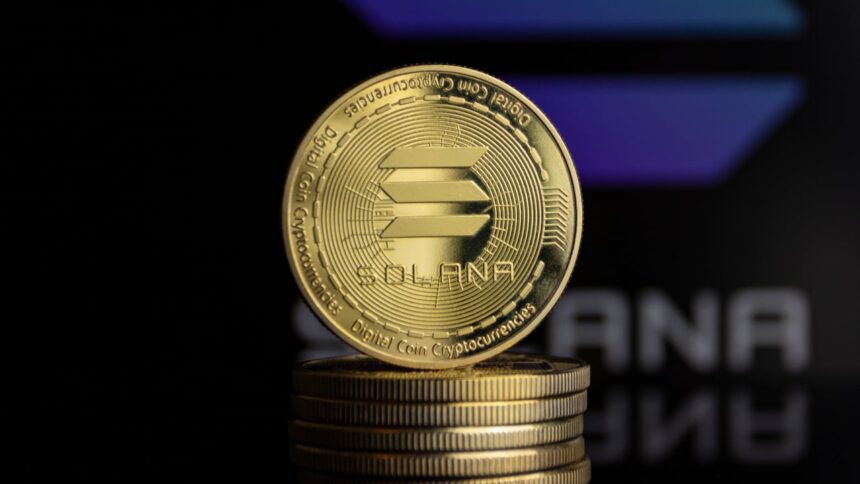
In late 2025, Solana’s native token SOL found itself teetering near the psychologically important $125 price level, a threshold closely watched by traders and analysts alike. Despite broader cryptocurrency headwinds and technical volatility, Solana’s price behavior has shown both resilience and sensitivity to market dynamics, leaving the question on many investors’ minds: Can SOL hold $125 as we approach year-end, or is deeper support needed? According to recent market reports, on-chain activity and ecosystem growth provide reasons for cautious optimism, even as short-term price swings test the strength of key support zones.
Solana’s journey through 2025 has been shaped by a mix of macro pressures, network developments, and evolving investor sentiment. Early in the year, the entire digital asset market grappled with mixed liquidity, regulatory uncertainty, and shifting capital flows across geographies. Solana, known for its high-throughput blockchain and competitive fee structure, saw periodic rallies during bullish phases especially when decentralized applications (dApps) and decentralized finance (DeFi) activity picked up. However, ongoing macro dynamics and rotational trading behavior have kept SOL range-bound at times, with buyers and sellers contesting the $125 level as a meaningful pivot between bullish conviction and technical caution.
From a technical perspective, the $125 mark has become a key psychological and structural support zone. Levels like this often act as magnet points prices that traders collectively treat as decision boundaries where sentiment shifts from defensive to optimistic. Sustained support above this level could signal that buyers are stepping in at historically relevant prices, reducing the likelihood of a deeper breakdown. Conversely, a clear breach below $125 on significant volume might invite short-term traders and algorithmic strategies to test lower support levels, potentially extending volatility.
One factor bolstering confidence in SOL’s support is on-chain activity across the Solana network itself. In recent months, transaction throughput, active addresses, and decentralized application interactions have remained relatively healthy even when spot prices fluctuated. This suggests that ecosystem participation remains intact, which can translate to underlying demand for the token beyond pure speculation. Higher activity levels reduce the risk of capitulation at lower price levels because network utility especially for staking, DeFi, and NFTs continues to attract users who hold tokens for functional use.
Another supportive trend is the continuing growth of staked SOL, which represents tokens locked up in validator nodes to secure the network. When large portions of a token’s circulating supply are staked, it effectively reduces the fluid float available for active trading. This “supply lockup” dynamic can help cushion price declines during periods of selling pressure because fewer tokens are freely available on the market. High staking participation signals long-term commitment among holders and can function as a de-facto structural support mechanism.
Institutional interest also plays a role. While Solana does not have the same breadth of regulated investment products (like ETFs or structured notes) as Bitcoin or Ethereum, institutional allocators and family offices have shown periodic interest in SOL as part of diversified digital asset allocations. Custodial solutions and regulatory pathways have improved over the last few years, lowering barriers for traditional finance to engage with high-utility layer-1 tokens like Solana. This gradual integration helps supply deeper order books and more resilient liquidity on both buy and sell sides of the market.
Market sentiment a crucial driver of price action has also exhibited unique behavior around Solana. Unlike some assets that experience rapid sentiment swings, Solana’s community has shown a blend of technical trader engagement and long-term holder conviction. This mix can lead to less extreme price swings compared with purely speculative markets, but it also means SOL’s price often moves in broader trends rather than sudden spikes. In late 2025, sentiment metrics indicate that while short-term momentum has cooled off from earlier highs, confidence in Solana’s development runway remains intact.
Despite these supportive indicators, it’s important to acknowledge risks that could influence whether SOL holds $125. Broader cryptocurrency market volatility influenced by macroeconomic data, interest rate expectations, and regulatory news can impact price action across the board. Solana’s price is not isolated; it often moves in correlation with Bitcoin and Ethereum trends, especially in risk-off scenarios where traders rotate out of altcoins and back into major stores of value. Such cross-market influences can add short-term pressure even when Solana’s internal metrics remain sound.
Liquidity trends also matter. If exchange inflows rise meaning more tokens are deposited onto trading venues it can signal a willingness to sell, which in turn may test support levels more aggressively. Conversely, when tokens flow out of exchanges into long-term or institutional custody, it reduces immediate sell pressure and supports higher price floors. Monitoring these flows around the $125 support zone is a strategy many traders use to gauge whether demand is sustainable or if selling could intensify.
Another layer to consider is developer activity on the Solana network. Solana’s ecosystem has been expanding with new projects across gaming, DeFi, and utility protocols. Developer engagement can act as a long-term catalyst, providing reasons for long-term holders to stick with the token even during choppy price action. Healthy development trends also help sustain ecosystem utility, which in turn justifies token demand for non-speculative purposes like staking, governance, and fee payment.
Market psychology around key levels like $125 also interacts with technical patterns such as moving averages, relative strength indicators, and volume oscillators. Traders often watch correlation between these indicators and price behavior to anticipate breakouts or breakdowns. For example, if SOL remains above its key moving averages and shows bullish divergence in momentum indicators, it’s generally interpreted as a sign that support is holding and further upward movement is plausible. A sharp break below these lines, however, could indicate weakening bid demand.
Looking ahead, if SOL maintains support around $125 and broader market conditions improve, several upside scenarios become plausible. For one, renewed capital inflows both from retail and institutional channels — could ignite buying pressure that pushes SOL into higher trading ranges. This could be fueled by positive ecosystem news, protocol upgrades, or macroeconomic tailwinds that improve risk sentiment. In such environments, historically key levels can act as launchpads for renewed rallies rather than resistance zones.
In contrast, if SOL breaks decisively below $125 on strong volume and macro sentiment weakens sharply, traders may look toward subsequent support zones often based on prior historical price action or Fibonacci retracement levels to find the next potential floor. Such price behavior would likely coincide with increased volatility and wider market rotation, potentially dragging altcoins lower in relation to Bitcoin.
In summary, Solana’s ability to hold $125 heading into late 2025 will be shaped by a blend of on-chain fundamentals, liquidity dynamics, staker participation, sentiment trends, and broader market forces. While internal metrics suggest structural support exists, external macro pressures and cross-asset correlations remain key risks. The next phase of price action may reveal whether this psychological support transforms into a springboard for renewed gains or a pivot for deeper consolidation.