

How Salt Based Power Storage Is Moving From Lab to Real World
In early 2026, MIT Technology Review named sodium ion batteries as one of the year’s breakthrough technologies, highlighting their rapid shift from scientific novelty to real world viability. This recognition reflects a broader trend across the global energy landscape: lithium based battery technology, long dominant in electric vehicles and grid storage, is facing serious competition from an alternative that promises lower costs, abundant materials, and safety strengths once thought out of reach for mainstream applications. Sodium ion batteries, leveraging earth abundant sodium instead of scarce lithium, are positioning themselves as a major force in sustainable energy storage in 2026 and beyond.
What Are Sodium Ion Batteries and Why They Matter
Sodium ion batteries operate on a principle very similar to lithium ion technology they both move charged ions between electrodes to store and deliver electrical energy but they replace lithium with sodium, a far more abundant and inexpensive element. While sodium ions are slightly heavier and larger than lithium ions, advancements in cell chemistry and materials have greatly improved performance, bringing energy densities and operational capabilities within striking distance of traditional lithium based systems.
Replacing lithium with sodium translates into meaningful real world benefits. Sodium is abundant, inexpensive, and widely distributed around the globe, unlike lithium, cobalt, and nickel, which are subject to volatile markets and concentrated supply chains. This abundance contributes to more stable pricing and reduces geopolitical risk, offering a potential solution to supply constraints that have repeatedly challenged lithium battery production.
Historically sodium ion batteries faced significant limitations, including lower energy density and shorter lifespans compared with lithium ions, which made them suitable only for niche uses. However, breakthroughs in materials research, engineering, and manufacturing have dramatically improved performance and durability, catalysing a renaissance in sodium based energy storage in 2026.
Breakthrough Recognition and What It Means
MIT Technology Review’s annual list of breakthrough technologies is widely watched by scientists, engineers, and industry leaders because it highlights innovations that have crossed the key threshold from laboratory curiosity to proven real world relevance. In naming sodium ion batteries as a breakthrough, the review signalled that recent advances are meaningful and timely, not speculative. This entry into the mainstream technology conversation means that sodium ion energy storage is now being taken seriously by investors, manufacturers, and policymakers worldwide.
This change has not occurred in isolation. Leading battery producers such as Contemporary Amperex Technology Co., Ltd (CATL) have already begun mass production of sodium ion cells under brands like Naxtra, and they expect expanded use cases in electric vehicles, commercial vehicles, and energy storage systems through 2026. These developments suggest a broadening commercial footprint for the technology in the immediate future.
Advantages Over Traditional Technologies
One of the most compelling reasons sodium ion batteries are emerging now is cost. The raw materials required for sodium batteries are dramatically cheaper than those needed for lithium ion cells. Analysts estimate that by mid century, sodium ion storage could offer energy at significantly lower prices per megawatt hour compared with lithium ion, making it an attractive option for grid scale storage and cost sensitive applications.
Safety is another major advantage. Sodium ion cells are inherently more stable at high temperatures and less prone to dangerous thermal runaway than some lithium based chemistries. This makes them particularly attractive for applications where safety is critical, including residential and industrial energy storage, transportation, and remote deployments in harsh environments.
Another important benefit is operational reliability across a wide temperature range. Some sodium ion designs maintain strong performance even in extreme cold, a condition that degrades many lithium based cells. This capability broadens the geographic and climatic range where battery systems can be confidently deployed.
Electric Vehicles and Sodium Ion Adoption
Electric vehicles (EVs) have been one of the primary drivers of battery innovation over the past decade. While lithium ion batteries still dominate EV markets, sodium ion technology is now emerging as a credible contender for certain segments, especially where cost and raw material availability matter most.
In 2025 and into 2026, companies like CATL began introducing sodium ion cells that achieve energy densities previously considered out of reach for salt based systems. Early commercial models can now deliver ranges comparable to some lower cost lithium iron phosphate vehicles, with energy densities that support over 300 to 500 kilometres of driving range. These performance levels demonstrate that sodium ion batteries are no longer limited to small scale uses such as scooters or micro vehicles but have matured into systems capable of powering mainstream electric cars.
Importantly, widespread adoption also depends on infrastructure, manufacturing capacity, and supply chain robustness. In 2025 and 2026, global efforts have ramped up to build manufacturing lines dedicated to sodium based cells, particularly in China and parts of Europe, where companies are creating supply webs that could rival those built for lithium technology.
Beyond EVs: Grid Storage and Renewable Integration
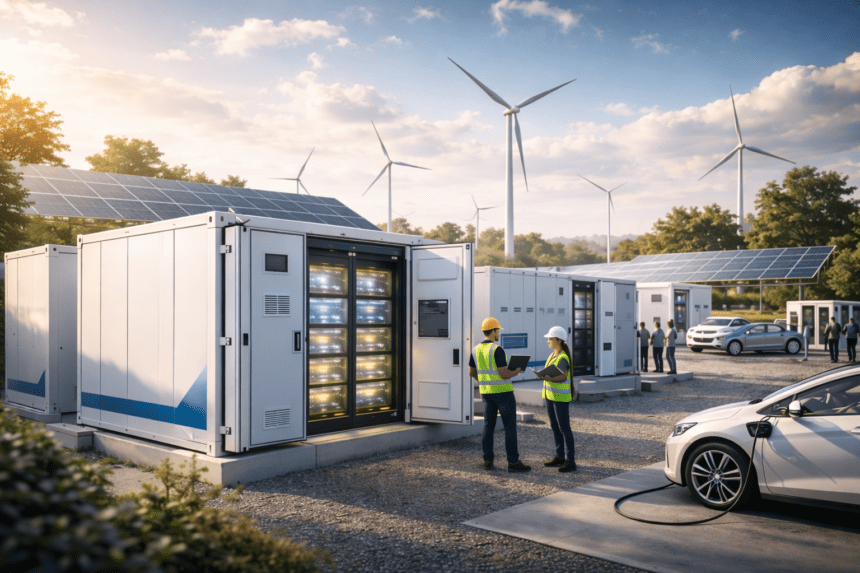
While EVs are headline applications, the potential impact of sodium ion batteries extends into grid scale energy storage. As renewable energy deployment increases, utilities and energy providers need reliable, long lasting, and cost efficient storage systems to balance intermittent generation from wind and solar. Sodium based batteries are ideal for these scenarios because they offer cost stability and safety without the premium associated with lithium based systems.
Sodium ion batteries also can play a role in backup power, remote microgrids, and industrial energy systems. Their ability to operate in low temperatures and withstand a large number of charge cycles without serious degradation makes them well suited for environments where performance reliability is essential.
Challenges and the Road Ahead
No technology is without challenges. In the case of sodium ion batteries, the primary limitations remain energy density and overall weight. Because sodium ions are physically larger than lithium ions, cell designs tend to be heavier for the same energy output. This characteristic makes them less ideal for weight sensitive applications like long range EVs or portable electronics.
Despite these challenges, technology improvements continue to close the gap. Researchers are exploring advanced materials for cathodes and anodes, solid state electrolyte designs, and novel production methods that could further improve performance. Some early work even suggests that future salt based cells could rival or surpass lithium ion capacities through clever engineering and material science breakthroughs.
Competition also remains with lithium ion technology itself, which continues to improve and find new pathways for cost reduction and performance enhancement. Many experts believe that sodium ion and lithium ion batteries will coexist for years to come, each serving specific market niches where their respective strengths are most valuable.
A Technology in Transition
Sodium ion batteries have moved into the spotlight at a moment when the world is seeking resilient, affordable, and sustainable energy systems. The convergence of mature manufacturing capabilities, strategic deployment in electric vehicles, and the ever growing need for large scale energy storage has made these salt based systems more than just an academic curiosity it has made them a technology with genuine potential to shape our energy landscape.
By 2026, sodium based batteries are no longer fringe alternatives. They represent a complementary technology that could help democratise access to clean energy storage, reduce dependency on scarce resources, and provide safer solutions across industries. Whether powering the next generation of electric cars or storing surplus renewable electricity for cloudy days, sodium ion batteries are proving they have arrived — and they are here to stay.
Thoughts
The inclusion of sodium ion batteries in a major breakthrough technology list marks a turning point for energy storage innovation. With cost advantages, better safety profiles, and improving performance, these batteries are poised to make important inroads where affordability and reliability matter most. While challenges remain, the accelerating pace of development and adoption suggests sodium ion technology will be a defining part of the global energy ecosystem for decades to come.