

The longer the war drags on, the more North Korea cashes in
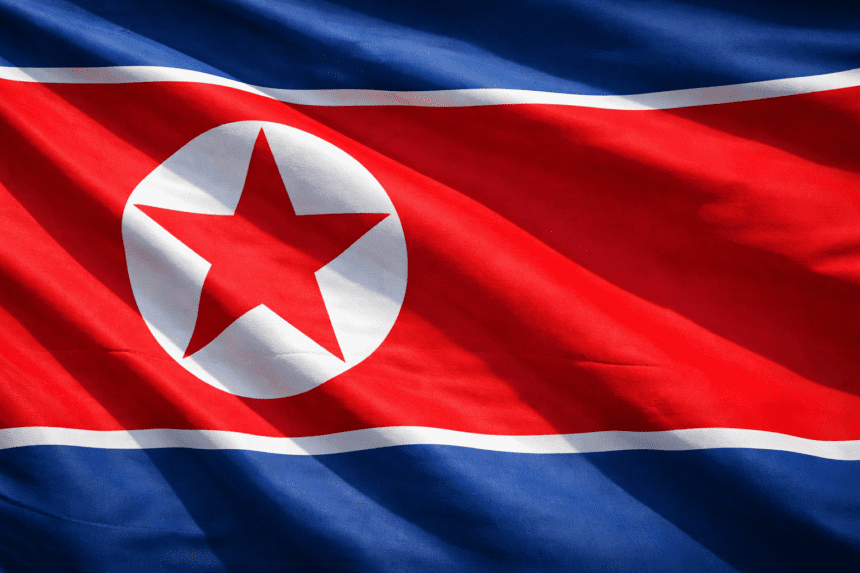
North Korea is not just watching the Russia-Ukraine war from the sidelines.
It is profiting from it.
According to a report cited by The Korea Herald and Yonhap, North Korea may have earned as much as $14.4 billion from its involvement in Russia’s war effort through arms shipments and troop deployments. The estimate reportedly came from Seoul’s Institute for National Security Strategy, which said Pyongyang’s foreign currency gains from support provided between August 2023 and December 2024 could range from $7.67 billion to $14.4 billion.
That figure is huge by any standard, but it matters even more when viewed through the North Korean lens.
For a regime choked by sanctions, isolated from much of the global economy, and constantly in need of hard currency, military exports and war-linked support are not just side income. They are strategic oxygen. If those estimates are even close to accurate, then Russia’s war has become one of the most valuable external revenue streams North Korea has seen in years.
And that should alarm far more people than it currently does.
A War Economy Hidden In Plain Sight
Too often, the public conversation around the Russia-Ukraine war focuses only on the obvious front lines: Russian troops, Ukrainian resistance, Western support packages, sanctions, and diplomatic breakdowns. But modern wars do not run only on soldiers and slogans. They run on supply chains, industrial capacity, ammunition flows, labor substitution, transport networks, and third-party enablers.
That is where North Korea enters the picture
Pyongyang’s value to Moscow is brutally simple: it can provide large volumes of military goods and manpower without the moral, legal, and diplomatic constraints that limit most states. In 2025, a Reuters investigation with the Open Source Centre found Russia had become heavily reliant on North Korean artillery shells, with some frontline Russian units at times firing mostly North Korean-made munitions.
That matters because attritional warfare is not won only with strategy. It is won with replacement rates. The side that can keep feeding the guns, the trenches, and the battlefield economy can keep the war going longer. North Korea has inserted itself directly into that equation.
This is no longer just a story about sanctions-busting or quiet back-channel support. It is about a regime under sanctions turning geopolitical chaos into a revenue engine.
Why The $14.4 Billion Figure Matters
When reports throw around billion-dollar estimates, people can become numb to the scale. But for North Korea, this is not abstract.
A cash inflow of this size could help finance weapons development, shore up internal regime stability, expand procurement networks, reward elites, and reduce the economic pain of international isolation. In simple terms, war revenue can be converted into political durability. Every shipment, every rotation, every shell, every payment stream potentially strengthens Kim Jong Un’s ability to outlast pressure.
Yonhap’s summary of the estimate said direct troop-related revenue, including wages and death compensation, accounted for about $620 million, and that if the arrangement continues, Pyongyang could make roughly $560 million a year from troop deployments alone.
That tells you something important.
The real story is not just that North Korea may have made a lot of money. It is that Pyongyang may now have a repeatable war-business model: export arms, deploy manpower, support a larger power’s battlefield needs, and convert foreign conflict into regime income.
That is not just opportunism. That is strategy.
Russia’s Need, North Korea’s Opportunity
Wars create shortages. Shortages create dependency. Dependency creates leverage.
Russia’s war effort has consumed enormous amounts of ammunition and matériel. That helps explain why outside suppliers matter so much. North Korea, with vast stockpiles of Soviet-caliber munitions and an authoritarian system capable of redirecting state output toward military support, offers something Russia needs: volume. Even if quality varies, the ability to keep shells moving matters in a grinding war of attrition.
North Korea also gains something more valuable than cash: relevance.
For years, Pyongyang has existed as a heavily sanctioned state trying to survive pressure from stronger powers. But by helping sustain Russia’s war machine, it stops being merely a problem to contain and becomes an active wartime supplier with bargaining value. That shifts the relationship. Moscow is no longer just a diplomatic partner. It becomes a customer, a strategic backer, and a political shield.
That is a dangerous upgrade for the regime.
The longer Russia depends on North Korean support, the stronger Pyongyang’s negotiating position may become in other areas, including military technology, diplomatic cover, and sanctions resilience.
The Bigger Risk: War As A Revenue Model
This is the part that should keep policymakers awake.
If North Korea is successfully earning billions from war involvement, then conflict itself becomes a viable export market. The lesson for Pyongyang is not that militarism is costly. The lesson is that militarism can pay.
That creates terrible incentives.
Instead of isolation weakening the regime, war-linked demand can partially offset isolation. Instead of sanctions fully containing risk, conflict can create side doors. Instead of military adventurism being economically punishing, it can become a monetizable service.
Once that logic takes hold, the implications stretch well beyond Ukraine.
A regime that learns it can profit from major-power confrontation is a regime with one more reason to stay dangerous. It does not need peace to prosper. It may discover that instability itself can be sold.
That is one of the darkest economic realities of modern geopolitics: some actors do not merely survive war. They monetize it.
Not Just Weapons, Influence
Money is only part of the equation.
The deeper issue is what this kind of support buys North Korea politically.
If Pyongyang is supplying ammunition, manpower, or defense support at scale, then it is not only earning revenue. It is embedding itself more deeply into a geopolitical bloc opposed to the U.S.-led order. That means the relationship with Russia may not remain transactional. Over time, it can become strategic in more durable ways.
That could include diplomatic shielding at the U.N., technology cooperation, logistical coordination, and deeper military to military ties. Even when details remain opaque, the pattern is clear: once wartime dependency forms, it is very difficult to pretend the relationship is shallow.
And this is where the West often misreads the board.
Too many analysts still talk about North Korea as if it is frozen in a static sanctions script. But the world has changed. The rise of multipolar conflict, fractured sanctions enforcement, and wartime supply desperation has created openings that regimes like North Korea can exploit. Pyongyang no longer needs universal acceptance to survive. It needs enough powerful partners, enough workarounds, and enough conflict-driven demand.
That is a much lower threshold
The Moral Cost Gets Buried Under The Strategic One
There is another uncomfortable truth here.
Whenever war becomes a supply business, human suffering gets converted into contracts, shipments, margins, and strategic opportunity. The battlefield becomes a market signal. Casualties become part of the economic backdrop. Every extra month of conflict can become another month of business for outside actors feeding the machine.
That does not mean North Korea is uniquely cynical. War profiteering has existed for centuries. But it does mean the regime is reportedly turning one of the world’s bloodiest ongoing conflicts into a hard currency opportunity while staying far from the daily ruin inside Ukraine itself.
There is something grotesque about that dynamic.
A sanctioned state accused for years of weapons proliferation and military provocation may now be materially benefiting from Europe’s largest war in generations. And rather than being cut off from the fallout, it may be emerging with cash, relevance, and stronger strategic ties.
Why This Story Matters Right Now
This is not just another foreign affairs sidebar.
It matters because it shows how fragmented the international system has become. Sanctions are not meaningless, but they are not airtight. Diplomatic isolation is not absolute. And global conflict increasingly creates alternative channels for money, power, and survival.
It also matters because it reveals how wars can strengthen actors far beyond the immediate battlefield. While Ukraine bleeds and Russia burns through matériel, third parties can leverage the chaos. North Korea’s possible windfall is a reminder that war has second order winners, and those winners are not always the ones officially fighting.
The estimate also lands at a time when the broader security environment is already deteriorating. More conflict zones, more proxy relationships, more sanction evasion pathways, and more strategic fragmentation create a world where authoritarian states can trade in instability itself.
That is the bigger warning.