


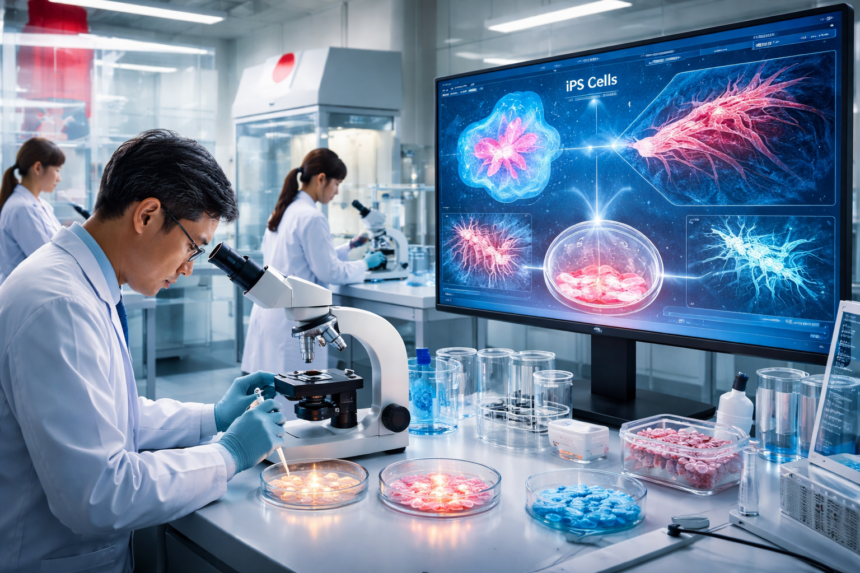
Transforming Medicine with Stem Cell Innovation
Japan is poised to make history in the world of regenerative medicine. In early 2026, a panel of experts convened by Japan’s health ministry gave advisory approval for the world’s first medical products based on induced pluripotent stem (iPS) cells to move toward formal authorization for patient use. These therapies are designed to treat some of the most challenging human diseases from severe heart failure to Parkinson’s disease and represent a milestone in stem cell science that could transform global medicine.
The announcement marks the culmination of decades of scientific research, government policy innovation, and regulatory foresight. Japan’s iPS cell technology pioneered by Nobel laureate Shinya Yamanaka has already reshaped how scientists think about cell biology and regenerative therapies. While clinical and commercial breakthroughs have been years in the making, this latest decision to approve iPS-based therapies for patients indicates that the promise of cell reprogramming is finally beginning to be realized outside of the laboratory.
What Are iPS Cells and Why They Matter
Induced pluripotent stem cells commonly called iPS cells are a type of stem cell created by reprogramming ordinary adult cells (such as skin or blood cells) back into a state with broad potential. In this pluripotent state, iPS cells can give rise to nearly any cell type in the human body, including neurons, heart muscle cells, and blood cells. The ability to generate these cells without using embryos was a breakthrough that won Shinya Yamanaka the Nobel Prize in Physiology or Medicine in 2012.
Unlike traditional stem cell sources such as embryonic stem cells, iPS cells can be derived from the patient himself or herself, which reduces the risk of immune rejection and avoids ethical controversies tied to embryo use. After reprogramming, iPS cells can be coaxed into specialized kinds of cells for research, drug testing, or therapeutic implantation. This provides a powerful platform not only for studying diseases but also for repairing injured or diseased tissues.
Research into iPS cells has spurred a new era of medical science, with applications ranging from modeling genetic diseases to developing personalized drug therapies and, most importantly, cell replacement treatments that repair or regenerate damaged organs.
The Historical Path to Medical Approval
Japan’s journey toward clinical use of iPS cells didn’t happen overnight. It began with fundamental scientific discoveries in the early 2000s, most notably the realization that adult cells could be induced to behave like embryonic stem cells through the introduction of specific transcription factors. This reprogramming revolutionized stem cell biology and laid the groundwork for therapeutic use.
In the years that followed, Japanese scientists, institutions, and government agencies invested heavily in regenerative medicine. Government programs such as the Highway Program for Realization of Regenerative Medicine helped transition iPS cell research from academic discovery to clinical application by supporting preclinical studies and encouraging strategic collaborations.
Clinical trials began to explore the potential for iPS-derived cells to treat diseases ranging from vision loss to neurological disorders. In 2014, a team led by Masayo Takahashi achieved one of the first successful transplants of iPS-derived retinal cells into a person with age-related macular degeneration, showcasing the real therapeutic promise of this technology.
Over time, Japan’s regulatory framework adapted to the unique challenges of cell-based therapies. Regulatory pathways were crafted to balance safety with expedited access, allowing treatments that demonstrate strong safety profiles in early studies to gain conditional approval while additional data is collected. This approach distinguished Japan as a leader in bringing regenerative medicines to patients.
The New iPS Therapies Treating Heart Failure and Parkinson’s Disease
The landmark approvals under consideration involve two groundbreaking therapies developed using iPS cells:
ReHeart, iPS Cell Heart Therapy
One of the approved products, developed by Cuorips Inc., originated from research at the University of Osaka. ReHeart comprises sheets of human heart cells grown from iPS cells that can be applied to damaged regions of the heart. The idea is that these cells boost blood vessel formation and promote organ repair in patients with severe heart failure, particularly those with ischemic cardiomyopathy a condition where parts of the heart become weakened due to loss of blood flow.
Severe heart failure is a leading cause of morbidity and mortality worldwide, and conventional treatments, including medication and surgical interventions, often offer limited improvement once the disease has progressed. By enhancing the heart’s repair mechanisms with cellular therapies, iPS-derived treatments could fill a therapeutic gap that has long challenged cardiologists.
Amchepry, Parkinson’s Disease Cell Therapy
The second therapy, known as Amchepry, was developed by Sumitomo Pharma in collaboration with partners. It targets Parkinson’s disease, a neurodegenerative illness characterized by the progressive loss of dopamine-producing neurons in the brain. Patients with Parkinson’s often suffer from motor dysfunction, tremors, and rigidity.
By generating neurons from iPS cells and using them to replace or support damaged neuronal systems, Amchepry aims to address symptoms at their source by restoring dopamine signaling pathways. While biology is complex and challenges remain, initial regulatory backing reflects confidence in the safety and promise of cell-based regeneration for neurodegenerative conditions.
Both therapies represent the first medical products of their kind to receive approval recommendations anywhere in the world, positioning Japan at the forefront of next-generation medicine.
Beyond Japan, Global iPS Therapy Developments
Japan’s progress in iPS therapies has inspired similar efforts globally. While Japan’s panel approval is the first for iPS-derived therapies, clinical trials and research programs in other countries are advancing rapidly. In the United States, companies and research institutions are investigating iPS-derived cell treatments for conditions such as geographic atrophy of the eye, Parkinson’s disease, and cancer, with early-phase trials underway.
Meanwhile, biotech firms around the world are developing innovative approaches that leverage iPS cells for immune-based therapies, such as off-the-shelf T cells and natural killer cells for cancer treatment, as well as therapies targeting degenerative and rare diseases.
Clinical successes such as transplanting iPS-derived corneal epithelium and promising results in spinal cord injury studies strengthen the case for broader use of cell therapies. In Japan, experiments in spinal cord repair using iPS-derived neural cells have reportedly improved motor function in some patients, further underscoring the clinical potential of these technologies.
Regulatory Innovation and Ethical Considerations
Japan’s regulatory strategy for regenerative medicines reflects a unique balance between innovation and patient protection. The country’s conditional approval pathway allows therapies with solid safety data but limited long-term evidence to enter clinical use while developers continue to collect data under real-world conditions.
This model has accelerated access to promising treatments while maintaining post-marketing oversight. However, it also requires careful management to ensure that early adoption does not outpace scientific validation. Clear guidance and rigorous monitoring remain essential.
Ethically, iPS cell technology resolves major controversies tied to embryonic stem cells by providing a powerful alternative that does not depend on embryo use. By deriving cells from adult tissues, iPS cells sidestep moral debates while expanding the therapeutic possibilities for regenerative medicine.
A Look Forward: The Future of Regenerative Medicine
The approval of iPS cell-based therapies signals a turning point in modern medicine. When these treatments reach patients, they could offer hope to millions suffering from debilitating conditions that currently lack effective cures. Japan’s role as a pioneer in this field demonstrates how scientific excellence paired with thoughtful regulation can accelerate innovation.
As more data emerges from ongoing studies and as additional therapies are developed and tested, the therapeutic landscape will continue to evolve. Researchers are exploring next-generation iPS applications from enhanced immune system therapies to genetically edited cell lines tailored to individual patients that could soon expand the range of treatable conditions.
The world is watching these advancements closely, and Japan’s breakthrough may encourage accelerated regulatory frameworks elsewhere, potentially ushering in a new global era of regenerative medical treatments.
The Promise of Regeneration , It’s needed
How Cell Reprogramming Is Rewriting the Future of Medicine