

How new legal reforms aim to change public accountability forever
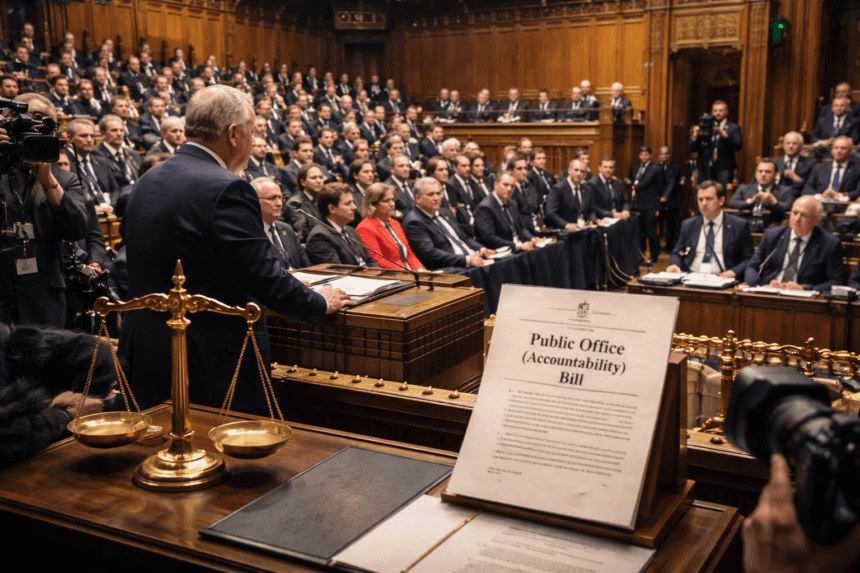
In the United Kingdom right now, a piece of proposed legislation is attracting national attention not just for what it seeks to achieve, but for why it exists. Known unofficially as the Hillsborough Law, the Public Office (Accountability) Bill has been introduced to Parliament and would create a new criminal offence specifically aimed at preventing senior public officials from deliberately misleading the public or withholding critical information. Its supporters describe it as a historic step toward restoring public trust and preventing future cover-ups; its critics raise questions about how it will be applied.
This article unpacks the origins, intentions, controversies, and legal mechanisms of the Hillsborough Law proposal. We also explore broader context from recent UK political debates, historical precedent, and the campaign that has driven this issue into public view.
What Is the Hillsborough Law?
The term Hillsborough Law refers to a proposed component of the Public Office (Accountability) Bill that would impose a legal obligation on public authorities and senior public officials to tell the truth, act transparently, and assist fully with official investigations and inquiries. It stems from long-running calls for public accountability after decades of state failures in several major UK incidents.
At its core, the bill would
Establish a statutory duty of candour, meaning public bodies and officials must act honestly when engaging with official investigations, inquiries, or in public communications.
Introduce a new criminal offence for intentionally misleading the public an offence that could see individuals jailed for up to two years.
Create new criminal offences related to misconduct in public office to replace previous common law versions.
Provide legal aid support for bereaved families in state-related disaster inquests.
Although it is still a bill not law its supporters see it as a potentially transformative approach to public transparency and political accountability at the highest levels.
Why It’s Called the ‘Hillsborough Law
The name Hillsborough Law refers back to the tragic Hillsborough disaster in 1989, when 97 people were crushed to death at a football stadium in Sheffield during an FA Cup semi final. In the decades that followed, families of the victims continued a long campaign for truth and accountability, especially after initial investigations suggested cover-ups and misleading statements by authorities.
That sustained campaign influenced broader debate in the UK about how public authorities respond to major disasters and whether there should be stronger legal responsibilities for transparency when lives and public trust are at stake. The bill’s name reflects that history and the moral force of decades long campaigning by families and activists.
What the Bill Would Change in Practice
Criminalising Intentional Misleading
Under current UK law, there is no specific offence for a senior public official, including a prime minister or cabinet minister, to deliberately mislead the public. The new bill seeks to change that by defining a standalone offence of “misleading the public” if done intentionally and in a “seriously improper” way.
This offence would apply primarily to senior officials: heads of government departments, high ranking civil servants, and other public figures in official capacity. According to campaigners, it could even apply to a serving prime minister a unique legal shift in British politics.
If convicted under this offence, an individual could face up to two years in prison a significant criminal penalty that emphasises the law’s seriousness.
Duty of Candour
The law would also enshrine a duty of candour across many public bodies when responding to official proceedings meaning an obligation to be frank, transparent, and cooperative rather than evasive. This would apply especially during inquiries into disasters, governance failures, or state-related deaths.
Such duties are common in the healthcare sector, but this would extend them more broadly into civil and public service.
Legal Aid for Family Members
One of the bill’s less reported but important features would be to provide non means tested legal aid for bereaved families in inquests where public authorities are parties. This is significant because it levels the legal playing field for families fighting for answers against well-funded government legal teams.
Who Supports It and Why?
Campaign groups, democracy advocates, and many Labour Party politicians back the Hillsborough Law proposal. They argue that
There is a growing deficit of trust between the public and politicians or officials.
Existing legal standards do not sufficiently deter dishonest conduct by those in power.
High-profile public failures from Hillsborough to the Grenfell Tower fire, the contaminated blood scandal, and the Post Office Horizon IT scandal have shown how badly transparency can fail.
Without statutory obligations and criminal penalties, similar cover-ups could happen again in future emergencies.
Campaigners often call it a historic measure the first time UK law would specifically make it a crime for senior officials to lie to the public in the context of their official duties.
Some MPs have also signalled support for broadening the scope of the offence to apply to all MPs including backbenchers rather than only senior ministers and officials.
Controversies and Criticisms
While many back the legislation, there are points of debate and concern:
Who Is Covered?
One of the most debated aspects is that the proposed criminal offence does not currently extend to all members of Parliament. Backbench MPs in both the House of Commons and House of Lords are exempt from the “misleading the public” offence, leading critics to argue that ordinary MPs should be included to ensure complete accountability.
Some lawmakers, especially from Labour, have proposed amendments to bring all MPs under the bill’s scope, but those proposals have not yet been agreed.
Application to Security Services
Another point of contention has been how the bill would interact with the intelligence community and national security particularly whether officials from security services could be held criminally liable under the duty of candour for certain operational information. These concerns have delayed the bill’s parliamentary progress.
Potential Political Backlash
Critics outside the bill’s supporters argue that creating criminal penalties for political speech could open the door to partisan misuse with future governments bringing prosecutions against political rivals. Opponents on social platforms have suggested that such laws might lead to endless investigations, legal battles, and disputes over what counts as “misleading.”
Some commentators also question whether this kind of legal deterrent will genuinely restore trust in politics, or whether it will simply create more legal theatre with limited practical effect.
Historical and Social Context
Understanding why this bill has resonance in British politics requires a look back at several historic events where public trust and state responsibility were at stake:
Hillsborough (1989) and Its Long Tail
The Hillsborough disaster itself was not just a tragedy in the moment it became a symbol of institutional failure. In the aftermath, false narratives were widely circulated that blamed fans for the crush, and authorities delayed full disclosure of the facts. Families of victims spent decades seeking justice, culminating in official apologies and a 2016 conclusion that those who died had been unlawfully killed.
That legacy has shaped how many campaigners think about the obligations of state authorities to be honest even when the truth is uncomfortable.
Other Major Cases: Grenfell, Post Office, and More
Over recent years, high profile inquiries into tragedies such as the Grenfell Tower fire (2017) and the Post Office Horizon scandal (which saw innocent postmasters wrongly prosecuted) have fed public frustration at what many see as systemic failures of institutional transparency and responsibility.
In each of these cases, families and victims’ groups have pushed for stronger legal requirements on public bodies.
What Happens Next in Parliament?
At the time of writing, the Public Office (Accountability) Bill has completed initial stages in the House of Commons but is still being scrutinised. Its planned return to Parliament for the report stage where further amendments may be made has been delayed as government and stakeholders debate how best to address issues such as intelligence agencies’ involvement and the exclusion of backbench MPs from the offence.
Whether the bill will become law unchanged is uncertain, but it remains one of the most significant attempts in recent UK history to reshape how public officials are held accountable for honesty and transparency.
The Broader Implications
If passed in its current or amended form, the Hillsborough Law could have far reaching effects
Redefining the legal landscape for political speech and official communication.
Setting a precedent for legal accountability for state officials beyond electoral consequences.
Potentially influencing public trust in government institutions and political culture.
It also raises important questions about how societies balance free political expression with legal standards for honesty, and how laws can or should respond to historic grievances.
Conclusion, A Turning Point in Public Accountability?
The Hillsborough Law conversation reflects something fundamental in democratic societies, a demand that public officials not only serve in name but uphold standards of integrity and transparency in fact. While the final legal form of the bill remains to be decided, its existence highlights deep public desire for truth in government and accountability for powerful actors.
Whether this proposed law becomes statute or serves as inspiration for future reforms, it is certain to remain a defining issue in the UK’s ongoing debate over political trust and truth-telling in public life.