

The dream of a multipolar economic order meets real world constraints
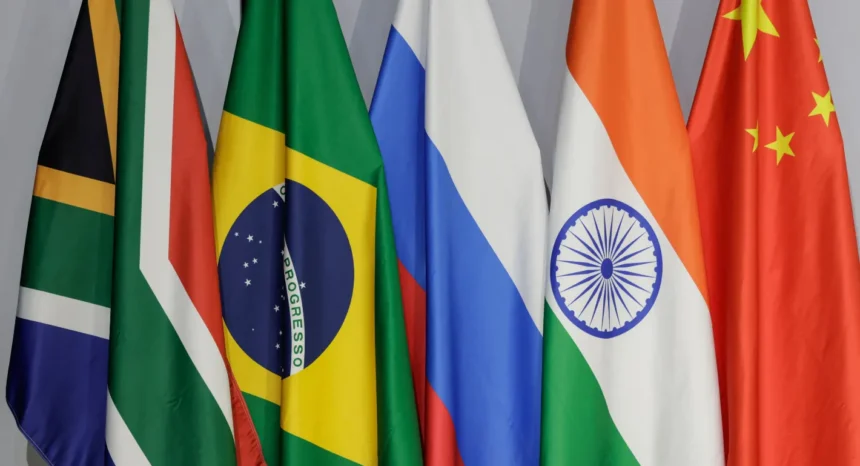
In early 2026, the question on many analysts’ minds was whether BRICS, the economic coalition of Brazil, Russia, India, China and South Africa, is still a viable force attempting to challenge Western economic dominance or if it has quietly lost momentum in that mission. A recent Al Jazeera feature highlighted concerns from economist Jim O’Neill, the person who originally coined the term BRIC over two decades ago, that while the grouping once symbolized a rising alternative to Western-led financial institutions, it may now be losing some of its early purpose.
This article takes a deep dive into what BRICS has achieved, where tensions and contradictions have emerged, why Western dominance remains entrenched, and what the future may hold for this influential bloc of emerging economies.
Origins and Ambitions: BRICS as an Alternative Economic Pole
The BRICS grouping did not start as a formal institution but as an idea. In 2001, economist Jim O’Neill coined the acronym BRIC to describe fast-growing emerging markets with potential to reshape the global economy. Later joined by South Africa, the group officially began meeting in the late 2000s, with the first leaders’ summit held in 2009.
These nations collectively represent a large proportion of the world’s population, vast natural resources, and rapidly expanding economic output. Current data suggests that BRICS and the expanded group sometimes called BRICS+ account for roughly a quarter of global GDP and nearly half of the world’s population. This scale fueled hopes that BRICS could be a serious counterbalance to established Western blocs such as the G7 and institutions like the International Monetary Fund (IMF) and World Bank, which have historically reflected Western priorities in international finance.
BRICS nations have implemented initiatives challenging traditional Western dominance, including the New Development Bank (NDB) and the BRICS Contingent Reserve Arrangement, designed to offer alternative financing and support among member states. They have also voiced concerns about global governance structures and sought greater representation for emerging markets in institutions like the United Nations.
At its peak, the coalition appeared poised not just to work alongside Western powers but to offer genuine alternative structures. Part of this ambition included discussions around reducing reliance on the U.S. dollar as the default global reserve currency and exploring mechanisms for direct currency transactions to avoid Western financial systems. Yet by 2026, that momentum seemed to be stabilizing rather than accelerating.
Internal Divergences and Leadership Absences
One of the persistent challenges for BRICS has been divergent national priorities among members. Brazil, India and South Africa have stronger trade, diplomatic and economic ties with Western nations compared to China and Russia. These differences often translate into competing interests in major geopolitical and economic decisions.
At the 2025 BRICS summit in Rio de Janeiro, these tensions were visible. Leaders from key member nations such as China’s Xi Jinping and Russia’s Vladimir Putin were absent from the summit. Several observers interpreted this as a sign that the alliance’s cohesion was weakening or at least strained. The summit’s declaration managed to condemn rising tariffs in global trade and signal opposition to military expenditure increases without directly naming specific Western nations, reflecting diplomatic balancing acts rather than firm confrontation.
Historic coverage also highlighted how different members prioritize their relations with the West. For example, India’s leadership has publicly stated that it does not intend to replace the U.S. dollar as the global reserve currency, emphasizing stability and long term economic cooperation over direct confrontation. Such positions reflect calculus shaped by domestic development goals and international positioning decisions that complicate the narrative of a unified alternative bloc.
Similarly, expansion of BRICS membership now including countries like Indonesia and United Arab Emirates has diversified the coalition geographically but may also dilute its economic focus. The absence of unified messaging or shared direction on key issues has led some analysts to question whether the bloc still embodies the same ambition it once did.
In contrast, at several summits member states have emphasised cooperation and multilateralism rather than outright rivalry with Western economic structures. This shift underscores a more pragmatic approach focused on incremental gains rather than revolutionary overhaul of existing institutions.
Challenges to Western Economic Dominance
Despite internal frictions, BRICS members still represent a significant economic force. Combined economic data suggests that the group’s output at purchasing power parity surpasses that of the G7 bloc, and its demographic weight is undeniable. However, influence in the global financial architecture particularly in reserve currency status, trade finance, and international institutions remains heavily skewed toward Western powers, especially the United States.
The U.S. dollar’s dominance is deeply entrenched. As of the mid-2020s, it is estimated that the American currency is used in nearly nine out of ten currency transactions globally and remains the principal reserve currency held by central banks around the world. Analysts argue that dethroning the U.S. dollar is not simply a matter of political will but requires alternative financial infrastructures that can match or exceed the dollar in terms of liquidity, stability, and international trust.
Though debates about de-dollarization are ongoing for example, through increased intra-BRICS trade settled in local currencies progress is gradual. China’s renminbi has shown growth in international usage, especially in Asia, but it still lags far behind the dollar or euro in global transactions and foreign exchange reserves.
Moreover, establishing a viable reserve alternative whether as a new BRICS currency or a digital monetary instrument faces hurdles due to divergent economic models and political systems among members. Russia and China have been vocal proponents of de-dollarization, partly driven by sanctions and geopolitical competition, while other members, like India, maintain strong economic orientation toward Western markets and institutions.
The absence of unified vision on this critical issue suggests that BRICS’s ability to directly challenge the Western-led order in the near term may be more limited than some early supporters envisioned.
Strategic Shifts and Evolving Goals
Even as questions arise about BRICS’s coherence, many experts argue that the bloc has not completely abandoned its ambitions but rather is evolving its strategy. Instead of outright confrontation with Western structures, some member countries have pursued parallel approaches that strengthen their economic positions while maintaining engagement with global institutions.
For instance, initiatives to develop alternative payment systems that reduce reliance on the U.S. dollar and SWIFT networks continue to be discussed, though without any immediate rollout of a unified BRICS currency or reserve unit. Enhanced cooperation on infrastructure financing through the New Development Bank, as well as collaborative efforts in technology, energy and trade, demonstrate that BRICS still seeks influence but in a more pragmatic and incremental manner.
The expansion of BRICS membership reflects a vision of a larger coalition of emerging markets that can act collectively on shared interests in areas such as trade reform, climate finance, digital infrastructure and global economic governance. Yet expanding membership also increases the complexity of reaching consensus among a more diverse group of states with varying domestic priorities.
While the BRICS grouping faces questions about its ability to present a unified challenge to Western dominance, its members nonetheless wield significant weight in global affairs. This influence can manifest in different ways through bilateral trade agreements, multilateral development financing, or strategic alignments in geopolitical forums.
The fact that economist Jim O’Neill, who first coined BRIC, now sees the group’s relevance waning highlights just how much the global landscape has changed since the early 2000s. But it also underscores that the development of alternative global power structures is a long term project shaped by shifting economic, political and technological forces.
Conclusion, An Evolving Multipolar World
Has BRICS given up on challenging Western economic dominance? The answer is nuanced. While the bloc may not be dramatically displacing Western powers soon, and internal divisions persist, BRICS has also not dissolved into irrelevance. Instead, it appears to be shifting toward a more pragmatic and institution-focused approach that values incremental cooperation and diversified strategies over direct confrontation.
The dominance of Western economic institutions, particularly the role of the U.S. dollar and Western led financial frameworks such as the IMF and World Bank, remains strong. Yet BRICS countries with their collective share of global population and economic output continue to pursue alternative mechanisms of trade, investment and governance, even if progress is slower and less unified than initially envisioned.
Ultimately, the story of BRICS in 2026 is not a simple tale of victory or defeat. It is a reflection of the complex realities of a multipolar world, where emerging powers balance cooperation with Western institutions while striving to expand their influence in a rapidly changing geopolitical landscape.