
A dive into regulation, responsibility, and the future of AI on social networks
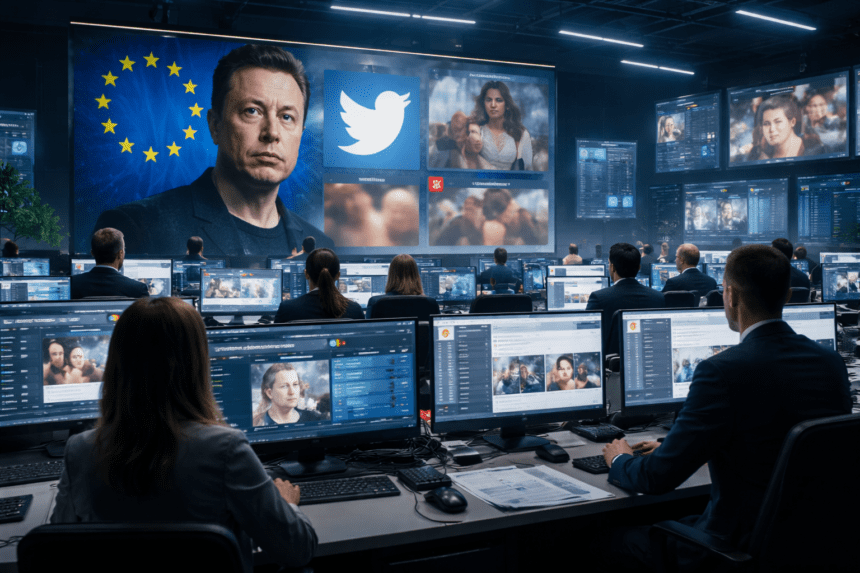
In late 2025 and early 2026, a fresh controversy reignited long running tensions between Silicon Valley style free speech absolutism and European digital regulation. The spark this time was artificial intelligence. More specifically, AI generated nude or sexualised images styled to resemble Elon Musk, circulating widely on X, formerly known as Twitter.
Some of these images were claimed to have been produced or amplified using Grok, the conversational and image capable AI developed by xAI. Almost immediately, regulators within the European Union signalled that X could face penalties or restrictions if such content was not brought under control.
Headlines moved fast and aggressively.
EU threatens to ban Twitter over Grok nude images.
But that framing oversimplifies what is actually happening. This situation is not just about one set of images, one AI model, or even one platform. It is about who holds responsibility when artificial intelligence is embedded directly into social networks, how fast harmful content spreads, and where free speech ends when identity and harm collide.
What actually happened
In the closing months of 2025 and into early 2026, users on X began circulating AI generated images that depicted or strongly resembled Elon Musk in nude or sexualised scenarios. These images spread quickly through reposts, quote posts, and algorithmic recommendations.
Several users claimed that the images were created using Grok, while others suggested that Grok assisted in prompt generation or refinement. Whether Grok directly produced the images or merely contributed to their creation is still debated, but from a regulatory perspective, that distinction matters far less than distribution.
European regulators responded by warning that X could be in breach of EU digital laws if it failed to remove and contain the content rapidly. Statements referenced obligations placed on very large online platforms under EU law, particularly around non consensual sexual imagery and deepfake content.
The resulting media narrative framed the situation as a confrontation between Brussels and Elon Musk, with the suggestion that the EU was once again threatening to ban or restrict X. Yet the deeper issue lies not in personal animosity or political symbolism, but in structural responsibility.
Why the EU response is not really about Twitter alone
The legal pressure facing X is grounded in the Digital Services Act, commonly known as the DSA. This legislation represents one of the most ambitious attempts anywhere in the world to regulate large online platforms at scale.
The DSA does not focus on creativity or artistic expression in isolation. Instead, it emphasises three core ideas.
Platform responsibility rather than AI creativity
Distribution and amplification rather than mere generation
Speed and effectiveness of takedowns rather than ideology
Under the DSA, platforms designated as very large online platforms carry additional obligations. X falls squarely into this category due to its user base and reach. These obligations include preventing the spread of illegal or harmful content, responding rapidly to user reports, and actively reducing systemic risks caused by algorithmic amplification.
Crucially, the EU is not arguing that X invented deepfakes or pioneered AI generated imagery. Nor is it claiming that Grok introduced capabilities that did not previously exist. What regulators are asserting is that X failed, even temporarily, to contain the spread of harmful content at scale.
In other words, the issue is not invention. It is containment.
The double standard question other AI models do the same thing
One of the loudest criticisms raised by free speech advocates and AI developers alike is the apparent double standard. If Grok is under scrutiny, why are other AI systems not facing the same regulatory pressure?
The argument is simple. Models from OpenAI, Stability AI, and Midjourney are all capable of producing similar images in terms of realism and style. Why single out Grok or X?
This criticism has real weight, but only up to a point.
The key difference is not what these models can generate, but where the output appears. Most major AI image generators operate off platform. They are accessed through separate interfaces, often with account gating, moderation layers, and friction before sharing. Users must actively export and post content elsewhere.
Grok, by contrast, is integrated directly into a mass social network. Content generated or assisted by Grok can move from prompt to public timeline in seconds. There is minimal friction, instant audience reach, and algorithmic amplification built in.
From the EU perspective, the concern is reach plus velocity. When an AI tool is embedded inside a platform with hundreds of millions of users, the risk profile changes dramatically. What might be a niche misuse elsewhere becomes a systemic risk when tied to viral distribution mechanics.
Is this really about free speech
The free speech dimension is unavoidable. Elon Musk has repeatedly positioned himself as a defender of expansive free expression, and Grok has been marketed as a less censored alternative to other AI models. This philosophical stance is central to why this controversy resonates far beyond Europe.
The EU position is relatively clear. Free speech does not include the right to distribute non consensual sexual deepfakes. Platforms have a duty to prevent harm regardless of political ideology, corporate ownership, or the identity of the person depicted.
The counterargument from critics is equally forceful. Enforcement can appear selective. High profile figures and powerful platforms attract scrutiny faster than smaller players. There is also concern that broad rules may chill satire, parody, or legitimate artistic expression, particularly when AI is involved.
Both positions can be true at the same time. The current conflict is less about censorship in the traditional sense and more about where responsibility sits when AI, virality, and identity collide at scale.
Why Elon Musk is central but not the legal target
Elon Musk is inseparable from this story for several reasons. He owns X. He publicly champions Grok. He represents a broader cultural pushback against moderation heavy platforms and regulatory oversight.
Yet from a legal standpoint, Musk himself is not the defendant. The platform is.
Regulators are not pursuing an individual for being depicted in AI generated imagery. They are assessing whether X fulfilled its obligations to prevent the rapid spread of harmful content. The identity of the person depicted matters far less than the mechanics of distribution.
That distinction is critical. If similar images had spread involving a private citizen rather than a globally known figure, the regulatory expectations would arguably be even stricter.
The broader precedent being set
This case is likely to influence how AI and social media are regulated for years to come. Three emerging precedents stand out.
First, embedded AI is not treated the same as standalone AI. When artificial intelligence is integrated directly into social platforms, regulators are likely to apply stricter standards due to the amplification effect.
Second, distribution increasingly beats generation in regulatory importance. The EU is signalling that it cares less about who creates content and more about who spreads it at scale.
Third, free speech will be increasingly balanced against identity harm. Deepfakes, impersonation, and sexualised imagery sit at the intersection of expression and personal harm, and regulators are drawing clearer boundaries.
What this means going forward
Despite dramatic headlines, an outright ban of X within the EU remains unlikely. The more realistic outcomes include fines proportional to platform size, mandatory safeguards around AI generated content, slower rollout of Grok features within Europe, and stronger default protections for public figures and private individuals alike.
From a regulatory standpoint, this episode functions as a stress test. It examines whether existing laws can handle the speed and complexity of AI driven platforms without resorting to blunt instruments.
Thoughts
Despite the headlines, this controversy is not really about Grok. It is not really about Elon Musk. It is not even really about Twitter or X alone.
It is about how much responsibility platforms bear for AI amplified harm. It is about whether free speech includes algorithmic virality. And it is about who gets regulated first when artificial intelligence becomes social infrastructure rather than a separate tool.
Other AI models can generate similar images. The difference is that X combines AI capability, massive audience reach, and instant distribution in one place. That combination is what places it under intense scrutiny.
It is also worth noting that the EU has a long running and sometimes adversarial relationship with both X and Elon Musk over free speech and moderation standards. While regulators insist that enforcement is neutral and law based, it would not be surprising if that broader history adds context and pressure to the current response, even as Musk has publicly stated that the issue will be fixed as quickly as possible.
The EU is watching not because this is new, but because it is no longer theoretical.