


Playnance is pitching utility first, liquidity second, and the market is now watching the numbers in real time.
Playnance’s G Coin has entered the market with a very different pitch from the usual token debut.
Instead of asking traders to back a concept with little visible usage, the project is leaning hard on existing activity, staking participation, and public tracker data as proof that demand is already forming. In the seven days ending March 20, G Coin moved from presale traction to open-market trading.
The headline numbers are the reason the launch is getting attention. Ahead of its March 18 token generation event, reports citing Playnance’s public tracker said G Coin already had more than 200,000 holders and an estimated market capitalization of about $38 million. Playnance describes the token as a utility layer for gameplay, rewards, partner revenue distribution, and treasury flows on PlayBlock, which it says offers gasless execution, deterministic settlement, and sub-second finality. That framing matters because the token is not being sold as a blank slate. It is being sold as an asset plugged into a live entertainment and gaming stack that the company says already exists.
That is where the broader thesis gets interesting.
According to exchange-distributed launch coverage cited in the article, the wider Playnance ecosystem already supports more than 10,000 on-chain games, works with more than 30 game studios, and processes roughly 2 million on-chain transactions per day. The article’s argument is simple: the market is not just being asked to value a token, it is being asked to value an existing stream of activity across gaming, prediction markets, and entertainment products. That is a stronger narrative than the classic “token first, utility later” model, but it still needs to survive real market scrutiny now that trading is live.
The first real stress test came through staking. On March 16, Playnance rolled out GCOIN staking on PlayW3, and launch coverage said more than 250 million tokens were locked within hours. Users can stake at least 1,000 GCOIN across lock periods of 6, 9, 12, and 18 months. Rewards start accruing after 24 hours, while early withdrawals are allowed but lose rewards. Playnance also says the reward structure is tied to ecosystem activity rather than fixed token inflation, which is meant to better align participation with actual platform use while also reducing the immediately circulating supply.
Then came the growth figures that turned the launch into something the market could measure in public.
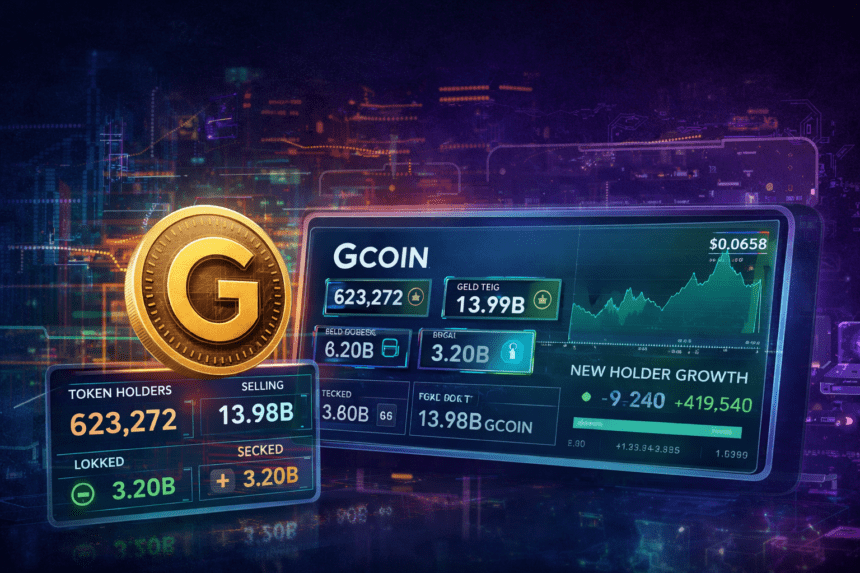
A March 19 report cited in the article said holders had climbed to 623,272, total sold tokens had reached 13.981 billion, and 3.202 billion tokens remained locked. Compared with the 203,732 holders cited in March 18 coverage, that implies roughly 3.1 times holder growth in a little more than a day. Those are eye-catching numbers, and they are exactly why the tracker now matters so much. It has effectively become the public scoreboard for whether Playnance can convert launch-week hype into sustained traction.
That is the real story here. In a market filled with token launches that rely on narrative, Playnance is trying to shift attention toward visible metrics: holders, sold supply, lockups, price, market cap, and growth.That makes the tracker more than a marketing asset. It becomes the place where the market can test whether the project’s claims continue to hold up once launch-week excitement begins to cool.
The bullish case is obvious.
If the usage layer is real, the staking stays sticky, and public growth metrics keep expanding, then G Coin could build a stronger post-launch narrative than many tokens that hit exchanges with little substance behind them. The risk case is obvious too. Early holder growth can look explosive during launch week, but maintaining that momentum is much harder once attention shifts and speculative flows start thinning out.
Thoughts, The takeaway is straightforward. G Coin is not just being judged on price action. It is being judged on whether public numbers keep matching the story. That makes this one of those launches where the dashboard may matter more than the chart. If Playnance can keep proving activity, participation, and lockups in public, the growth story gets stronger. If those numbers stall, the market will notice just as quickly.
This is no longer a presale promise. It is a live test.