


Exploring the future of Ethereum validation and why hardware demands could reshape participation
Ethereum developers are working on a major shift in how the network verifies transactions one that could make it significantly easier for everyday users to participate in validation, but also comes with surprising hardware challenges. At the heart of this change is the transition from re-executing every transaction in a block to using compact execution proofs that validators can quickly verify. This effort is positioned as a foundational improvement to Ethereum’s Layer-1 scalability and decentralisation.
A Quiet but Fundamental Transformation
The Ethereum protocol has historically relied on validators re-executing all transactions in each block to confirm correctness. In the upcoming upgrades, developers are prototyping an alternative path where some validators can simply verify proofs that attest to the correct execution of transactions, instead of re-running the execution logic themselves. This concept is framed in EIP-8025, known as “Optional Execution Proofs,” and is part of a broader roadmap toward a more scalable and efficient network.
EIP-8025 introduces two new modes for validators
Proof-generating validators that produce compact proofs of correct execution, and
Stateless validators that verify those proofs without needing the full execution history.
This approach is expected to reduce the computational burden and allow more validators to participate without running heavyweight execution clients. The proposal remains backward compatible, meaning validators can still operate with traditional re-execution if they choose.
If this model succeeds, it shifts Ethereum’s core validation role from simple settlement and data availability toward high-throughput execution with verification workloads that could be kept light enough for home validators and smaller stakes.
The Hardware Reality A 12 GPU Threshold
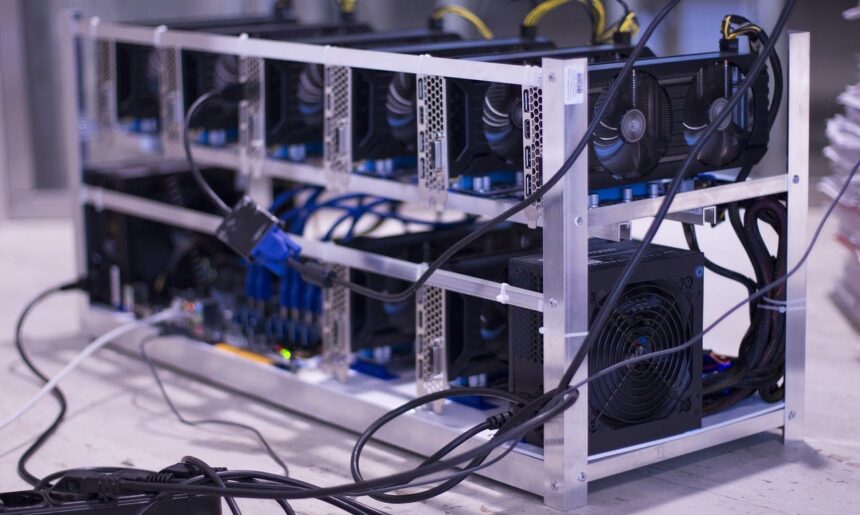
While the idea of proof verification sounds like a win for decentralisation, real-world hardware needs raise a new concern. Recent research and community discussions suggest that generating a proof for a full Ethereum block currently requires a surprisingly high amount of GPU power approximately 12 high-end GPUs running in parallel to achieve an average proving time of about seven seconds.
This hardware threshold roughly a 12 GPU machine could unintentionally centralise proof generation to specialised operators or well-funded mining-style facilities, rather than the everyday “garage staker” with a laptop or modest setup. In other words, Ethereum might trade one form of decentralisation constraint (running a full execution client) for another: the need to access GPU clusters or specialised proving infrastructure.
Developers are aware of this risk and have built mechanisms into the proposal to mitigate potential centralisation. One idea is introducing client diversity and requiring validators to verify multiple independent proofs such as accepting a block only after seeing three out of five distinct proofs from different teams or implementations. This creates redundancy and reduces the chance that a single proving operator can dominate.
However, the hardware demand itself does not disappear. As of early 2026, generating compact proofs fast enough for real-time validation still appears to be a task suited for those with access to powerful discrete GPU setups, not everyday desktops.
Why Proof Verification Matters
Despite the hardware challenge, the move toward proof verification is seen as essential for Ethereum’s long term scalability. Traditional validation requires each node to re-execute every transaction within a block, which means that the cost of validation scales directly with network activity. High gas limits which allow more transactions per block make node operation heavier and discourage smaller validators.
By decoupling verification from full re-execution, Ethereum can target higher throughput without proportionally increasing the cost of running a validator. This could make it easier to raise the gas limit or unlock throughput targets in the thousands of transactions per second something crucial for global adoption. It also aligns with broader efforts to make blockchain participation accessible without specialised hardware.
Furthermore, this proof focused design can benefit Layer-2 rollups scaling solutions built atop Ethereum. If proofs become the standard way of attesting to execution correctness, rollups can use the same infrastructure for interoperability, simplifying how Layer-2 and Layer-1 communicate and settle.
Balancing Decentralisation and Practicality
At its core, Ethereum’s evolving validation model represents a trade-off between decentralisation ideals and practical performance. Today, any individual with enough ETH and computing resources can set up a validator node by running an execution client, a consensus client, and a validator client. This model supports broad participation but limits how much the network can scale without increased computational overhead.
In contrast, proof verification reduces the on-chain work required to confirm blocks, but introduces external pressure on hardware requirements for proof generation. If proof generation becomes concentrated among a few large operators with GPU clusters, the network might still face centralisation risks, albeit in a different layer of the stack.
The Ethereum community’s challenge is finding a balance: making validation both scalable and decentralised, without moving the bottleneck to specialised hardware access. Mechanisms like multi-proof thresholds, client diversity, and open source prover implementations aim to create a competitive and distributed proving ecosystem rather than a single dominant provider.
What’s Next for Ethereum Validators?
Ethereum’s roadmap through 2026 includes more than just proof verification. Optional execution proofs, witness formats, and stateless validation all play into a larger theme of reducing the cost of participation and enabling home validators to remain relevant. However, the pace of adoption and hardware trends will be crucial.
The network is positioning proof-first validation as optional initially, giving the ecosystem time to mature implementations and tooling. Over time, as proof systems become more efficient and hardware requirements fall, these changes could dramatically reshape how validators participate.
Technical benchmarks and community feedback will influence how quickly these models become production ready, and whether hardware demands can be lowered enough to avoid centralisation. For now, the conversation continues among researchers, developers, and the wider validator community all watching how Ethereum’s evolution unfolds