

How builders language and collaboration are shaping the future of intelligence
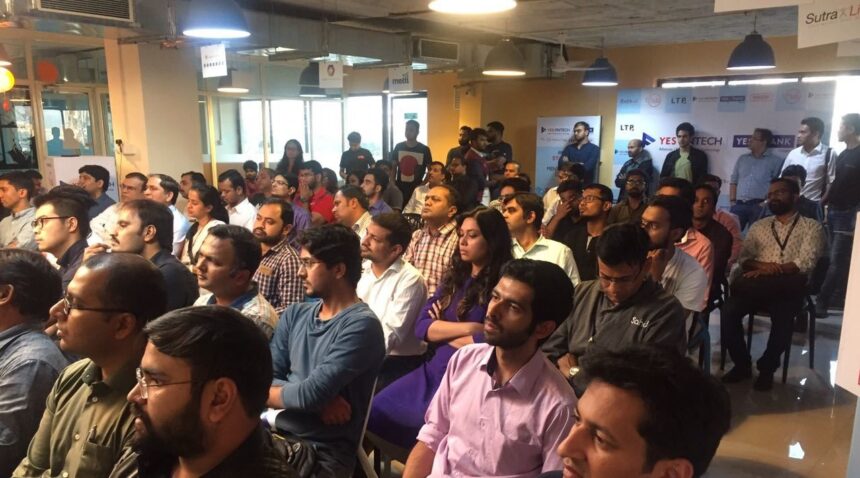
India is quietly but powerfully shaping one of the most important movements in modern technology which is community driven artificial intelligence. Unlike earlier technology waves that were led mainly by large corporations or elite institutions, the current AI surge in India is being built from the ground up by people gathering in shared spaces both online and offline. Developers students founders researchers and self taught builders are forming living networks where learning building and collaboration happen at the same time. This community first approach is changing how AI is understood how it is built and who it is built for.
At the heart of this movement is a strong shift away from passive learning and toward hands on creation. Indian AI communities are no longer satisfied with presentations or surface level experimentation. Instead the focus is now on building working systems that solve real problems. Builders are creating intelligent assistants workflow automation tools language translators and voice driven interfaces that can be tested used and improved in real environments. The culture values speed iteration and usefulness rather than perfection. What matters most is whether something works and whether people can learn from it together.
One of the most distinctive aspects of community AI in India is its strong alignment with real world needs. Many communities are shaped by the realities of scale diversity and access. India has hundreds of millions of digital users across many languages cultures and levels of literacy. As a result community builders naturally gravitate toward solutions that work for multilingual voice based and mobile first environments. This makes Indian AI communities uniquely practical. Projects often focus on speech recognition translation customer support automation and tools that help people access services more easily. These are not abstract experiments but responses to everyday challenges faced by businesses governments and individuals.
Another defining feature is the embrace of open collaboration. Indian AI communities strongly favor sharing knowledge code and learning resources openly. This openness is not driven only by ideology but by practicality. Open collaboration helps people build credibility gain skills and improve employability. Many community projects are developed in public spaces where feedback is immediate and learning is collective. Shared repositories shared datasets and shared evaluation methods are becoming community assets that anyone can contribute to and benefit from. This creates a sense of ownership and belonging that strengthens the ecosystem over time.
Language plays a central role in shaping how AI communities evolve in India. English is widely used among developers but the users of AI tools often speak regional languages. This gap has pushed communities to treat language inclusion as a core design principle rather than an optional feature. Builders regularly experiment with systems that understand and generate multiple Indian languages including mixed language speech that reflects how people actually communicate. Voice interfaces are especially important since they lower barriers for users who may not be comfortable with text based systems. This focus on language makes Indian community AI efforts highly relevant and socially impactful.
Education and skill building are deeply embedded in the community AI landscape. Learning does not happen in isolation or through long formal programs alone. Instead knowledge flows through workshops peer mentoring build sessions and collaborative challenges. Beginners work alongside experienced practitioners and progress quickly by doing rather than watching. This creates fast learning loops and builds confidence. Communities often serve as bridges between informal learning and professional opportunities helping members transition into jobs startups or independent work.
Founders and entrepreneurs are increasingly intertwined with AI communities. Many startup ideas now emerge directly from community build sessions where problems are explored collectively before becoming products. This reduces risk and improves relevance because ideas are validated early by peers and potential users. The result is a prototype driven culture where experimentation is encouraged and failure is treated as learning. Community spaces act as incubators where ideas can grow organically before seeking formal investment or scale.
Another important trend is the blending of national scale initiatives with grassroots participation. Large programs aimed at strengthening AI capacity provide infrastructure training and visibility while communities supply creativity energy and practical execution. This layered ecosystem allows people from different backgrounds to participate meaningfully. Students from smaller cities professionals changing careers and experienced engineers all find entry points into AI through community engagement. Over time this broad participation strengthens both talent supply and innovation quality.
The impact of this community driven approach is already visible in how AI is being adopted across sectors. Customer support automation is one example where community built solutions are finding real use. Builders understand local accents language switching and cultural context which allows them to design systems that perform better in Indian conditions. Similar patterns are emerging in education healthcare logistics and small business tools. Communities act as testing grounds where solutions are refined before reaching wider audiences.
Geography also plays a role in shaping the movement. Major cities remain important hubs but community AI is no longer limited to a few locations. Hybrid events remote collaboration and shared online spaces allow people from many regions to participate. This decentralization brings new perspectives and reduces dependence on a single innovation center. It also increases resilience by distributing knowledge and opportunity more evenly.
Looking ahead the momentum behind community AI in India is likely to accelerate. As tools become more accessible and computing resources more widely available communities will tackle increasingly complex challenges. There is growing interest in building systems that operate reliably in sensitive areas such as finance health and public services. Communities are beginning to focus more on evaluation safety and accountability while maintaining their experimental spirit. This balance between responsibility and creativity will be crucial as AI becomes more deeply embedded in society.
What makes the Indian community AI movement especially powerful is its human foundation. Technology is treated not as an end in itself but as a means to improve lives expand access and create opportunity. Builders learn from one another challenge assumptions and share progress openly. The result is an ecosystem that is not only technically capable but also socially aware. In a world where AI development is often dominated by a few large players India offers a different model one where communities lead and innovation grows from shared effort.