

How Beijing’s latest restrictions on virtual currencies and real world asset tokens are reshaping the future of digital finance
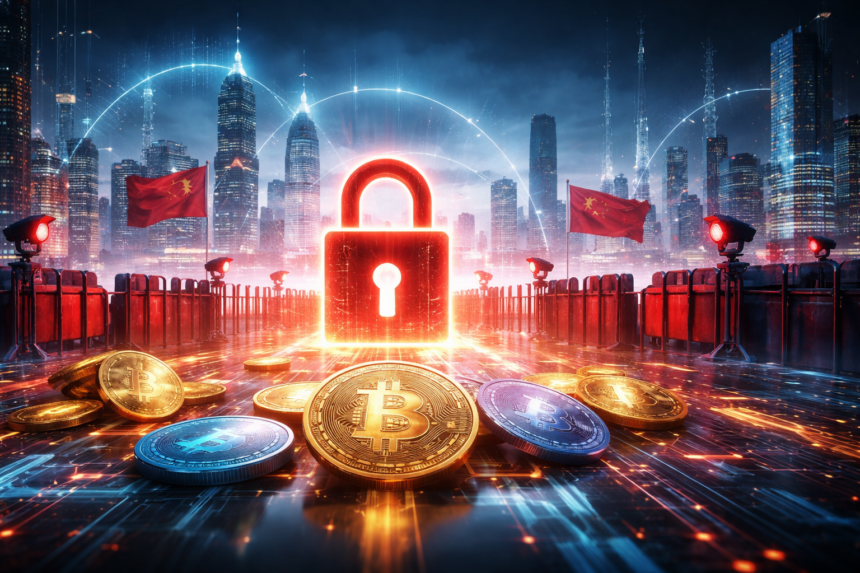
In early February 2026, Chinese regulators issued a powerful new notice tightening rules on cryptocurrency and related digital finance activity. This announcement, which expanded the country’s long-standing ban on virtual currencies, marked a significant escalation in Beijing’s campaign to control crypto markets and clamp down on speculative digital asset activity. The updated policy continues a broad prohibition on most crypto dealings and brings what’s known in the industry as real world asset (RWA) tokenisation squarely into the regulatory spotlight.
What the New Announcement Says
At its core, the latest regulatory notice from China reiterates the government’s hard line stance on cryptocurrencies: they have no legal currency status, and related market activities are deemed illegal financial conduct within the country. Despite the global spread of crypto technology, traditional virtual currencies like Bitcoin and Ethereum remain prohibited from use in China, and authorities are now extending these restrictions even further.
One of the most notable changes in the new framework is the specific inclusion of real world asset tokenisation that is, the process of converting physical or financial assets like real estate, stocks, or commodities into blockchain-based tokens that can be traded digitally. This concept, which has attracted interest in global markets as a way to modernise asset ownership and improve liquidity, is now subject to strict supervision and, in many cases, outright prohibition within China.
Under the updated rules, no entities whether based domestically or offshore but controlled by domestic institutions may issue virtual currencies or engage in RWA tokenisation without prior approval from Chinese regulators. This applies to stablecoins pegged to the yuan and to blockchain tokens backed by onshore assets, closing a regulatory loophole that some firms previously used to partner with overseas exchanges.
Why China Is Taking This Stance
The expanded crackdown reflects broader concerns by Chinese authorities about the financial risks posed by crypto markets. Decentralised digital assets operate outside the traditional banking system, making it difficult for regulators to track capital flows and enforce safeguards against money laundering, fraud and illicit financial behaviour. Chinese state media and official communications have cited these dangers, warning that speculative activity involving crypto and tokenised assets can destabilise economic and financial order.
By clearly defining RWA tokenisation under the same umbrella as virtual currencies, Beijing intends to prevent what regulators see as a new wave of unregulated digital speculation. The government’s position is that virtual assets can be exploited to disguise illegal fundraising, cross-border capital flight, and other financial crimes. Tightening oversight, then, is part of a strategy to maintain control over the financial system and to enforce compliance with China’s existing laws.
Real World Asset Tokenisation: Promise and Peril
Before this new crackdown, RWA tokenisation was gaining traction globally as part of the broader adoption of blockchain in finance. In principle, tokenisation promises to democratise access to traditionally illiquid assets think fractional real estate ownership, digitised bonds or even tokenised art by turning them into blockchain tokens that can be traded 24/7 online. Proponents believe this could increase market efficiency, expand access to capital and lower entry barriers for investors.
Yet this promise comes with real challenges. While tokenisation can theoretically broaden participation and unlock liquidity, actual markets for tokenised assets often suffer from low trading volumes and limited secondary market participation. Lack of regulatory clarity in many jurisdictions has also encouraged speculative behaviour that erodes investor confidence and increases systemic risk.
China’s latest move suggests that regulators are especially wary of these risks. They see unregulated tokenisation as a form of disguised or emerging crypto speculation that could be just as volatile and hazardous as traditional crypto trading. For domestic investors and financial institutions, the message is clear: innovation cannot occur outside the oversight of regulators, and any tokenised asset activity must remain within the bounds of approved and transparent frameworks.
Global Implications of China’s Policy Shift
China’s economic influence means that its regulatory decisions tend to have global repercussions, especially in financial markets and technology sectors. The latest crackdown sends a signal to other governments and regulatory bodies that stricter crypto governance may be on the horizon worldwide. As more countries grapple with how to balance financial innovation against stability and consumer protection, Beijing’s approach could become a reference point for policymakers seeking to avoid the pitfalls of unregulated digital asset markets.
At the same time, there are contrasting developments especially in regions like Hong Kong, which is pursuing licensing schemes for stablecoins and regulated crypto products to position itself as a hub for compliant digital finance. Investors and companies now face the challenge of navigating a fragmented global landscape, where tokenised assets may be welcomed in some jurisdictions and tightly controlled or banned in others.
For international crypto firms, this environment requires careful legal planning and agility. They must ensure that products and platforms comply with local regulations in each market they serve, while also building robust risk management systems capable of withstanding ongoing regulatory evolution.
What This Means for Investors
For both retail and institutional investors, China’s latest policy update highlights the importance of understanding the regulatory environment before engaging in digital assets. China’s insistence on strict compliance and oversight means that unapproved crypto and RWA token activities could carry serious legal repercussions for domestic participants. Investors should prioritise transparency, regulatory alignment and due diligence when evaluating tokenisation or crypto investment opportunities.
Those interested in tokenised assets should also watch how regulators in other major markets including the United States, European Union and Southeast Asian nations develop their own rules. Jurisdictions that offer clear guidelines and legal certainty may attract more talent, capital and innovation in tokenisation, blockchain finance and decentralised technologies.
A Future of Digital Finance Under Governance
The unfolding story of cryptocurrency and RWA regulation in China underscores a broader theme in digital finance: innovation and regulation are intrinsically linked. The rapid growth of blockchain technologies and digital assets offers powerful tools for transforming traditional finance, but without thoughtful governance, these tools also expose markets to speculation and instability.
China’s latest regulatory actions are not just a ban they represent a pivot toward redefining how digital assets fit into the broader financial order. As this new framework takes shape, crypto developers, financial institutions and global investors alike will need to adapt and collaborate with regulators to build a safer and more sustainable digital economy