


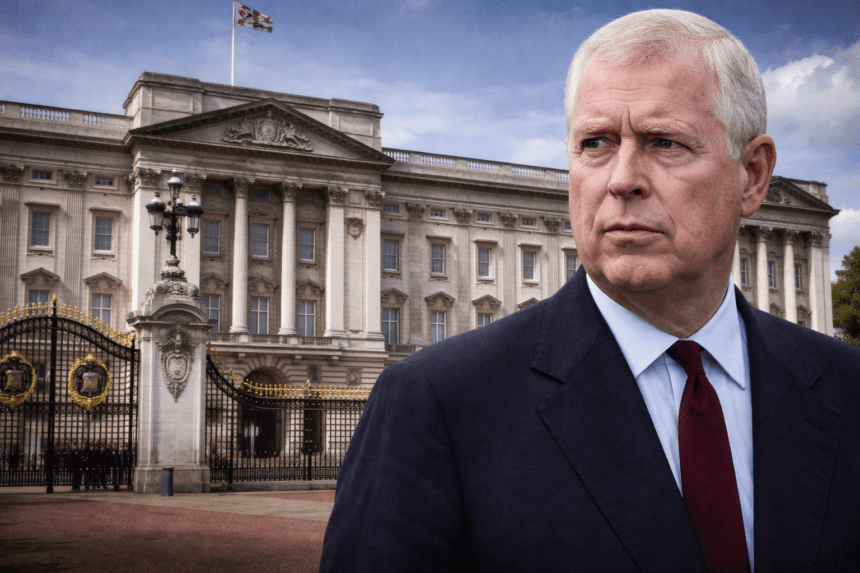
New reports claim the Palace wants Andrew to step aside voluntarily
Prince Andrew’s place in the British line of succession is back under intense scrutiny after fresh reports claimed that Buckingham Palace sent a representative to urge him to remove himself voluntarily. The report, carried by GB News and attributed to royal author Tom Bower, says Andrew was effectively asked to sign away his position rather than force a longer constitutional fight.
The claim has added new fuel to a debate that has been building for months: whether the disgraced royal should remain in the succession at all.
According to the latest public succession information, Andrew Mountbatten-Windsor is currently eighth in line to the throne. The official royal family guidance also makes clear that the line of succession is governed by statute, including the Bill of Rights 1689, the Act of Settlement 1701, and the Succession to the Crown Act 2013. That means removing someone is not just a private family matter or a simple Palace decision.
That is the key point behind the current drama
While GB News and other tabloids frame the situation as a Palace push, the legal reality is more complicated. ABC News Australia recently noted that removing Andrew would likely require legislation across multiple Commonwealth realms, not just action in Westminster, because the rules of succession are shared among the countries that recognise the British monarch as head of state.
That is why the idea of a “voluntary renunciation” is drawing attention. A private step by Andrew could potentially avoid a much messier international legislative process, even if the exact constitutional mechanics remain unclear from public reporting. GB News presents that route as the Palace’s preferred option, describing it as the cleanest solution.
Public sentiment appears to be moving strongly against him. The GB News report cites a YouGov survey showing 82% of Britons believe Andrew is no longer suitable to remain in line to the throne. That level of public hostility is politically significant, especially at a time when the monarchy remains highly sensitive to reputational damage.
What makes this story bigger than just royal gossip is that it sits at the intersection of public legitimacy, constitutional law, and Palace damage control.
The monarchy has already taken major steps to distance itself from Andrew. He is no longer a working royal, and his formal standing inside the institution has been dramatically reduced. But the line of succession is different. It is a legal order, not just a branding exercise.
So the real question is no longer whether Andrew is politically toxic. That much is already obvious.
The real question is whether Buckingham Palace, the UK government, and the Commonwealth realms are willing to undertake the constitutional work required to remove him or whether they are hoping he will do it himself.
For now, the pressure appears to be growing.
But the path from Palace frustration to actual removal is still far from simple.