


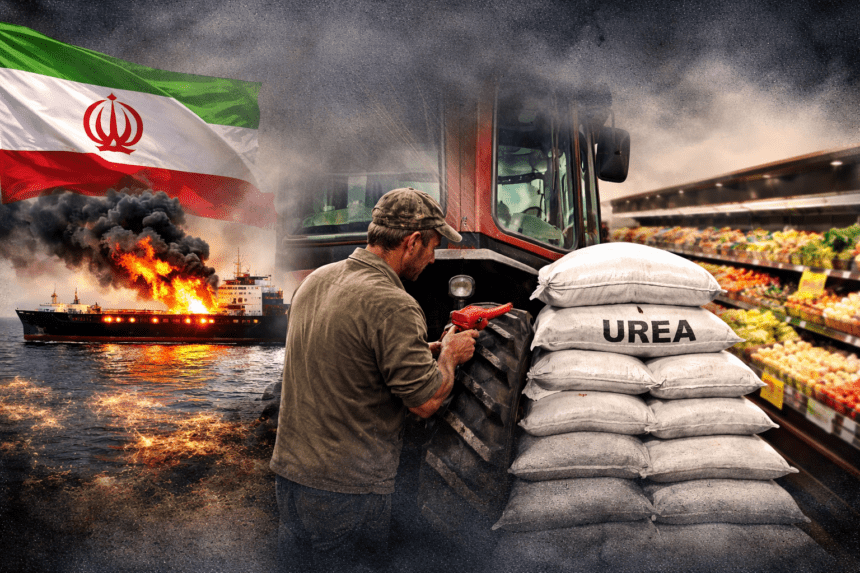
The fuel shock is already hitting farms
Britain may be staring down another cost of living punch, and this one is building fast. The trigger is the war linked disruption around the Strait of Hormuz, one of the world’s most important trade chokepoints. Reuters reports that the conflict has disrupted fertiliser and energy flows, with roughly 30% of globally traded fertiliser moving through the route and urea prices already jumping 30% to 40%.
That is not a distant headline. That is a direct threat to the cost of producing food.
Farms run on diesel, fertiliser, transport and timing. When fuel spikes and crop inputs jump at the same moment, the pressure does not stay on the farm gate for long. AHDB says higher oil prices hit farm businesses directly through fuel, heating oil, transport, plastic wrap and agrochemicals, while also noting anecdotal evidence that red diesel prices are increasing faster than white diesel.
That matters because farmers do not get to stop. Spring work still has to happen. Machinery still has to move. Inputs still have to be bought. If those costs surge during key planting and production windows, the result is simple: margins get crushed, activity gets cut, or costs get pushed further down the chain, and that chain leads straight to consumers.
Reuters says the global fertiliser squeeze is severe enough that experts are warning of reduced crop yields, tighter food supply and a renewed wave of food price inflation if disruption persists. It also notes there are no emergency fertiliser stockpiles comparable to strategic oil reserves, making the system more exposed if the shock drags on. This is why the story matters in Britain even before supermarket prices move. The UK was already not back to normal on inflation. The Office for National Statistics said CPI was 3.0% in the 12 months to January 2026, with CPIH at 3.2%, both still above the Bank of England’s 2% target.
So this is not a fresh shock hitting a stable economy. It is an external price threat landing on top of inflation that was already too high. The energy side is just as dangerous. Reuters reported that the Iran war’s impact on the global energy system has been severe enough to force countries to pay more or cut consumption, with major disruption to flows through Hormuz and broader pressure across oil, gas and fertiliser linked supply chains.That is how a geopolitical crisis turns into a kitchen-table problem.
First comes the energy shock. Then come higher transport costs, pricier fertiliser, tighter farm margins and harder pricing decisions. After that, households feel it in the weekly shop. This is not guaranteed to become a full second inflation wave. But the warning signs are real, and they are already flashing. If disruption in Hormuz drags on, Britain’s next inflation scare may not begin with mortgage rates or tax rises. It may begin with diesel, fertiliser and food, and once it reaches the shelves, households will not care where it started.