

How a bold policy change could reshape the mining landscape
Brazil’s Decision to Cut Import Duty on Mining Hardware
In February 2026 Brazil’s government officially eliminated import tax on Bitcoin mining equipment. Previously, mining hardware such as ASIC rigs faced tariffs that made it more expensive for firms to bring equipment into the country. By reducing the import duty to zero, Brazil has signaled that it wants to attract global mining investment.
Import duty cuts are not uncommon as part of economic development strategies, but applying this tool specifically to cryptocurrency mining is unusual. The decision reflects Brazil’s recognition of miners as technology investors that bring capital, jobs, technical expertise, and associated economic activity.
The government’s policy statement emphasized that lowering import costs would encourage miners to establish facilities in Brazil rather than in traditional hubs such as the United States, Canada, Kazakhstan, or parts of Scandinavia. Some Brazilian officials see Bitcoin mining as a new form of high tech manufacturing, one that can take advantage of Brazil’s large renewable energy base.
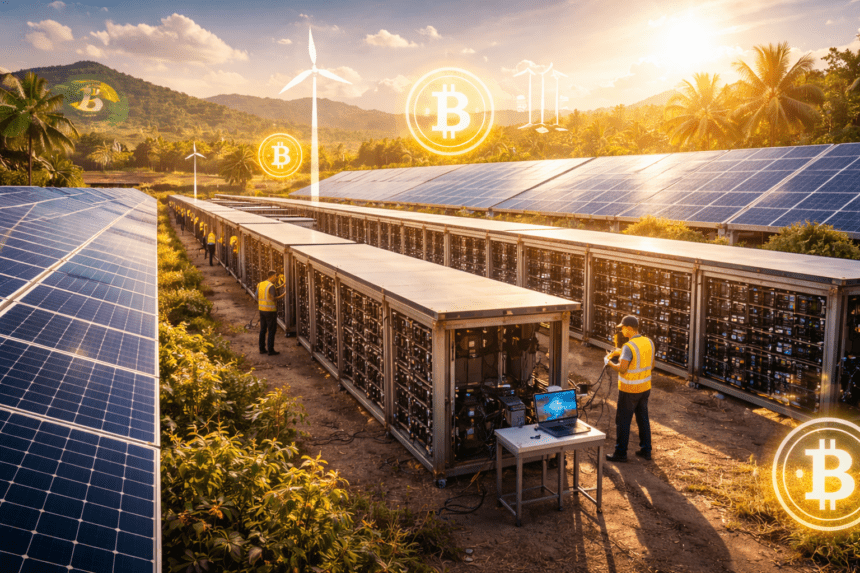
According to the CryptoSlate article, companies may now take advantage of stranded solar power electricity that would otherwise go unused by plugging mining operations directly into those sites. This could reduce energy waste, increase grid flexibility, and support local economies.
Why the Policy Matters to the Global Mining Industry
A geography driven by favorable energy costs has historically determined where Bitcoin mining takes place. After the 2021 crackdown on crypto mining in China, miners flocked to North America, Central Asia, and Europe. Many regions with cheap or surplus energy became magnets for large mining farms.
Energy availability and price remain critical factors because mining consumes large amounts of electricity. Mining machines solve cryptographic puzzles that validate transactions and secure blockchains. The more hash power a miner controls, the higher the chance it will earn Bitcoin rewards. But increased power means increased cost.
Brazil’s import duty cut makes it significantly cheaper for mining firms to establish operations there. When combined with solar and wind energy, this creates a highly attractive cost structure. Miners can import hardware at a fraction of the cost compared to markets with high tariffs and then operate using domestic renewable energy.
Brazil also offers abundant hydroelectric power in certain regions. However, hydroelectric generation can fluctuate seasonally and can be tied to agricultural water use. Solar power, especially in the country’s interior, provides predictable, stranded or excess energy that mining firms could tap directly.
The policy thus positions Brazil as a competitive alternative to mining markets in the United States and Canada, where energy prices and regulatory costs can be higher. It also gives miners a base close to key financial centers in North and South America.
Stranded Solar Energy and Mining Synergy
One of the most novel aspects of Brazil’s move is the government’s encouragement of mining operations connected to stranded solar energy. Stranded energy refers to electricity generation capacity that exists but cannot be fully utilized because of grid limitations, lack of nearby industry demand, or seasonal fluctuations.
In many remote areas, renewable energy developers build solar farms to contribute to peak demand, but during off peak hours the energy goes unused because it cannot be economically transmitted to major population centers. For example, Brazil’s northeast and interior regions have significant solar potential but limited transmission infrastructure.
Bitcoin mining operations can serve as flexible, mobile loads that absorb energy when other demands are low. This improves utilization of solar generation assets, increases revenue for solar producers, and reduces the need for grid curtailment. Instead of energy being wasted, it is used to power ASIC equipment that helps secure the Bitcoin network.
In economic terms this synergy can improve returns on investment for renewable developers. Solar farms typically rely on power purchase agreements with utilities or industrial users. When demand is low, they may lose revenue. By pairing mining load behind the meter or near production sites, mining can act as a flexible buyer that increases utilization.
This model is already being tested in parts of the world such as the United States, where miners partner with renewable developers. Brazil’s formal recognition and policy encouragement of this synergy could accelerate adoption.
Energy and Environmental Considerations
Bitcoin mining has faced scrutiny over its energy consumption and environmental impact. Critics argue that mining contributes to high carbon emissions, especially in regions dependent on fossil fuels. Supporters counter that miners can use renewable energy and act as demand response loads that support grid stability.
Brazil’s move directly addresses environmental concerns. By reducing import barriers and encouraging use of stranded solar, the government effectively funnels mining demand into renewable sources rather than fossil fuel based grids. If implemented at scale, this model could set a precedent for “green mining” that aligns economic incentives with climate goals.
Still, energy usage remains large. A solar paired mining operation depends on local generation capacity, storage infrastructure, and transmission. Brazil’s grid and regulatory environment will need to support these developments. Additionally, critics point out that simply moving mining to a region with renewable energy does not inherently reduce global emissions unless the energy would otherwise go unused.
To maximize environmental benefit, Brazil may need to refine policies that encourage behind the meter connections and direct use of renewable energy without increasing total carbon footprint.
Economic and Job Creation Potential
Lowering import duties on mining equipment is expected to attract foreign direct investment. When mining companies build facilities they bring capital expenditure on infrastructure, land lease agreements, local partnerships, and jobs for technicians, engineers and support staff.
Mining operations require technical expertise and ongoing maintenance. This demand could spur education and training programs in Brazil focused on blockchain technology, network security, power systems engineering, and data center operations. Universities and technical institutes may partner with industry players to develop talent pipelines.
Local businesses could also benefit. Construction firms, logistics companies, and service providers stand to gain contracts related to building and operating mining farms. This could help communities in regions where traditional industries are not as strong.
However, critics caution that mining is not a labor intensive industry compared to manufacturing or services. While it does create jobs, its primary value may lie in capital investment and tax revenues rather than large scale employment. Policy makers may therefore need to balance expectations about economic impact.
Regulatory and Legislative Context in Brazil
Brazil has been evolving its stance on cryptocurrency and blockchain technology over recent years. Unlike some jurisdictions that have sought to restrict crypto activity, Brazil has taken a relatively open approach. The country’s financial authorities have issued guidance on crypto exchange operations and tax treatment, and Brazilian banks have increasingly integrated digital asset services.
The decision to cut import duty on mining equipment fits within this broader trend of welcoming crypto innovation. However, mining still sits at the intersection of energy policy and financial regulation. Brazil’s government will need to coordinate among ministries of finance, energy, and technology to ensure coherent policy implementation.
Tax incentives are powerful tools but may require sunset clauses or performance conditions to ensure that investments deliver long term benefits. Additionally, policies that support grid upgrades could enhance the utility of stranded energy projects and ensure reliability for communities near mining operations.
Clear regulatory frameworks are also necessary for institutional investors interested in mining infrastructure. Brazil’s openness to discussion with global stakeholders could help attract the kind of large scale participation that moves the needle on global mining capacity.
Comparisons with Other Global Mining Destinations
Bitcoin mining is a global industry shaped by energy costs, infrastructure, regulatory clarity, and geopolitical risk. North America, particularly the United States and Canada, has emerged as a dominant mining region due to abundant energy, investment capital, and stable regulatory environments.
In the U S states such as Texas and Kentucky have become hotbeds of mining because of cheap energy and supportive policies. Canada’s Quebec province has also attracted miners due to hydroelectric availability. In contrast, regions like Kazakhstan have seen rapid growth but also faced regulatory crackdowns.
Brazil’s entry into this competitive landscape adds a new dimension. Its vast renewable resources including solar, wind, and hydroelectric give it an edge over regions reliant on fossil fuels. By eliminating import duties, Brazil reduces the cost barrier for entry.
At the same time, mining companies must consider risk factors such as political stability, currency fluctuation, local grid reliability, and logistical challenges. Brazil’s economy, while large and diversified, can be susceptible to inflation and regulatory adjustments that impact business planning.
Miners considering Brazil must weigh these factors against the potential for low energy costs and favorable policy support.
Environmental Advocacy and Skepticism
While renewable energy paired mining is appealing to environmental advocates, some remain skeptical. They argue that even renewable mining requires significant infrastructure that can alter ecosystems or divert resources from other uses.
For example, building solar farms in fragile ecosystems may require land use changes that impact biodiversity. Mining operations often require water and cooling infrastructure that could strain local resources.
Brazil’s Amazon region and interior landscapes contain diverse environmental conditions. Policy makers will need to ensure that mining paired with renewables balances economic incentives with environmental protection.
Environmental NGOs have suggested that mining companies commit to robust sustainability reporting, community engagement, and impact assessments before establishing operations. These measures help build trust and mitigate potential ecological harm.
Future Outlook and Long Term Impacts
Brazil’s import duty cut on mining equipment is a bold policy move that could reshape the global mining map. If mining companies invest in solar paired operations, the industry could evolve toward more sustainable practices that integrate energy usage with environmental considerations.
The true measure of success will be how effectively Brazil attracts investment and balances economic, environmental and regulatory goals. If the country becomes a major mining hub, it may inspire other nations with renewable energy potential to adopt similar policies.
Bitcoin itself will benefit from a broader distribution of mining infrastructure. A more geographically diverse mining network strengthens resiliency and reduces concentration risk. Brazil’s participation enhances global decentralization.
At the same time, industry watchers will monitor price movements, energy markets, and technological innovation that could influence mining profitability. Advances in ASIC efficiency, energy storage, and grid integration technology may further impact where mining thrives.
Ultimately the intersection of renewable energy and Bitcoin mining reflects larger shifts in how digital infrastructure coexists with physical energy systems. Brazil’s policies put the country at the center of this evolving landscape.
Conclusion, Brazil’s decision to cut import duty on Bitcoin mining equipment to zero and encourage the use of stranded solar energy is a strategic policy move with far reaching implications. It positions the country as a potential leader in renewable powered mining, attracts foreign investment, and opens up economic opportunities for local communities.
The synergy between renewable energy and mining could reduce waste, improve grid efficiency, and set a precedent for sustainable mining practices. At the same time policy makers must navigate environmental concerns, regulatory coordination, grid infrastructure, and economic expectations.
As miners evaluate new destinations for operations, Brazil’s offering may become increasingly attractive. Whether this leads to a significant shift in global mining distribution remains to be seen. But the combination of favorable policy, abundant renewable resources, and strong economic incentives gives Brazil a compelling story in the future of Bitcoin mining.