

Bitcoin, the world’s most prominent cryptocurrency, has had a wild ride since its inception in 2009. For years, Bitcoin’s price action was defined by dramatic cycles of explosive rallies followed by painful drawdowns. Those cycles were driven by a love-hate relationship between retail investors and speculative fervor, punctuated by technological milestones and global macro events. However, as 2026 begins, a striking new paradigm is unfolding a more muted, sideways market regime in which Bitcoin’s price momentum appears paused and institutional dynamics play an outsized role.
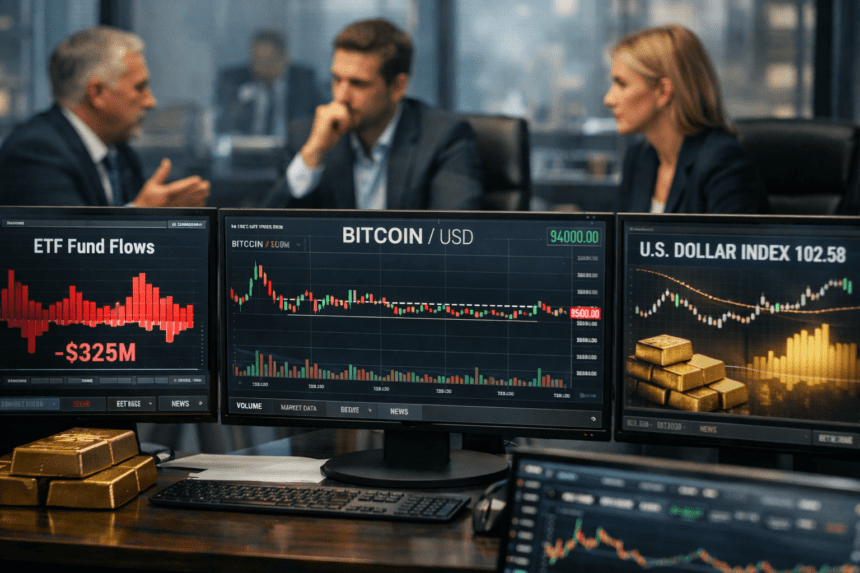
Recently, Bitcoin’s exchange-traded funds (ETFs), once a source of fresh capital and upward price pressure, have reported significant outflows. In just a few days, over $1 billion in institutional capital left Bitcoin ETF products, highlighting a broader shift in market dynamics and demand signals. This development, and Bitcoin’s steady but unimpressive price behavior, are being interpreted by analysts and market participants as the start of what many are calling a “boring sideways era.”
In the first two trading days of 2026, Bitcoin ETFs had enjoyed around $1.2 billion in initial inflows, signaling renewed interest at the beginning of the year. Yet, that momentum reversed sharply, with sustained outflows across multiple sessions. The three-day streak of institutional redemptions not only erased much of the early positive flow but also showcased how sensitive the market has become to fund flows rather than purely on-chain activity.
Ethereum, XRP, and other major cryptocurrencies have also felt the drag of declining ETF demand, reinforcing that Bitcoin’s price action now reverberates across the broader crypto ecosystem. The shift represents more than just a matter of capital allocation it reflects how deeply intertwined digital assets have become with traditional finance and macro sentiment.
Institutional Flows: The New Primary Price Driver: In previous cycles, Bitcoin’s price surges were fueled largely by retail enthusiasm, media narratives, FOMO (“fear of missing out”), halving events, and increased on-chain activity. However, as the crypto market matured especially following the introduction of U.S. spot Bitcoin ETFs institutional capital flows have emerged as the primary driver of price direction. According to recent analysis, Bitcoin’s price is now more tethered to ETF demand signals than ever before.
The reason is straightforward: ETFs offer regulated exposure to Bitcoin for large financial institutions, pension funds, and wealth managers who may otherwise be reluctant to hold Bitcoin directly. When these instruments see inflows, they represent not just buying pressure but broader confidence in the asset’s risk-return profile. Conversely, outflows can signal reallocation or de risking behavior from institutional portfolios.
In early January 2026, the abrupt shift from strong inflows to rapid outflows underscored just how quickly sentiment can turn. The net result has been a market environment where the price consolidates within a narrow range roughly between $85,000 and $94,000—rather than breaking out to new highs or plunging in dramatic fashion.
Technical traders have taken note. A protracted period of consolidation often reflects equilibrium between buyers and sellers, where neither bullish nor bearish forces dominate. For Bitcoin, this has translated into range-bound trading, with the price oscillating near key psychological levels. Breaking out of this range either above resistance or below support could set the tone for the next major move.
The Macro and On-Chain Picture
Beyond ETF flows, Bitcoin’s broader market context adds nuance to the sideways narrative. According to on-chain analytics, demand metrics have slipped into negative territory over recent weeks, indicating that fresh capital is not absorbing new supply at previous rates. Essentially, while the market remains active, real accumulation has slowed.
At the same time, macroeconomic forces are shaping investor behavior across asset classes. The U.S. dollar, traditional safe haven assets like gold, and rate expectations provide important backdrops for digital assets. For example, gold has experienced a notable rally, drawing interest from investors seeking store-of-value alternatives during periods of dollar strength. Such macro forces can divert capital away from risk-sensitive assets like Bitcoin, contributing to its muted price action.
Critically, Bitcoin’s price is not falling off a cliff it’s simply not advancing quickly. This contrasts sharply with the hyper-momentum phases seen in earlier cycles, where Bitcoin briefly surged to and above record highs. Instead, the market seems to be in a liquidity reset, digesting gains while institutions reassess risk exposure.
Some on-chain metrics still point to resilience. Long-term holders entities that have held Bitcoin for years rather than months continue to hold significant positions. Their reluctance to sell en masse provides a floor under price declines and suggests that confidence in Bitcoin’s long-term trajectory remains intact, even if short-term speculation cools.
Is “Sideways” a Bad Thing? Not Necessarily, To a casual observer, a sideways market might sound dull or disappointing—especially for traders hoping for explosive gains. Yet for many sophisticated investors, periods of consolidation are healthy and sometimes necessary. Sideways markets allow:
Profit rebalancing: Long-term holders can adjust positions without triggering panic selling.
Capital rotation: Traders and funds can diversify into other assets, reducing systemic risk in crypto.
Technical reset: Chart patterns and indicators recalibrate, making future breakouts potentially more sustainable.
Range-bound phases can also smooth out extreme volatility, creating an environment where strategic dollar-cost averaging and measured accumulation strategies make more sense than frantic trading.
From a psychological perspective, Bitcoin’s sideways era also marks a shift toward maturity. Instead of emotion-driven price swings, market behavior reflects nuanced decision-making influenced by institutional strategy, macro conditions, and long-term investor positioning.
Importantly, sideways action often precedes decisive moves. Historical market cycles across asset classes show that stretches of consolidation can serve as launching pads for future trends. Bitcoin is no exception. The current equilibrium between bulls and bears could give way to a breakout either to the upside or downside once catalyst events or a shift in institutional sentiment occur.
Looking Ahead: What Could Break the Stalemate?
Several factors may determine the next chapter of Bitcoin’s trajectory:
Macro catalysts: Central bank policies, inflation data, and geopolitical tensions influence risk assets. A shift toward easing could boost investor appetite for Bitcoin once again.
ETF flows: Renewed institutional interest either through a reversal of outflows or new product innovations could reignite upward momentum.
Technicals and sentiment: A decisive move above resistance levels (or below support) would change trader psychology and attract fresh participation.
Global adoption narratives: Regulatory clarity or broader corporate adoption could provide real fundamental tailwinds.
A combination of these elements could finally push Bitcoin out of its sideways coil. Conversely, absent fresh demand, the market may remain range-bound for an extended period reinforcing the “boring” label.
Conclusion: An Era of Stability, Maturity, and Strategic Positioning
Bitcoin’s new phase marked by ETF outflows, muted price action, and institutional dominance reflects both a maturation of the market and a recalibration of investor expectations. While many early adopters thrived during periods of volatility and parabolic price moves, the current environment demands patience, strategic thinking, and greater emphasis on long-term fundamentals.
The “boring sideways era” is less about stagnation and more about equilibrium. It is a time when capital reallocates, narratives evolve, and Bitcoin transitions from speculative curiosity to a financial instrument shaped by serious market mechanics. Whether this period marks just a pause or the prelude to something bigger, only time will tell. For now, the market watches, waits, and trades within the lines anticipating the next breakout.