


A bold push to unlock domestic oil and gas resources to strengthen energy security jobs and regional growth
Australia has a long history as a producer of energy resources. For decades offshore fields and established basins have supplied much of the oil and gas that powers homes and industry. But in 2026 a significant development is unfolding in Queensland that could transform Australia’s energy landscape again. After millions of years underground and half a century without a major new oil province, the state government has opened up the Taroom Trough near the town of Miles for exploration rights that could lead to the country’s next big discovery.
This new energy frontier is not just about fuel. It reflects broader national conversations about energy security prices jobs environmental responsibility and the future of Australian resource development. It also places Queensland in the spotlight as a potential centre of onshore oil and gas growth that could reshape domestic supply and regional economies.
An Emerging Oil and Gas Province
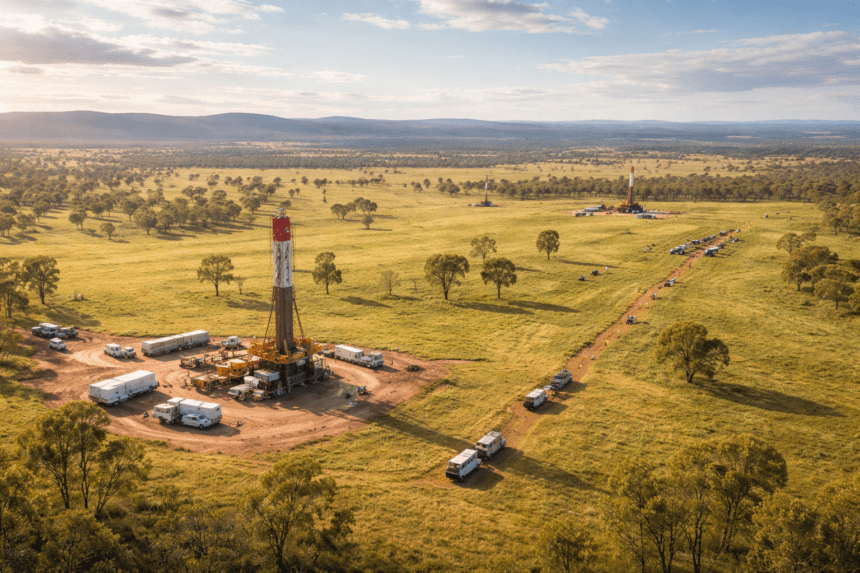
The Queensland government has awarded exploration rights to three companies to drill for oil and gas across a vast tract of land in the Taroom Trough. The area spans roughly 750 square kilometres an expanse about the same size as the nation state of Singapore.
The governments decision places the Taroom Trough on a path to become Australia’s first major new oil province in around 50 years. Historically Australia has produced oil from fields such as the Bass Strait offshore basin and has been a leading exporter of liquified natural gas. But new onshore discoveries of this scale have been rare since exploration slowed in the later decades of the 20th century.
State Minister for Natural Resources and Mines Dale Last described the move as a critical step to boost energy supplies within Queensland and across Australia. His view is that unlocking these resources can increase domestic supply reduce energy prices and support local industry and jobs.
The companies awarded exploration rights include Omega TN Pty Ltd, Tri Star Stonecroft Pty Ltd and Drillsearch Energy Pty Ltd. These firms now have the opportunity to conduct geological surveys exploratory drilling and ultimately determine whether commercially viable oil and gas resources exist beneath the ground in this region.
Why the Taroom Trough Matters
Queensland’s Taroom Trough has become a focus because of its promising geology and recent drilling successes in nearby parts of the basin. Industry observers and analysts say there are structural similarities between this region and productive hydrocarbon basins around the world. Some of the factors that contribute to its potential include:
Geological Promise
The Taroom Trough lies within a sedimentary basin with geological formations that may have accumulated large volumes of oil and gas over millions of years. Previous drilling results in proximity to the trough have shown oil flows and gas bearing reservoirs that suggest a significant subsurface system may be present.
Emerging Data and Technology
Advances in seismic imaging drilling technology and reservoir modeling have improved the ability of explorers to target prospective zones more accurately. This reduces some of the uncertainty that traditionally comes with onshore exploration projects. Industry studies have suggested the geology in the Taroom Trough may be comparable to productive unconventional basins overseas making it a compelling location for new exploration.
Domestic Energy Security
One of the key reasons the government emphasises the development of this region is energy security. Any gas discoveries would be subject to the Australian Market Supply Condition, meaning producers would be required to supply gas first to Australian homes businesses and industries before export. For many Australians this is a central concern because gas and electricity prices influence costs of living and business operations.
Jobs and Regional Development
Developing a new energy province also has potential economic benefits for rural and regional communities. Exploration programs create jobs. If production ever reaches commercial scale it could support long term employment in drilling operations processing supply services and transportation infrastructure.
Local leaders have spoken about how investment in the Taroom Trough could stimulate economic growth in southwest Queensland where agriculture and small business are key parts of the regional economy.
A Step in a Changing Energy Landscape
The decision to open up the Taroom Trough comes at a time when Australia is balancing multiple priorities: meeting climate goals supporting renewable energy growth and maintaining reliable affordable energy supplies.
Energy Prices and Supply Challenges
Australia, particularly the eastern states, has faced volatility in energy markets as global supply dynamics shift and domestic production contracts. Natural gas plays a central role in electricity generation industrial heating and transport fuels. When supply tightens spot prices can spike which directly affects household bills and business costs.
Developing new gas and potentially oil resources could help alleviate some of these pressures by adding supply options within the domestic market. The government has framed its policy in part as a way to help put downward pressure on energy prices for consumers and industry.
The Renewables Transition and Climate Commitments
At the same time environmental groups and climate advocates have raised concerns. Some argue expanding oil and gas exploration is at odds with Australia’s emissions reduction targets and the broader global push to transition to clean energy sources. They worry that new fossil fuel development could lock in emissions infrastructure at a time when decarbonisation is urgent.
Conservation groups have highlighted potential impacts on groundwater quality ecosystems and prime agricultural land, urging governments to prioritise renewable energy and future oriented sectors like hydrogen production and battery storage.
Balancing Risks and Rewards
The state government and industry bodies argue that Australia will need fossil fuels for some years to come even as renewable energy grows. They claim a balanced energy portfolio including gas and oil can provide reliable baseload supply while renewables scale up. Gas in particular is seen as a transition fuel because it emits less carbon when burned compared to coal and oil.
Critics say long term climate commitments should reduce reliance on new fossil fuel projects and instead focus investments on clean technologies and energy efficiency. This debate reflects challenges governments face worldwide: how to ensure secure affordable energy while tackling climate change and environmental protection.
What Could Happen Next
The mere award of exploration rights does not guarantee oil or gas will be found. Exploration is a costly uncertain process. Each well can cost millions of dollars and there is no guarantee of economically recoverable resources.
Pilot drilling programs will likely begin in the coming years pending permits and environmental approvals. Explorers will combine seismic data rock samples and test drilling to evaluate the best locations for wells and to estimate how much resource might be present.
If significant oil or gas deposits are confirmed, companies may proceed to appraisal drilling to define the size and characteristics of the potential field. Only after that comes decisions about production infrastructure pipelines and facilities needed to bring the resource to the market.
For the local communities near the Taroom Trough this could mean years of exploration activity followed by development projects that reshape the local economy. The pace and scale of these changes will depend on results from early drilling and commercial assessments by the energy companies involved.
A New Chapter for Australian Energy
The opening up of the Taroom Trough for oil and gas exploration is much more than a map change on an industry brochure. It represents a strategic pivot towards domestic resource development at a time of shifting global markets and national energy needs.
If the region lives up to its promise it could redefine Australia’s place as an energy producer onshore as well as offshore. It could also shape discussions about regional economic futures climate goals and how Australia balances old and new energy sources in the decades ahead.
This is a story that will unfold over many years and will be watched not just by energy investors but by ordinary Australians who see energy policy influencing their bills jobs and environment.