
YouTube believes its biggest stars will stay on the platform, but the bigger story is that the creator economy is now strong enough to rival television without becoming it
When YouTube’s chief executive said the best YouTubers will “never leave their home,” the comment sounded deliberately provocative. Taken literally, it is easy to mock. Plenty of creators already travel, build production teams, shoot on location, sign external deals, and increasingly behave like media businesses rather than solo uploaders. But the point behind the remark is more serious than the phrasing. In the original interview summary, the argument was not that creators will never do anything beyond YouTube. It was that the biggest creators still understand YouTube as their long term home, even when other platforms try to lure them away. The CEO said he had not seen major YouTubers completely yank their content off the platform and argued they ultimately know YouTube is the right place for them over the long run.
That matters because it says something deeper about the current creator economy. A few years ago, the dream for many online creators was still to “graduate” into older media structures. The prestige ladder ran from internet popularity to streaming deal to television legitimacy to something resembling mainstream cultural permanence. The YouTube line now suggests a reversal of that status logic. Instead of treating the platform as a stepping stone, YouTube wants creators to view it as the primary base from which everything else radiates. In that model, Netflix, podcast networks, live shows, merch, and brand deals are side expansions. The home remains the channel.
Why YouTube sounds so confident right now
That confidence is not coming from thin air. YouTube is leaning on a very large and increasingly measurable position in media. In the company’s own 2026 outlook letter, it said creators, artists, and media companies had been paid more than $100 billion over the past four years and that the YouTube ecosystem in the United States contributed $55 billion to GDP and supported more than 490,000 full time jobs in 2024. Those are not just vanity numbers. They are the kind of figures a platform uses when it wants to tell governments, advertisers, and creators that it is not merely a website but a serious economic system.
Audience habits are moving in the same direction. Nielsen’s January 2026 Gauge data shows YouTube sitting inside the monthly U.S. TV viewing landscape rather than outside it, which is important because it reinforces the idea that YouTube is now part of the living room battle, not just the phone screen battle. Separate reporting last year already showed YouTube saying TV had surpassed mobile as its primary viewing device in the U.S. by watch time. That trend helps explain why YouTube no longer sounds defensive when compared with television or premium streaming. It increasingly sees itself as television, just built on creator terms instead of network terms.
There is another audience shift reinforcing this. Edison Research’s 2026 Infinite Dial shows YouTube defying category boundaries, with 78 percent of Americans age 12 and up using YouTube in the last week. The same presentation also shows YouTube leading as the service used most often for podcasts among weekly podcast consumers, ahead of Spotify and Apple Podcasts. At the same time, SSRS highlighted fresh data showing 37 percent of the U.S. population consumes a video podcast monthly. That is exactly the sort of overlap that favors YouTube, because the platform is strongest when media formats collapse into one another and creators can move fluidly between video, audio, clips, live streams, and long form conversation.
The phrase “never leave home” is really about leverage
This is why I think the literal wording distracts from the real point. The strategic meaning of “never leave home” is not that the best creators never work elsewhere. It is that they no longer need to abandon their primary distribution base in order to become bigger, richer, or more culturally central. The old model of media migration assumed creators had to leave the platform to reach the next level. The new model assumes the platform is the center and outside opportunities are simply additional layers. YouTube is arguing that creators can negotiate with the old world from a position of strength because their audience relationship is already owned at home.
That claim has real force. A top YouTuber today often has direct audience habit, multi format publishing power, ad revenue, memberships, shopping links, live monetization, sponsorship pathways, and a global archive that keeps working even when the creator is not actively uploading. That is a much stronger base than the one most television talent historically had. Traditional media gave performers reach, but the platform often owned the infrastructure, the schedule, and the economic relationship. YouTube gives creators something much closer to a running business. That does not make every creator secure, but for the top tier it creates leverage older systems cannot easily replicate.
My opinion is that this is the real reason streaming services and other players are now circling creator talent more aggressively. It is not because YouTube failed to hold attention. It is because YouTube succeeded so completely that everyone else now wants access to audience behavior it cannot organically generate fast enough. When a creator already arrives with millions of loyal viewers, the attraction is obvious. But that same fact also means the creator has less reason than before to leave the platform that built the relationship in the first place.
Home does not mean amateur anymore
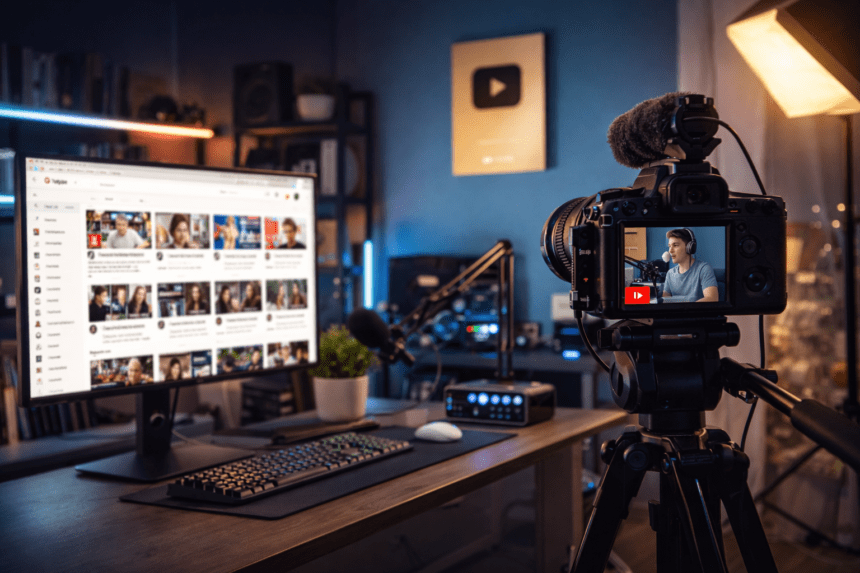
One reason the comment resonated so strongly is that it captures a bigger cultural shift around what “home” production now means. Home used to imply amateur, low budget, improvised, or transitional. In the current creator economy, home often means efficient, controlled, brand safe for the creator, and economically superior to older studio arrangements. A creator with a strong set, a sharp editing team, audience data, sponsor relationships, and platform fluency can build a show from a house or personal studio that reaches millions and throws off more flexible revenue than many cable productions ever did. In that environment, the old symbolism of leaving home for the studio starts to look backwards.
You can already see the outlines of that shift in the kinds of content now rising fastest. Long form conversation, creator TV, tutorial and review ecosystems, family channels, creator led game shows, podcast hybrids, and episodic lifestyle formats all benefit from repeatable production rather than glamorous location change. Recent reporting on “creator TV” argued that YouTube creator shows are approaching traditional TV in both volume and viewership, with more than half of their U.S. viewing taking place on connected TVs. The image of the creator sitting in one physical space is no longer a sign of limitation. It is often the heart of the product.
That does not mean production value stops mattering. It means production value has been redistributed. The creator economy increasingly rewards recognizable environments, repeatable formats, low friction publishing, and direct audience familiarity. A carefully built home studio can now carry more value than a rented sense of prestige. In fact, the home base often becomes part of the brand itself, a kind of visual territory audiences return to again and again. My view is that YouTube understands this better than most of its rivals. It is not competing only on content quantity. It is competing on the creator owned nature of the environment.
Netflix and the streamers are competing for the same attention now
This is also why the comparison with Netflix matters. The quote emerged in the context of being asked about podcasts and creator formats moving to streaming platforms. The answer was not dismissive of those moves. It was almost casually superior. YouTube’s chief executive described it as flattering that competitors see YouTube as the center of culture and suggested creators themselves understand that their home remains on YouTube. That response only makes sense if YouTube believes the competitive terrain has changed. It is no longer fighting only against TikTok for short form or against cable for ad budgets. It is fighting against premium streaming for creator led entertainment itself.
SSRS described this directly as a battle for viewers, pointing to Netflix’s push into video podcasts and the large audience for that format. Once video podcasts, creator shows, and creator led series become normal streaming inventory, the dividing line between YouTube and television weakens. But that same convergence helps YouTube too, because it has already spent years training audiences to consume hybrid formats without worrying about what category they belong to. If the future of entertainment is less neatly divided between television, podcasting, and creator content, YouTube starts from a strong position because it already behaves like all three at once.
My opinion is that this is what makes the moment so important. Streaming services still have prestige, budgets, and strong IP. But YouTube has habit, creator loyalty, audience ownership, and a much broader tolerance for experimental formats. That can be a more powerful position than people think, especially when consumers no longer care much whether something counts as a show, a channel, a podcast, or a stream. They just care whether it is good and easy to watch.
The creator relationship is still the moat
The strongest part of YouTube’s case is that it remains a platform where creators can diversify their income and maintain a direct relationship with their audience over time. The official 2026 company letter emphasizes multiple revenue streams beyond advertising, including shopping, brand deals, gifts, and fan funding. That matters because creator loyalty is rarely based on a single check. It is based on the sense that an ecosystem can support a business. A premium streaming deal may be larger in the short term, but a creator with a stable channel, a loyal viewer base, multiple monetization lines, and years of searchable archive may rationally prefer the long arc of platform ownership over the temporary glamour of exclusivity elsewhere.
This is where YouTube’s strategy looks strongest to me. It does not need to promise every creator a giant payday. It needs to convince top creators that leaving entirely would mean giving up the most durable piece of their business. The more revenue pathways the platform builds, the harder that becomes to justify. If the creator can earn from ads, memberships, shopping, live features, sponsorships, and off platform opportunities while keeping the audience anchored on YouTube, then the platform becomes less a distributor and more the creator’s home market.
The phrase “home” is doing a lot of work here. It suggests not only familiarity, but ownership, return, and long term orientation. That is powerful language because it reframes outside deals as visiting rather than relocating. A creator can do Netflix, do a book, do a podcast expansion, do a tour, and still conceptually live on YouTube. That is a very different status hierarchy from the one that existed even five years ago.
The weakness in YouTube’s argument
Still, there is a risk in taking the statement too literally or too triumphantly. The best creators will not always stay physically or strategically bounded by the platform. Some will continue building multi platform empires. Some will choose windows of exclusivity elsewhere. Some will seek prestige projects that YouTube cannot fully replicate. And some formats still benefit from the marketing power, cash, or institutional support of old media. A platform can be home without being the only place a creator meaningfully exists. That is why the strongest reading of the quote is metaphorical rather than absolute.
There is also a broader creative question. A system optimized for platform ownership can sometimes encourage repetition and safety. If a creator’s “home” is also an algorithmically tuned business environment, it may reward consistency more than risk. That can be fantastic for stability, but not always for experimentation. Traditional media still has one advantage here: it can sometimes underwrite projects that are less immediately efficient but culturally ambitious in different ways. So while I think YouTube is right about where creator gravity now sits, I do not think that means the wider media ecosystem stops mattering. It means the bargaining power has shifted.
The bigger shift is that creator media no longer needs permission
The most important part of this whole story is that the best YouTubers now operate more like self contained media companies than internet celebrities waiting for outside validation. The platform’s payment scale, the audience shift to TV screens, the collapse of podcast and video categories, and the growing centrality of creator led formats all point in the same direction. Creator media no longer needs to graduate into the old system to become serious. It can remain native and still become enormous.
That is why the “never leave their home” line really matters. It marks a psychological turning point. The goal is no longer escape from the platform. The goal is to become powerful enough that everything else comes to you while the platform remains your base. That changes how creators think, how investors think, how streaming companies think, and how advertisers think. It changes who is seen as infrastructure and who is seen as a guest.
My view is that this is one of the clearest signs yet that the creator economy has entered a more mature phase. The future is not just bedroom creators becoming celebrities. It is bedroom creators, or more accurately studio at home creators, becoming media