

The facts already show a major pricing shift has begun and the hype is no longer just speculation
My view is that India may not flood the world overnight, but it has already started changing the economics of one of the hottest drug categories on earth
The weight loss drug boom has become one of the biggest pharmaceutical stories in the world, and for good reason. These medicines are no longer being talked about as niche therapies sitting quietly inside specialist medicine. They have become market moving products, cultural flashpoints, investor obsessions, and political talking points all at once. They sit at the centre of a huge conversation about obesity, public health, private demand, access, inequality, body image, long term care, and the commercial future of modern medicine. But for all the breathless excitement around the category, one truth has kept hanging over the whole story. Most people still cannot access these drugs easily, and in many countries price has been the biggest reason why.
That is why India matters now in a much bigger way than many people first realised.
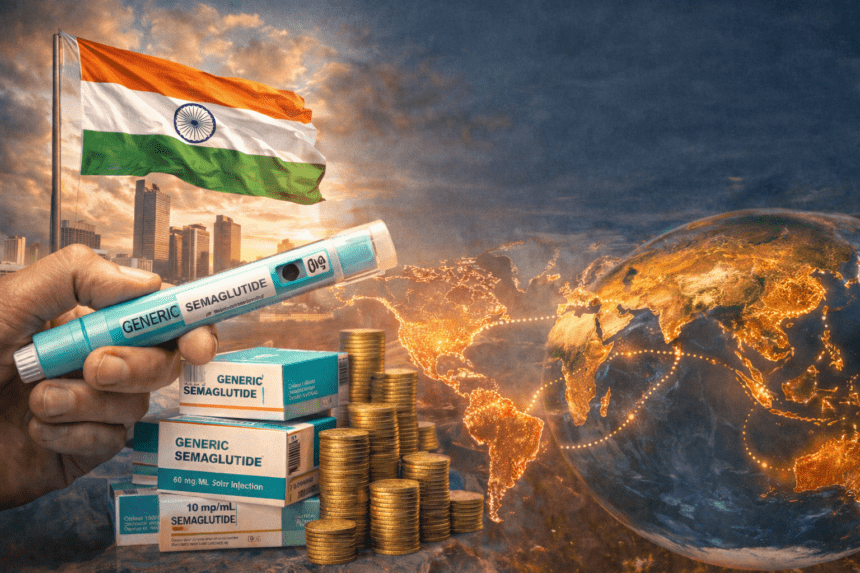
The basic fact pattern is already strong enough to justify the excitement. Semaglutide patent protection has expired in India. Local manufacturers have begun launching cheaper versions. Prices are moving lower. Competition is building. And what looked like a future possibility only months ago is now becoming a real market event. The louder claims about India instantly changing the world remain too simplistic, but the deeper claim is increasingly hard to argue with. India has already started changing the semaglutide story, and the effects could spread much further than its own borders over time.
That is the fact part.
The opinion part is this. I think this could become one of the most important drug pricing stories of the decade, not because India magically controls the whole market tomorrow, but because it has just opened the first credible path toward a more competitive and more affordable semaglutide world. That kind of shift rarely arrives in one cinematic global moment. It usually begins with one market breaking the old price logic and then forcing everyone else to reckon with what comes next.
The first hard fact is that the rollout is no longer theoretical
The most important thing to understand is that this is not a future tense story anymore. India is not merely preparing to challenge branded semaglutide. It has already begun. Once the patent barrier dropped locally, the conversation changed. This stopped being a debate about possibility and became a story about execution, scale, and consequences.
That matters because there is a big difference between a potential challenger and a real one. Plenty of countries and companies talk about lowering drug prices. Far fewer are in a position to act at industrial scale in a category this hot. India is. That is why even the first wave matters. It signals to the whole pharmaceutical world that semaglutide is not going to remain trapped indefinitely inside a single premium brand logic everywhere.
The second major fact is price. Indian prices coming in at up to about 70 percent below the branded versions, with treatment costs ranging roughly from ₹750 to ₹4,200 per month depending on brand and dose. Even if those numbers move as competition intensifies and the market matures, the direction is unmistakable. This is not a small trim around the edges. This is the sort of shift that changes both access and psychology. A product that looked distant suddenly starts to feel imaginable.
That psychological effect matters more than people think. Price cuts do not only change spreadsheets. They change who even bothers to ask their doctor. They change whether clinics build offerings around a category. They change whether health systems start taking a treatment area more seriously. They change whether distributors and investors treat the category like a premium niche or a scale market. When the price barrier starts to bend, the whole social meaning of the product starts to bend with it.
The hype is justified, but only if you understand what the hype should actually be about
This is where the story needs a bit of discipline. The weakest version of the hype says India is about to flood the entire world with cheap Ozempic style drugs and crush branded pricing everywhere overnight. That is the cartoon version. It is dramatic, simple, and not really how the global pharmaceutical system works.The stronger version of the hype is less flashy and more convincing. India has just become one of the clearest real world forces pushing semaglutide toward a more competitive era. That does not mean every market opens instantly. The United States and Europe still have major patent barriers, regulatory controls, approval hurdles, and import realities that make an immediate global wave very unlikely. But it does mean the old assumption of semaglutide scarcity and premium protection now has a serious crack in it.
That distinction matters. If people imagine the story as all or nothing, they will underestimate it the moment they realise the world is not changing overnight. But most major market shifts do not work like that. They happen step by step. First a major country changes its internal economics. Then selected export markets come into play. Then price expectations start shifting more broadly. Then political pressure rises in the places that are still expensive. Then the premium incumbents have to rethink how defensible the old structure really is.That is the version of the story I find far more important. Not fantasy global flood. Real staged disruption.
India has the ingredients that make this more serious than a normal generic launch
One reason this story carries so much weight is that India is not just any market. It has pharmaceutical manufacturing depth, technical capability, domestic demand, and a habit of turning scale into leverage. A lot of countries can talk about drug affordability. India can actually manufacture at scale and compete.
That matters because semaglutide is not entering India as a one brand sideshow. More than 40 Indian companies could eventually push out more than 50 brands into the space. If that becomes reality, the market dynamic changes fast. One cheap challenger is interesting. Dozens of brands are a price war. Once a category starts to look like that, margins tighten, positioning shifts, and the entire conversation changes from exclusive access to competitive access.
That competitive density is why this could become so important globally. A premium branded story can stay narrow for a long time when supply is controlled and the challengers are weak or slow. But when a major manufacturing country turns the drug into a broad competitive category, the commercial story begins to migrate. The product starts to feel less like a luxury medical breakthrough and more like a contested therapeutic market.
My opinion is that this is exactly why the world should take India’s move seriously. It is not just making a local point about price. It is helping to redefine what semaglutide might become once exclusivity weakens.
The real disruption may happen market by market, not all at once
The most sensible way to picture what comes next is not one giant global rollout but a staggered spread. First India reshapes its own domestic market. Then Indian producers target countries where legal and regulatory conditions are friendlier. Then buyers in those countries begin benchmarking against lower Indian prices. Then politicians, insurers, clinics, and patients elsewhere begin asking why their own prices remain so high.
That kind of staggered pressure can be more powerful than one big bang event because it gives the story time to build. Each new market becomes evidence. Each lower price becomes precedent. Each successful launch chips away at the aura of inevitability around branded dominance.
This is one of those situations where selective geographic progress can still trigger broad strategic consequences. India does not need to reach every country on earth to change the world of semaglutide. It only needs to change enough of the world that the rest of the system starts feeling unstable.
That is why even countries that are not immediately open still matter in the story. If Indian manufacturers expand into parts of Latin America, Asia, Africa, Turkey, and other lower cost or more accessible markets, the conversation in wealthier or more protected markets will still shift. Once a lower price benchmark exists somewhere, it becomes harder forever to defend why huge gaps should remain elsewhere.
This could push the category from premium momentum into mass market tension
The semaglutide boom has already proven one thing beyond any doubt. Demand is huge. The branded success of the category made that clear. But branded success and broad access are not the same thing. One can prove demand without solving affordability. In fact, that is exactly what has happened so far.
India’s emergence pushes the category toward a different phase. It raises the possibility that semaglutide may no longer be defined only by branded scarcity and premium positioning. Instead it could begin shifting toward a mass market tension, where demand expands because affordability improves, and where the next great battle is not over proving the category matters but over who gets to scale it.
That is a much bigger fight.
The implications spill well beyond pharmaceutical revenues. If semaglutide becomes more affordable across enough markets, the effects could run through telehealth, obesity clinics, consumer health platforms, insurance design, employer health planning, metabolic disease strategy, and public health politics. It could change how doctors talk about obesity treatment. It could change whether broader populations start seeking care. It could even change whether governments come under pressure to treat these drugs less as optional premium products and more as serious tools in long term health management.That is why I think the India angle could become world changing. Not because it is copying a drug. Because it is attacking the affordability wall around one of the biggest therapeutic categories in the world.
The downside risks are real and they matter
This is not a pure victory story. It also highlighted increased surveillance by India’s regulator after the launch of these cheaper copies, including scrutiny around unauthorised sales and misleading promotion. That part of the story should not be brushed aside, because fast moving high demand drug markets can get messy very quickly. Whenever a medical category becomes culturally hot and commercially lucrative at the same time, it attracts more than just good actors. It attracts hype merchants, grey market sellers, sloppy marketing, weak supervision, and bad incentives. Weight loss drugs are especially vulnerable to that because public demand is so intense and so emotionally charged. People want results fast. That makes them easier to target with shortcuts, misinformation, and questionable supply chains.
So while the pricing story is exciting, quality and oversight become even more important now. A lower cost market is only a genuine breakthrough if patients can trust what they are getting, understand how it should be used, and avoid being pulled into unsafe or misleading channels. That is one reason this next phase matters so much. India is not only stepping into an opportunity. It is stepping into a credibility test. Can it deliver lower prices and maintain confidence at scale. Can it widen access without letting the category drift into disorder. Can it lead on affordability without losing trust.Those questions do not cancel the excitement. They define whether the excitement lasts.
The branded incumbents may now be entering a much tougher phase of the story
One of the most interesting things about this moment is that it may signal a broader transition in how this category creates value. In the first phase, the rewards flowed to the innovators who built and dominated the breakthrough. That phase was about science, exclusivity, and market creation. In the second phase, the rewards may increasingly depend on affordability, distribution, and who can adapt to a more competitive world.
History says those are not always the same winners.
This is not to say the original branded players suddenly lose all their power. They still have regulatory advantages in many places, established commercial muscle, and powerful positions in some of the most lucrative markets. But the story may no longer be theirs alone. Once a credible lower cost ecosystem emerges in a country like India, the global conversation starts changing. The category stops being controlled only by innovation prestige and starts being judged more heavily by accessibility and scale.That shift can be uncomfortable for incumbents because it changes the terms of the argument. Instead of asking whether semaglutide works, the world increasingly asks who can provide it broadly and at what price. That is a harder question to dominate forever through brand strength alone.
This may end up being one of the defining pharma stories of the year
The reason this feels so significant is that the timing is almost perfect for disruption. The branded weight loss boom has already validated demand. The market already knows these drugs matter. Public interest is already enormous. Investors already understand the stakes. Health systems are already under pressure. And now one of the world’s biggest pharmaceutical manufacturing powers has entered the local generic semaglutide era.
That is a potent setup.
In some stories the hype runs miles ahead of the fundamentals. Here the fundamentals are strong enough to support a lot of the excitement. The patent expiry is real. The launches are real. The price pressure is real. The manufacturing ambition is real. The export potential is real. The uncertainty is not whether India matters. The uncertainty is how large its influence becomes and how quickly the ripple effects spread.That is why I think this story deserves both restraint and energy. Restraint, because it is not an overnight universal takeover. Energy, because it could still become one of the most consequential changes in the economics of metabolic medicine that we see this decade.
So is India about to change the world of Ozempic style drugs
The fact based answer is yes, India is already changing the semaglutide landscape, but the global transformation is likely to be uneven, gradual, and market specific rather than instant and universal.
My opinion is even stronger than that. I think this is the kind of shift people tend to underestimate at first because it does not arrive wrapped in a single dramatic global event. It arrives through competition, pricing pressure, local launches, regulatory work, and changing expectations. It looks fragmented at the start. Then suddenly everyone realises the old pricing order is no longer secure.
India may not flip the entire world in one move, but it has already started changing the economics around semaglutide in a way that could shape the next chapter of access, affordability, and pharmaceutical power. That is how world changing stories often begin. Not with a neat universal moment, but with one market breaking the old logic and forcing everyone else to catch up.
The rollout has started. Prices are falling. Competition is arriving. The barriers outside India are still real, but so is the shift. The most important thing is no longer whether India can influence the semaglutide story. It already has. The real question now is how far that influence can travel and how much pressure it puts on the rest of the world to rethink what this category should cost.