

Striking a gas field is not just military escalation it is economic warfare at global scale.
The war around Iran has just crossed a line that changes everything.
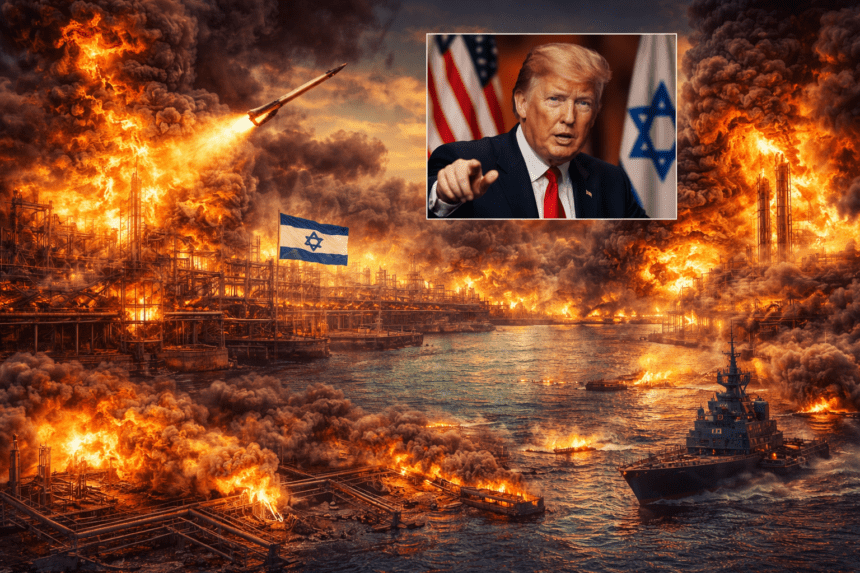
An Israeli strike on Iran’s South Pars gas field the largest natural gas reserve in the world marks a shift from targeting military assets to hitting core economic infrastructure. That move alone signals a new phase of the conflict, where the objective is no longer just deterrence or retaliation, but pressure on the system that powers a nation.
And the fallout was immediate.
Iran responded by targeting energy infrastructure across the Gulf, including major facilities in Qatar and elsewhere, triggering global fears over supply disruptions. Oil prices surged toward $119 per barrel, while gas markets tightened sharply as the region’s energy backbone came under direct threat.
This is no longer a contained conflict.
It is now hitting the arteries of global energy.
Trump Blames Israel and Draws a Line
In a rare public split, Donald Trump made it clear the United States was not aligned with the escalation.
He said he did not want further attacks on Iranian energy infrastructure, signaling concern that the strike risked spiraling the conflict beyond control.
That tension matters.
Reports show a growing divide between U.S. and Israeli strategy, with Washington focused on limiting escalation while Israel pushes deeper into Iran’s economic and leadership targets.
Trump’s message is simple:
Hit the military.
Avoid triggering a global energy crisis.
But that line may already have been crossed.
Why This Strike Changes the Game
This was not just another airstrike.
South Pars is responsible for a major share of Iran’s gas output, and damage to the site has already disrupted production and forced shutdowns in key facilities.
That turns the conflict into something far bigger:
Energy supply is now a battlefield
Global markets are reacting in real time
Regional infrastructure is becoming a target
And once energy infrastructure becomes fair game, escalation becomes harder to contain.
The Real Risk, A Chain Reaction
The strike is already triggering a wider reaction across the region.
Iran has hit Gulf energy assets
Shipping routes like the Strait of Hormuz are under pressure
Global oil and gas flows are at risk
This is exactly the scenario markets fear most:
a localized war turning into a global energy shock.
And history shows once energy infrastructure is pulled into conflict, it rarely stays limited.
Where This Is Heading
Right now, three things are clear
The war has moved beyond military targets
The U.S. and Israel are not fully aligned
Energy markets are now directly exposed
That combination is volatile.
Because once a war starts hitting supply, not just soldiers, the stakes shift from regional to global.
This is no longer just a Middle East conflict.
It is a pressure point for the entire world economy.
And it just escalated.