
A shocking Taliban claim has thrown Pakistan/Afghanistan tensions into even deeper chaos
A fresh and highly contested claim is now at the centre of the escalating Pakistan-Afghanistan conflict the Taliban government says a Pakistani airstrike hit a drug rehabilitation hospital in Kabul and killed around 400 people, with about 250 more injured. Pakistan has flatly denied targeting a civilian hospital and says its strikes were aimed only at military sites and assets linked to terrorism. At the time of writing, major news agencies are reporting the allegation and denial, but the casualty figure has not been independently verified.
That distinction matters.
In a media environment built for speed, outrage, and instant amplification, it is easy for a headline like this to harden into accepted fact before the evidence fully catches up. But when the reported death toll is this large, and when both sides have every incentive to shape the narrative, caution is not weakness. It is necessary. The Taliban is presenting the strike as a mass-casualty attack on a civilian medical facility in the Afghan capital. Pakistan is rejecting that description and insisting it carried out precise strikes on military targets. Those are two radically different versions of the same event.
Still, even as the details remain contested, the story is already geopolitically significant.
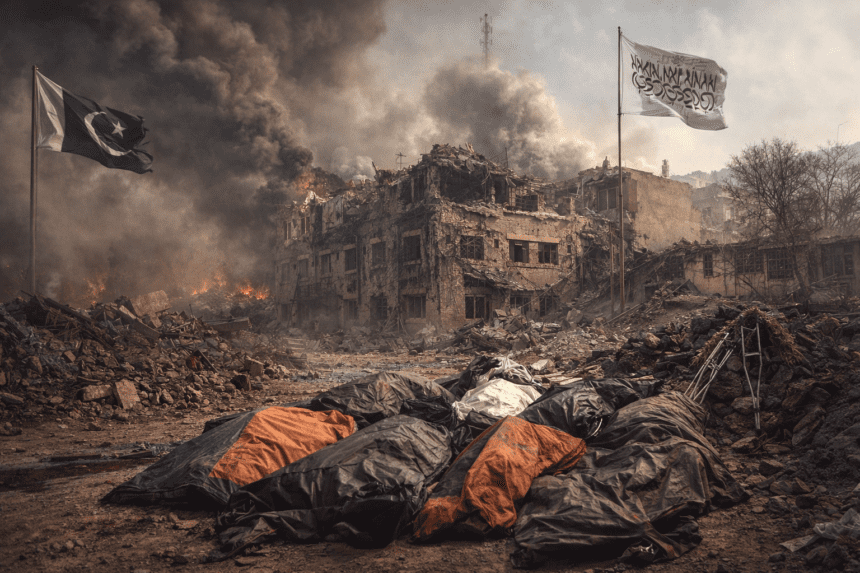
Reuters reported on March 17, 2026 that debris and damage were visible at the hospital site in Kabul, while the Taliban accused Pakistan of carrying out the strike and the United Nations urged de-escalation and protection of civilians. AP likewise reported the Taliban’s claim that the strike destroyed much of a 2,000 bed drug rehabilitation hospital in Kabul. Pakistan, meanwhile, denied hitting civilian infrastructure and said it had targeted military assets supporting terrorism.
That means the current state of play is not “confirmed massacre” or “debunked hoax.” It is this: a very serious allegation, visible destruction at the reported site, firm Pakistani denials, and no independent final confirmation yet of the full toll or exact targeting facts.
Why This Story Matters Even Before Full Confirmation
Some stories matter before every fact is nailed down because the allegation itself reveals how dangerous the moment has become.
Pakistan and the Afghan Taliban have been sliding into a much more direct confrontation in recent weeks. Reuters reported that fighting between the two sides intensified after Pakistani strikes in Afghanistan beginning in late February, with Pakistan accusing the Taliban of sheltering Tehreek-e-Taliban Pakistan militants and Baloch insurgents, accusations the Taliban denies. AP has similarly reported a sharp escalation in cross-border clashes and mutual accusations of backing militant groups.
In that context, a reported strike in Kabul is not just another border incident. It would represent a major widening of the conflict, both symbolically and militarily. Kabul is not a remote frontier village. It is the Afghan capital. A strike there, especially one allegedly hitting a medical facility full of vulnerable patients, turns an already volatile regional conflict into something far more inflammatory.
It also changes the information war
The Taliban now has a powerful narrative to push: that Pakistan struck a civilian rehabilitation centre and caused catastrophic loss of life. Pakistan has an equally strong incentive to reject that narrative outright, because accepting it would bring immense diplomatic, military, and reputational consequences. That is why outside verification matters so much here. In a high-conflict environment, both claims and denials are strategic acts.
The Human Reality Is Already Grim
Even if the final confirmed toll ends up lower than the Taliban’s reported figure, the incident appears serious.
Reuters described visible destruction at the rehabilitation hospital and said Taliban officials put the death toll at about 400 with another 250 wounded. AP reported similar figures and said the attack allegedly struck a facility treating drug users, many of whom would have been among the most vulnerable civilians in Kabul. Both outlets also reported Pakistan’s denial that it had targeted the hospital.
That alone is grim enough
Because whether the final confirmed death toll is 400, lower than 400, or eventually revised again, the core issue remains the same: the Pakistan-Afghanistan conflict is now producing claims of mass civilian casualties in the Afghan capital. That is not a routine escalation. That is a flashing red warning sign for the region.
What We Know, What We Don’t
Here is the cleanest breakdown based on current reporting:
What is being claimed
The Taliban government says Pakistani airstrikes hit a drug rehabilitation hospital in Kabul on March 16, 2026, killing about 400 people and injuring around 250. Reuters and AP both reported that claim.
What Pakistan says
Pakistan denies targeting a hospital or other civilian sites and says its strikes were aimed at military facilities and assets linked to terrorism. Reuters, AP, and Reuters’ broader conflict analysis all reported that position.
What appears independently supported so far:
There was a strike event in Kabul connected to the current Pakistan-Afghanistan escalation, and there was visible damage at the reported site. But the exact casualty count, target characterization, and final responsibility details remain contested in public reporting.
That is the zone responsible reporting has to stay in for now.
The Bigger Strategic Picture
This incident is landing at a time when the Pakistan-Afghanistan relationship is already under severe strain. Reuters reported that China recently stepped in to help cool the fighting, while AP described the conflict as the most serious in recent years between Pakistan and the Taliban-led Afghan government. Pakistan has accused Afghanistan of allowing anti-Pakistan militants to operate from Afghan territory. The Taliban denies this and has made counter-accusations of its own.
That means every new strike now carries a much higher chance of triggering broader regional consequences.
If the Taliban’s version of events gains wider acceptance, Pakistan could face international pressure over alleged civilian targeting. If Pakistan’s version prevails, the Taliban may be accused of weaponizing casualty claims in an information campaign. Either way, the incident fuels mistrust, pushes diplomacy further out of reach, and makes it easier for both sides to justify future escalation.
This is how localized conflict becomes entrenched conflict.
It starts with retaliation. Then counter-retaliation. Then duelling narratives. Then capital-city strikes, real or alleged mass-casualty events, and collapsing trust. By the time outside powers begin pushing hard for de-escalation, the political incentives for restraint have often already weakened. Reuters reported that the United Nations urged both sides to de-escalate and protect civilians, which is a sign of how seriously this latest episode is being treated internationally.