


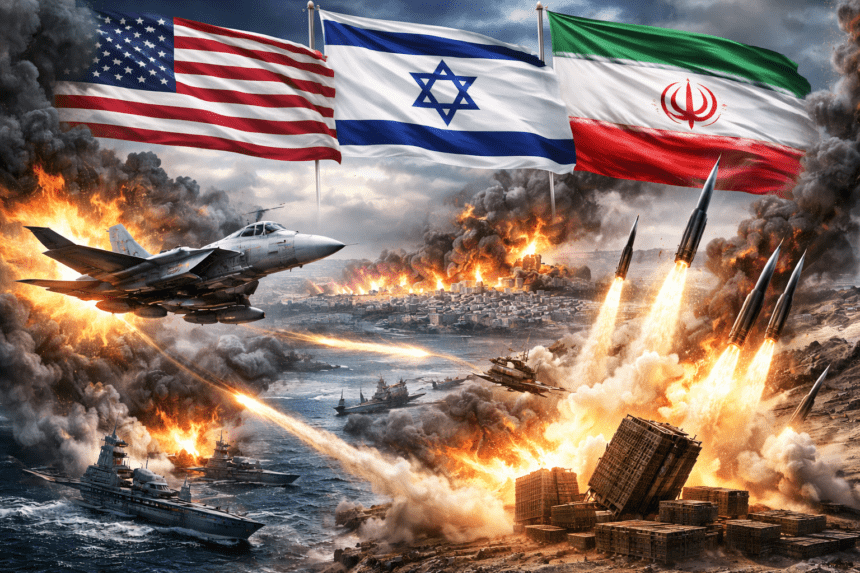
Missile attacks, airstrikes, and oil disruptions shake the Middle East
The war involving the United States, Israel, and Iran has entered a dangerous new phase, with missile attacks, airstrikes, and regional instability spreading across the Middle East as the conflict moves into its third week.
The conflict began on February 28, 2026, when Israel and the United States launched coordinated strikes on Iranian military and government targets, including a decapitation strike that killed Iran’s Supreme Leader Ali Khamenei and several senior officials.
Iran quickly retaliated with waves of ballistic missiles and drone attacks targeting Israel, U.S. bases, and allied countries across the region.
Missile Strikes and Expanding Attacks
Iran has continued to launch missiles and drones toward Israel and several Gulf states, with regional countries reporting interceptions of incoming strikes and attacks on infrastructure.
Sirens have repeatedly sounded in Israeli cities as Iranian and allied forces attempt to overwhelm air-defense systems, while Israeli and U.S. forces continue targeting missile launch sites and military facilities inside Iran.
Military analysts say the fighting has already spread beyond its original battlefield, increasing fears of a broader regional war involving multiple Middle Eastern states.
Strategic Oil Routes Under Threat
The conflict is also threatening global energy supplies. Iran has warned that shipping in the Strait of Hormuz one of the world’s most important oil routes could remain disrupted while the war continues.
About 20% of the world’s oil shipments pass through the strait, making any disruption a major risk to global markets.
Recent strikes and threats in the region have already pushed energy prices higher and raised concerns about a wider economic shock if the war continues to escalate.
Major Military Operations
One of the most significant operations so far was a large-scale U.S. bombing raid on Kharg Island, a strategic Iranian port responsible for much of the country’s oil exports. The strikes destroyed dozens of military facilities used to threaten shipping in the Persian Gulf.
At the same time, Iranian forces have targeted U.S. and allied military installations across the region, including bases in Kuwait, where missiles and drones were launched as part of retaliation efforts.
Rising Casualties and Global Concern
As the war intensifies, reports indicate thousands of casualties and widespread displacement across parts of the Middle East.
World leaders and international organisations are increasingly calling for restraint and negotiations, warning that the conflict could spiral into a much larger confrontation.
No Clear End in Sight
Despite growing diplomatic pressure, both sides appear determined to continue fighting.
The United States and Israel say their goal is to weaken Iran’s military capabilities and prevent it from developing nuclear weapons, while Iran has vowed to continue retaliating against what it calls foreign aggression.
With missile strikes continuing and tensions spreading across the region, the war is rapidly becoming one of the most dangerous geopolitical crises of the decade.
For now, the world is watching closely as the conflict threatens to reshape the balance of power across the Middle East and possibly beyond.