

New laws and proposals are expanding government reach over digital assets
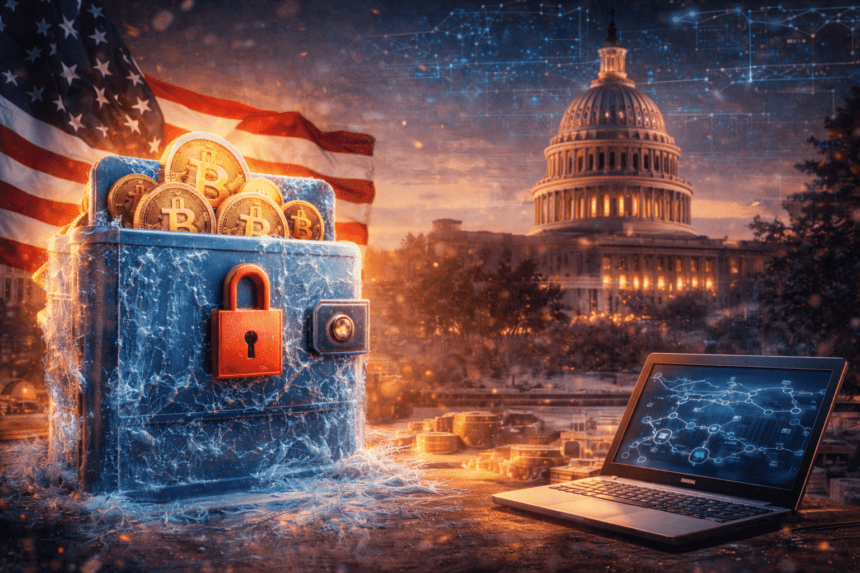
The United States government is steadily building a legal framework that could allow authorities to freeze crypto wallets and digital assets tied to crime, sanctions, or investigations.
While some powers already exist, a wave of new legislation and regulatory proposals is expanding how and when authorities could block crypto funds moving through exchanges and stablecoin networks.
Here’s a breakdown of the key laws and proposals shaping the future of crypto enforcement in the U.S.
The GENIUS Act: America’s First Stablecoin Framework
The GENIUS Act (Guiding and Establishing National Innovation for U.S. Stablecoins Act) became law in 2025 and represents the first comprehensive federal framework governing stablecoins.
The legislation requires stablecoin issuers operating in the United States to follow strict anti-money-laundering (AML) and compliance rules.
That means issuers such as USDC and other regulated dollar-pegged tokens must cooperate with regulators and law enforcement, including the ability to freeze transactions linked to illegal activity, sanctions violations, or financial crimes.
Supporters argue the law strengthens consumer protections and reduces illicit finance in crypto markets.
Critics warn it also introduces new centralized control mechanisms into systems that were originally designed to be decentralized.
A Proposed “Hold Law” for Crypto Exchanges
In 2026, the U.S. Treasury recommended that Congress introduce new powers allowing crypto exchanges to temporarily freeze suspicious funds before a court warrant is issued.
Under the proposal, exchanges could place a short-term hold on assets tied to suspected fraud, hacking, sanctions evasion, or money laundering.
The goal is to prevent criminals from rapidly moving digital assets across blockchains before investigators can intervene.
Supporters say the policy would help law enforcement react faster in cases involving crypto scams, ransomware attacks, or stolen funds.
But civil liberty advocates argue the idea raises questions about due process and the potential for mistaken freezes.
OFAC: The Sanctions Power Already in Use
Even without new laws, the U.S. Treasury already has powerful tools to block crypto transactions.
The Office of Foreign Assets Control (OFAC) can sanction specific crypto wallet addresses connected to terrorism, sanctions evasion, cybercrime, or hostile foreign governments.
Once a wallet is sanctioned:
U.S. exchanges must block the address
any associated funds can be frozen or restricted
financial institutions must report the assets to authorities.
These sanctions have already been used against addresses linked to ransomware groups, North Korean hacking operations, and illicit crypto services.
The CLARITY Act: Defining Who Regulates Crypto
Another major proposal is the Digital Asset Market Clarity Act, commonly known as the CLARITY Act.
The bill aims to clarify how digital assets are regulated in the United States by assigning oversight responsibilities to the Securities and Exchange Commission (SEC) and the Commodity Futures Trading Commission (CFTC).
If fully implemented, the framework would impose stronger compliance requirements on crypto exchanges and service providers.
That would give regulators greater authority to enforce freezes, investigations, and reporting obligations tied to suspicious transactions.
Stablecoin Issuers Are Already Freezing Wallets
Even outside formal legislation, stablecoin issuers already have the technical ability to block specific addresses.
Companies like Tether and Circle maintain blacklist functions in their token contracts, allowing them to freeze funds linked to criminal activity or sanctions enforcement.
Billions of dollars worth of stablecoins have been frozen over the past few years following requests from authorities such as:
the FBI
the U.S. Secret Service
the Treasury Department
international law enforcement agencies.
The Bigger Policy Trend
Taken together, these laws and proposals show a clear direction.
U.S. regulators are increasingly focused on:
preventing sanctions evasion using crypto
tracking illicit financial flows
forcing exchanges to implement stricter wallet screening tools
expanding the ability to freeze digital assets tied to investigations.
Compliance requirements for crypto platforms are expected to tighten significantly through 2026 and beyond.
The Bottom Line
The U.S. government already has several ways to block or freeze crypto wallets, and the regulatory toolkit is expanding.
Already possible today
OFAC sanctions blocking wallet addresses
stablecoin issuer blacklists
exchange compliance freezes.
Potential future powers
exchanges temporarily freezing funds without a court order
broader federal regulation of stablecoins and digital asset markets.
For crypto supporters, the changes highlight a growing tension between financial freedom and government oversight.
For regulators, the message is simple: as digital assets become a bigger part of the financial system, the rules governing them are only going to get stricter.