


Decentralized finance is evolving fast as regulatory pressures ease and DAOs explore new value capture models
The world of decentralized finance (DeFi) is rapidly evolving, and recent developments in regulatory attitudes and governance proposals could profoundly impact how leading protocols generate and distribute revenue. One of the most talked-about cases is that of Aave, a major DeFi lending and borrowing platform built on Ethereum and governed by a decentralized autonomous organization (DAO). Recently, analysts are suggesting that if the U.S. Securities and Exchange Commission (SEC) maintains a softer enforcement stance toward crypto, Aave’s DAO could start capturing more than $100 million in annualized revenue a transformation that would mark a significant shift in how DeFi captures and distributes value.
At the heart of this discussion is a new governance proposal called the “Aave Will Win Framework.” This initiative aims to redirect 100 percent of the revenue generated by Aave-branded products directly to the DAO treasury, rather than having that income flow to Aave Labs, the entity that has traditionally developed and supported many of the products users interact with.
Under this proposed framework, all revenue from products such as the Aave.com interface, mobile apps, Aave Pro, Aave Kit, Aave Horizon, and even potential future offerings like an Aave card or exchange traded product would be routed into the DAO’s treasury. Proponents argue that this would give the DAO controlled by holders of the AAVE token far greater flexibility and financial strength to fund further development, support growth initiatives, and compete with both centralized and decentralized competitors.
Why This Matters
Traditionally, DeFi protocols like Aave separated core protocol fees the fees users pay for lending and borrowing from revenues generated at the product layer, such as fees from interfaces and branded services. While protocol fees have always been collected by the DAO, revenue from products built by Aave Labs had mostly stayed with the company. With regulatory uncertainty in the United States, many protocols avoided clear value capture mechanisms due to fears that such flows could be viewed as unregistered securities.
However, recent regulatory signals suggest that the SEC has reduced its enforcement actions in the crypto sector, with reported enforcement actions falling significantly from 2024 to 2025 and monetary penalties dropping as well. The softer stance has encouraged projects like Aave to reconsider how they structure revenue flows and governance, with the belief that clearer regulatory terrain makes it safer to route revenues through on-chain mechanisms.
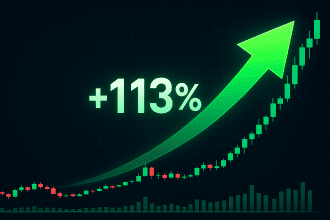
If the Aave DAO adopts this proposal, the DAO could capture well over $100 million annually in both protocol and product revenue. Already, revenue from swap integrations on the Aave.com interface is estimated at around $10 million on an annualized basis, and the protocol layer alone has historically generated more than $100 million from lending and borrowing fees. Stepping into product-generated revenue as well would mark a dramatic uptick in the financial capability of the DAO.
How Aave’s Governance Works
Aave’s governance model centers on its DAO, where holders of the AAVE token can vote on changes to the protocol and its economic model. The new proposal represents not just a technical adjustment, but a philosophical shift toward a token-centric model where tokenholders are positioned to capture more of the economic value created by the ecosystem.
This kind of model reflects a growing trend across DeFi, where projects experiment with value capture mechanisms that align incentives between protocol users, developers, and token holders. For example, other protocols like Uniswap have pursued similar efforts, such as redirecting fees to support token buybacks or burns.
Implementing the proposed framework also would require more than just a vote it would mean formalizing the operational and legal structures needed to protect the Aave brand and intellectual property. Since DAOs cannot legally hold trademarks or enforce intellectual property rights in many jurisdictions, the proposal suggests the creation of a separate foundation that could own and protect these assets on behalf of the DAO. This would help bridge the gap between on-chain governance and real-world legal requirements.
Community Response and Challenges
While many community members and investment firms support this move toward more direct value capture, the governance process has not been without controversy. Some DAO members have pushed back against aspects of the proposal, including requests for significant funding commitments from the DAO’s treasury in exchange for future product rights. Critics emphasize the importance of clear and enforceable definitions of revenue and safeguards against potential misuse of funds.
These discussions reveal broader tensions in DeFi governance: balancing rapid growth with decentralized decision-making, aligning financial incentives with long-term sustainability, and navigating regulatory uncertainty without falling afoul of securities laws or other regulations.
Despite these debates, the proposal underscores the evolving nature of DAOs as more than just governance wrappers for protocol parameters. If implemented, Aave’s model could serve as a blueprint for how decentralized communities manage and grow treasury assets at scale, blurring traditional lines between on chain governance and institutional financial strategy.
The Regulatory Factor
The context of a softer regulatory stance in the U.S. has been critical in opening the door to these discussions. During periods of heightened enforcement risk, protocols were wary of activating mechanisms that could resemble profit sharing or dividends in ways that regulators might interpret as securities distributions. As the environment shifts, DAOs are positioning themselves to experiment with new economic designs that could unlock liquidity and long-term sustainability.
It’s important to note that regulatory certainty is still far from complete. Any significant shift in enforcement philosophy could alter the viability of these revenue models, especially if regulators revisit how they interpret fee routing or revenue generation in decentralized systems. Nonetheless, for projects like Aave, the current climate provides a window to reimagine how protocols can operate and compete with both centralized finance and traditional fintech.
Looking Ahead
The proposal to route 100 percent of revenue from Aave-branded products to the DAO treasury is more than a financial change it’s a strategic pivot that reflects broader trends in DeFi governance and token economics. If passed, it would signal confidence in decentralized economic models and the potential for DAOs to manage and steward significant financial resources.
This development also highlights how regulatory environments influence innovation. As regulators around the world clarify their approaches to crypto and DeFi, protocols will test new economic structures that could bake value capture into the core of decentralized systems. Aave’s case stands out as one of the most ambitious efforts yet, and many in the space will be watching closely to see how it unfolds.