


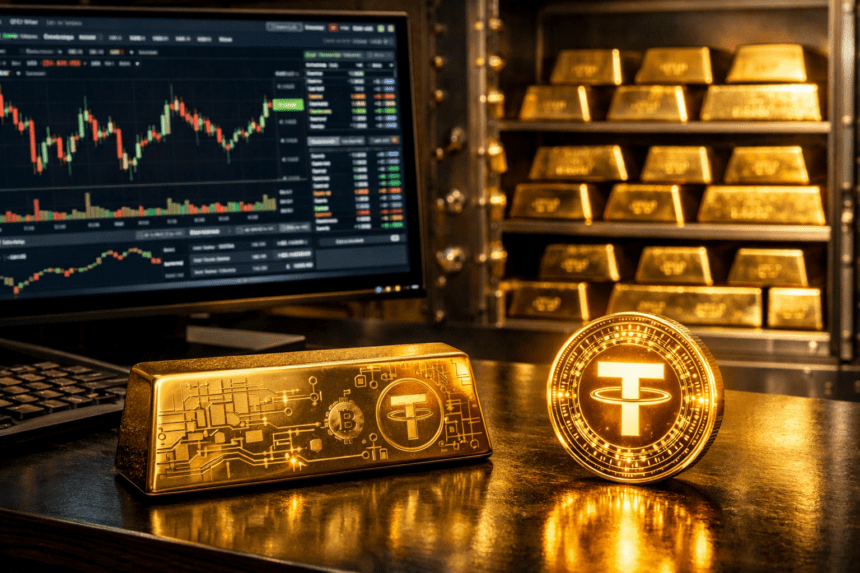
How crypto meets physical gold and what it means for investors
A New Chapter for Gold and Crypto
In February 2026, one of the biggest names in the crypto world took a major step deeper into the age-old world of gold. Tether, the company behind the largest stablecoin market in the world, announced a $150 million investment in Gold.com, acquiring a roughly 12 percent stake in the precious metals platform. What makes this deal especially noteworthy is that it is not just about owning shares in a gold marketplace. Instead, it is a strategic push to blend tokenized gold with mainstream bullion buying, giving people a way to hold gold exposure while staying within the crypto ecosystem.
For decades, gold has been seen as a hedge against risk. People flock to gold during times of financial stress because it has stood the test of time as a store of value. Crypto markets have their own version of this concept in stablecoins like USDT, which people use as a safe place to park value when markets churn. With this new partnership, Tether is effectively creating a path for gold to become another form of digital risk protection one that can be traded, transferred and settled on blockchain rails.
What Tokenized Gold Means and Why It Matters
Tokenized gold refers to digital tokens that represent ownership of physical gold stored in secure vaults. In Tether’s case, the token is called XAU₮, and it is backed one to one by physical gold. Each XAU₮ unit corresponds to a specific amount of gold held in custody, allowing token holders to gain exposure to gold without needing to physically hold bars or coins.
This structure is similar to gold backed stablecoins like PAX Gold and others that have seen rising interest in recent years. In fact, the market for tokenized commodities like gold has climbed past $6 billion, driven by rising investor demand for on-chain assets tied to real world value.
Until now, tokenized gold has mostly been traded on crypto exchanges or used as a portfolio asset by digital natives. The missing piece has been a real-world retail bridge a place where everyday buyers, collectors and traditional gold investors feel comfortable engaging with tokenized gold in familiar ways. That is where the Gold.com platform comes in.
How the Deal Bridges Two Worlds
Gold.com has been a retail name in precious metals for decades, selling gold bars, coins and other bullion products to buyers who trust the feel and tradition of physical gold. By integrating XAU₮ directly into Gold.com’s infrastructure, users could, in theory, use their crypto stablecoins like USDT to buy tokenized gold or physical gold without leaving the crypto payment system.
This integration aims to make tokenized gold accessible in a way that people understand. Instead of seeing XAU₮ as a niche crypto experiment, users may see it as an alternative way to own gold one that marries the convenience and speed of blockchain with the psychological comfort of owning precious metal.
For example, a crypto investor holding stablecoins may decide that, in times of uncertainty, they want something more permanent than a dollar coin on the blockchain. Traditional gold buying often requires bank transfers, storage concerns and complex logistics. With XAU₮ seamlessly integrated into a retail platform, users could move from stablecoin to gold exposure with just a few clicks and potentially back again.
The Bigger Strategy Behind the Investment
This partnership is about more than convenience. It is part of Tether’s broader strategy to position tokenized real world assets as fundamental tools in financial markets. Tether’s CEO has discussed allocating a significant portion of the company’s investment portfolio to physical gold, treating it not as a seasonal accessory but as a core reserve alongside Treasuries and cash equivalents.
Tether’s focus is to create an ecosystem where stablecoins like USDT serve as a settlement layer and tokens like XAU₮ serve as risk-off hedges that crypto users can turn to during market stress. Integrating these tools into a retail platform could help expand distribution beyond traditional crypto users and into audiences who are familiar with standard bullion markets.
This is not only about demand for gold. The deal underscores a broader trend where blockchain technology is used to represent real world assets (RWA) in tokenized form. RWA tokenization is gaining traction across commodities, equities and even real estate. But gold remains one of the most compelling cases because of its history, liquidity and emotional appeal.
Why Safety and Transparency Still Matter
Despite the obvious appeal, tokenized gold is not without its challenges. When someone buys a digital representation of gold, they are simultaneously buying exposure to gold price movement and a promise from the issuer regarding custody, backing and redemption rights. Those seem like technical details, but they are essential. Users want to know that the gold backing their tokens is independently verified, securely stored, and redeemable for physical metal if they choose.
Concerns about custody and legal ownership have been raised by market watchers, who point out that clarity is crucial if tokenized gold is ever to become a true safe haven instead of just another digital financial product. The integration with a trusted bullion marketplace could help address some of those questions, especially if redemption pathways and third-party verification become part of the user experience.
What It All Means for You
So what does this mean for the average person watching crypto and gold markets? Here are the core takeaways:
Tokenized gold backed by physical metal is gaining significant traction as an investable asset.
Tether’s Gold.com investment could make digital gold more accessible to both crypto-native users and traditional gold buyers.
The success of this strategy depends on user experience, regulatory clarity and transparency around custody and redemption.
If successful, tokenized gold may sit next to stablecoins and digital Treasuries as a hedge within the evolving financial ecosystem.
While it is still early days in the mainstream adoption of tokenized real world assets, this partnership between one of the most influential players in crypto and a longstanding bullion marketplace may help bridge the gap between digital finance and traditional value stores. For investors who value both innovation and stability, this could be a sign of future trends where old money meets new technology in ways that feel natural and useful.