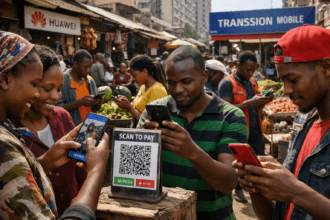



The Ringgit Goes Digital. The Future of Money Goes Global.
a world where the Malaysian ringgit no longer lives only as physical banknotes or traditional accounting entries in legacy systems. Instead it could move on blockchains, settle in seconds, and unlock a new class of digital money infrastructure that makes settlement faster, cheaper, and more transparent across borders.
That future might be arriving much sooner than most people realise. On February 11, Malaysia’s central bank announced three pilot initiatives under its Digital Asset Innovation Hub to explore stablecoins and tokenised deposits experiments that could ultimately influence the future of wholesale payment systems and central bank digital currencies (CBDCs).
It is a story that should be grabbing attention not just in Kuala Lumpur but across Asia, Europe, and the global financial ecosystem.
In this blog post I want to go beyond the headline to explain why this matters, what it means for the future of money, and why you should care even if you are not based in Malaysia.
What Exactly Is Happening in Malaysia?
The central bank of Malaysia Bank Negara Malaysia (BNM) has chosen to go beyond theory and into real world experimentation. Under the umbrella of its Digital Asset Innovation Hub (DAIH), three regulated pilots will run in 2026 focusing on:
Ringgit-backed stablecoins designed for business to business payments.
Tokenised deposits tested by major Malaysian banks.
Further trials that could inform future central bank digital currency planning.
These pilots will explore how digital versions of money can operate in controlled regulatory environments including for wholesale payments, cross-border settlement, and programmable finance. Partners include heavyweight financial institutions like Standard Chartered Bank Malaysia, Capital A, Malayan Banking (Maybank), and CIMB Group Holdings.
Importantly, the central bank has noted it will look at Shariah related considerations, a crucial aspect in a Muslim majority country where Islamic finance compliance plays a meaningful role.
Put simp ly: this initiative is not a gimmick. It is a serious, regulated move toward testing the future of money infrastructure.
Why Central Banks Are Suddenly Talking About Digital Money
Central banks everywhere are grappling with the reality that money is changing not just the technology, but how economies function and what citizens and businesses demand.
The explosion of crypto in the last decade highlighted two truths:
Digital money is possible. Bitcoin, stablecoins, and tokenised assets show that value can be transacted and stored digitally without traditional rails.
Governments want responsible innovation. Regulators fear unregulated systems that bypass monetary oversight but also see benefits in innovation that preserves stability.
That tension explains why many central banks from the European Central Bank to the Federal Reserve are exploring digital currencies and tokenised assets. Malaysia’s move is part of that global pattern. But what makes it particularly interesting is its pragmatic approach: test what actually works in controlled environments and gather data, rather than leap straight into production.
Stablecoins and Tokenised Deposits Explained Simply
Before going further it helps to clarify the key terms.
Stablecoins are digital tokens designed to maintain a stable value often pegged to a fiat currency like the ringgit. In Malaysia’s case these would be ringgit-backed stablecoins used primarily for institutional transfer and settlement rather than everyday retail spending.
Tokenised deposits are digital representations of traditional bank deposits. Instead of a deposit being an entry in a ledger at a bank, it becomes a token on a digital network that can move freely and instantly between authorised participants.
Both tools have significant potential to disrupt how money moves between institutions, especially for cross-border transfers that are slow, costly, and opaque today.
Malaysia Is Not Just Playing With Tech It Is Planning Strategy
What makes this announcement more than a PR moment is Malaysia’s three-year roadmap for asset tokenisation and digital infrastructure work. This roadmap published in late 2025 outlines a phased approach where experiments and pilots are foundational steps toward broader adoption and regulation.
That means BNM is not simply tossing out a pilot and hoping someone builds something cool. It is testing ideas, gathering structured data, and using real banks to explore use cases that could become the backbone of future financial infrastructure.
The Implications for Payments and Settlements
The potential impacts of what Malaysia is doing are profound.
Faster and Cheaper Cross Border Payments
Today most cross-border payments rely on legacy systems, correspondent banking relationships, and a patchwork of intermediaries. This makes transactions slow and expensive.
If stablecoins backed by the ringgit or tokenised deposits can move value directly between institutions on a digital ledger, settlement times could shrink from days to seconds.
That could give Malaysia and its partners a competitive advantage in global trade and finance.
Improved Liquidity and Transparency
Tokenised money can provide better liquidity tracking and more transparent settlement flows. For regulators and institutions this means greater oversight, easier reconciliation, and potentially fewer systemic risks.
New Opportunities for Programmable Finance
One of the more exciting aspects of tokenisation is programmable money where transactions can be tied to logic and conditions. For example, smart contracts could automate cross-border payroll, supply chain financing, or real-time credit clearing in ways currently impossible with traditional systems.
This sort of innovation could benefit both large enterprises and emerging economies that suffer from financial friction today.
But There Are Real Questions and Risks
None of this is guaranteed to work smoothly.
Critics of digital money pilots often point to concerns about:
Monetary control: Will tokenised assets erode the central bank’s ability to manage money supply?
Financial stability: Can these systems handle stress without creating new systemic risks?
Consumer protection: How do regulators ensure the public is safe while innovation flourishes?
Malaysia’s approach acknowledges these issues. By focusing on wholesale payments and controlled environments, the central bank is effectively saying: “Let’s test before we leap.” That cautious mindset may pay dividends in ensuring that the benefits of innovation are realised without undermining trust.
The FOMO Is Real And It Should Be Taken Seriously
Here is where the story gets personal for investors, technologists, policymakers, and anyone interested in the future of money.
Whether you are thinking about crypto infrastructure, digital finance startups, or financial services innovation, this announcement is a signal moment.
Why?
Because Malaysia is validating an idea that many global players have been debating for years: tokenised assets and stablecoins are not experimental add-ons. They are an evolution of how money could operate in a more connected and digitised world.
If you are watching from the sidelines thinking this is a niche Southeast Asian story, consider this:
Other central banks around the world are watching closely.
Institutional investors are beginning to price the future based on how easily value can move on digital rails.
Businesses operating cross-border are desperate for more efficient systems.
In other words, this is not fringe anymore. It is strategic innovation with economic and geopolitical implications.
What This Could Lead To Next
From Malaysia’s pilot programs, there could emerge:
Formal wholesale central bank digital currency frameworks. BNM has hinted that these pilots could inform CBDC policy direction by the end of 2026.
Expanded tokenisation of real-world assets including securities, commodities, and financial products that could be traded and settled digitally.
New APIs and interoperable financial networks that connect regionally and globally, lowering fragmentation and enabling real time settlement at scale.
These developments might take years to fully realise, but the groundwork is being laid now.
This Is Bigger Than a Tech Trend It Is a Monetary Moment
When a central bank openly invites experimentation with tokenised assets and stablecoins, we need to recognise it as more than a technology story. It is about the nature of money itself.
For decades money has been defined by physical cash and central bank entries in ledgers. Digital wallets, cryptographic proof, and tokenised value alter that paradigm fundamentally.
Malaysia’s pilots are not the first of their kind but they are among the most sophisticated to date in Asia. Countries like China have tested retail CBDCs. Others in Europe are evaluating digital euro frameworks. But Malaysia’s clear focus on collaboration between the central bank, regulated banks, and private sector innovators could provide a roadmap for others to follow.
Thoughts
Many people talk about the future of money in abstract terms: digital cash, tokenised economies, blockchains everywhere. But policy makers and financial institutions around the world are now shifting from theory to action.
Malaysia’s stablecoin and tokenisation pilots are an example of innovation under regulated supervision. That is precisely the environment needed to unlock real utility while managing risk.
Whether this leads to a wholesale CBDC or broader financial transformation, one thing is clear: the nature of money is changing, and nations that experiment intelligently will be best positioned in the global economy.
The question is no longer whether digital money will play a role in the future. The question is how ready you are to understand, engage with, and benefit from that future.