

A Big Political Moment in Trade Policy
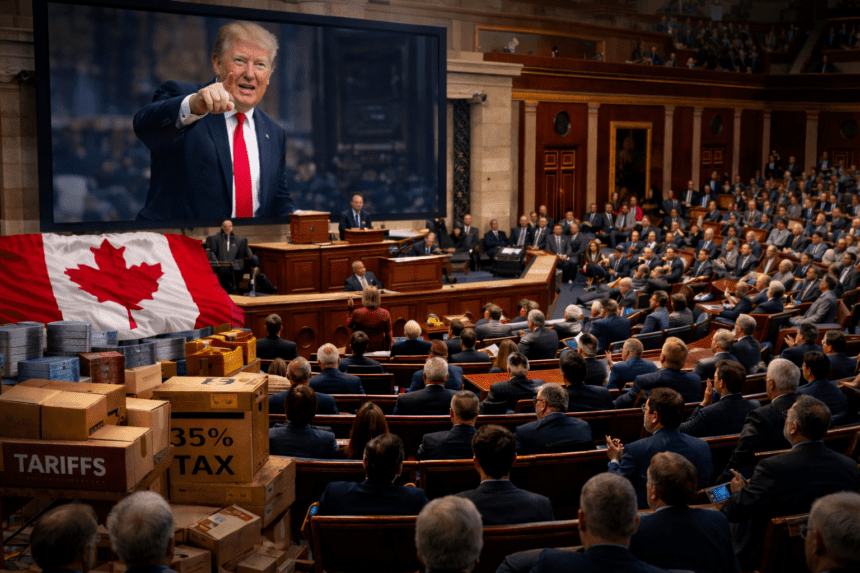
On February 11, 2026, the United States House of Representatives voted 219 to 211 to pass a resolution aimed at overturning President Donald Trump’s tariffs on Canadian goods. The vote was notable because it was bipartisan, with six Republican lawmakers joining Democrats in supporting the measure. This marked a rare public break within the Republican Party over Trump’s trade policies.
The tariffs were originally imposed in 2025 under a national emergency declaration that cited concerns about illicit drug trafficking across the northern border. The measures included tariffs of up to 35 percent on certain Canadian imports. Critics argued that the legal basis for using emergency powers in this way was questionable and that the tariffs were raising costs for American consumers and businesses.
Lawmakers who supported overturning the tariffs said they were responding to concerns about inflation, supply chain disruptions, and higher prices for everyday goods. Representative Gregory Meeks, who sponsored the resolution, framed the vote as an effort to protect American families from rising costs.
The resolution does not automatically end the tariffs. It must still pass the Senate and would likely face a presidential veto. Overriding a veto would require a two thirds majority in both chambers of Congress, which is considered unlikely given the current political balance.
The vote also highlighted broader concerns in Congress about executive authority over trade policy. Some lawmakers have pushed for reforms that would increase congressional oversight of tariff decisions, including proposals such as the Trade Review Act. Legal challenges to the tariffs and the use of emergency powers are also pending in the courts.
Internationally, Canadian leaders welcomed the House vote as a positive step for trade relations. In contrast, Trump criticized Republican lawmakers who supported the resolution and warned of potential political consequences.
Economically, businesses and industry groups have raised concerns that the tariffs increased costs, disrupted supply chains, and harmed sectors such as manufacturing, agriculture, and energy that depend on integrated North American trade. Economists have warned that tariffs can lead to higher consumer prices and retaliation from trading partners.
Overall, the House vote represents a significant political moment in the ongoing debate over trade policy, executive power, and economic strategy. While the immediate policy outcome remains uncertain, the bipartisan nature of the vote reflects growing divisions over tariff policy and signals continued debate in Congress over the future direction of US trade relations.