

When loyalty becomes policy and ideology becomes action
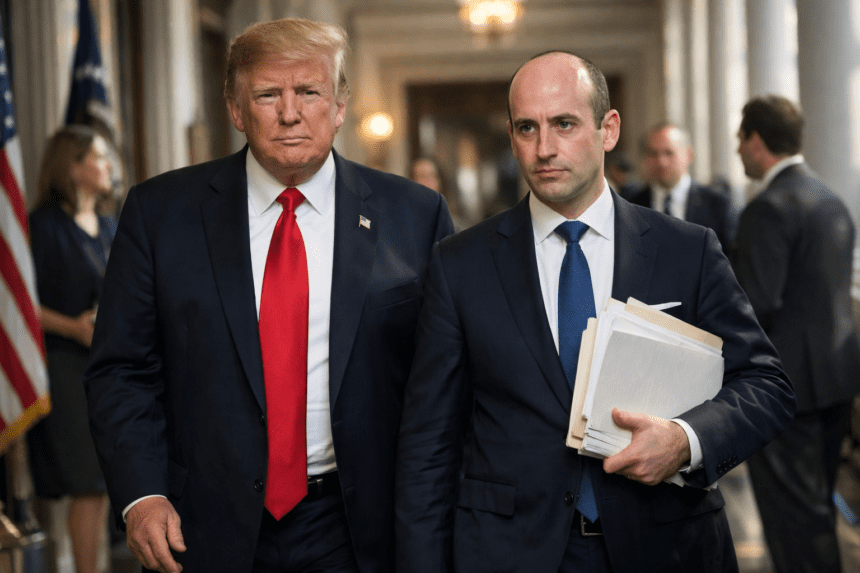
Stephen Miller’s relationship with Donald Trump represents one of the most enduring and controversial alliances in modern American politics. While many figures have passed through Trump’s orbit rising quickly and falling just as fast Miller has remained a constant presence. Through election victories defeats investigations and political exile he has stayed close to the former and now current president acting as both strategist and enforcer of a worldview that has reshaped national debate. As explored in reporting by the BBC and other outlets Miller is no longer merely a background adviser. He has become a lightning rod a symbol of ideological purity and an embodiment of what unwavering political loyalty looks like in the Trump era.
To understand Stephen Miller is to understand a particular model of power in Washington. It is not based on charisma or public popularity. Instead it is grounded in ideological alignment personal devotion and an almost singular focus on execution. Miller has served in both the first and second Trump administrations a distinction few can claim. In doing so he has earned a reputation as an untouchable figure within the West Wing someone whose influence extends far beyond his formal title. Supporters describe him as disciplined and effective while critics see him as ruthless and polarizing. Both sides agree on one thing his role matters.
The Rise of Stephen Miller
Stephen Miller entered national politics long before he became a household name. Born in California and educated at Duke University he gravitated early toward conservative politics particularly issues of national identity immigration and executive authority. His work on Capitol Hill gave him experience in legislative messaging but it was the 2016 Trump campaign that transformed his career. Miller joined the campaign as a speechwriter and policy aide quickly gaining the trust of Donald Trump through his ability to articulate hardline positions in clear uncompromising language.
From the beginning Miller understood Trump’s political instincts. He did not attempt to soften them or translate them into traditional Republican frameworks. Instead he amplified them. This alignment proved invaluable. When Trump won the presidency Miller was rewarded with a senior adviser role placing him at the center of policy development and messaging. His fingerprints were soon visible on major speeches executive orders and policy initiatives.
Unlike many advisers who sought to moderate Trump or position themselves as internal counterweights Miller embraced the role of ideologue. He believed the administration’s success depended on delivering exactly what voters had been promised even if it sparked controversy or legal challenges. This approach would define his tenure and shape his relationship with Trump.
Loyalty in Its Purest Form
Miller’s loyalty to Donald Trump has often been described as undying and unquestioning. He has publicly praised Trump as one of the most gifted political figures of his generation and has consistently defended the president’s decisions even during moments of intense scrutiny. Where others hesitated or distanced themselves Miller doubled down reinforcing Trump’s self image as a decisive leader under siege.
This loyalty was tested after the 2020 election loss and the events of January 6 2021. As many former officials retreated from Trump Miller remained close. He did not publicly criticize Trump nor did he attempt to rebrand himself as an independent conservative voice. Instead he worked quietly maintaining ties and preparing for a potential return to power. During this period often described as Trump’s political exile Miller founded America First Legal a nonprofit organization dedicated to advancing Trump era policies through the courts and challenging progressive initiatives.
Importantly Miller did not use this period to cash in on his access. While other former officials pursued consulting deals or media contracts Miller focused on building an infrastructure for policy combat. This choice reinforced Trump’s perception of him as a true believer rather than an opportunist. When Trump returned to office Miller returned with him stronger and more influential than before.
Ideological Synergy and Shared Worldview
At the core of the Miller Trump relationship is ideological synergy. Miller has often been described as the embodiment of the America First agenda particularly on immigration and national identity. Where Trump expresses instinct and impulse Miller provides structure and execution. He takes broad political promises and transforms them into actionable policy frameworks.
Miller has described his work as energizing deeply personal and mission driven. This language reveals the extent to which he sees policy not as compromise but as purpose. For Trump this approach is invaluable. It ensures that decisions are implemented rapidly and aggressively without dilution.
This synergy has led some observers to refer to Miller as Trump’s brain or ideologue in chief. While Trump remains the ultimate decision maker Miller is often the architect translating vision into reality. In the second Trump administration this role has expanded dramatically giving Miller influence across immigration foreign policy education and trade.
Immigration as the Defining Battleground
Immigration remains the issue most closely associated with Stephen Miller. During the first Trump administration he played a central role in shaping policies such as the travel bans border enforcement expansions and family separation practices. These initiatives sparked intense backlash but were defended by Miller as necessary measures to restore sovereignty and enforce existing laws.
In the second administration Miller has moved even faster. Immigration enforcement actions have intensified with a renewed focus on mass deportations detention capacity and legal challenges to long standing interpretations of constitutional protections. Supporters argue these policies reflect the will of voters who demanded stronger borders. Critics warn they risk humanitarian harm and constitutional conflict.
What distinguishes Miller’s approach is not only the substance of the policies but the method. He has worked to bypass traditional bureaucratic resistance by placing loyalists in key agencies particularly within the Department of Homeland Security. This strategy allows directives to move swiftly from the White House to implementation reducing internal friction.
Beyond Immigration Expanding Power
While immigration remains central Miller’s influence now extends far beyond it. In the second Trump term he has emerged as a key figure in shaping executive orders across a wide range of issues. From education policy to trade enforcement and regulatory rollbacks Miller has become a central node connecting the president to the machinery of government.
Some officials have referred to him informally as Trump’s prime minister a figure who coordinates across departments to ensure alignment with the president’s agenda. He frequently liaises with Congress helping draft legislation and executive actions that reflect administration priorities. This expanded role has increased both his power and the scrutiny he faces.
Miller’s management style is often described as aggressive and relentless. He is known for pursuing objectives without regard for personal popularity or media backlash. To allies this makes him effective. To opponents it makes him dangerous. Either way it reinforces his status as one of the most influential figures in the administration.
The Dynamics of Trust and Dependence
The relationship between Miller and Trump is built on mutual dependence. Trump values Miller’s loyalty and ideological clarity while Miller relies on Trump’s authority to advance sweeping policies that might otherwise be impossible. This dynamic creates a powerful feedback loop. Trump empowers Miller and Miller reinforces Trump’s vision.
Insiders have noted that while Miller may argue passionately within internal discussions once a decision is made he executes it fully. This respect for presidential authority further cements trust. Other officials may attempt to reinterpret or soften directives. Miller does not. He treats the president’s word as final.
This trust has consequences within the White House hierarchy. Miller is often seen as untouchable someone whose position is secure regardless of internal disputes. This perception shapes how other officials interact with him and underscores the unique nature of his role.
Public Backlash and Polarization
As Miller’s influence has grown so too has public backlash. He is frequently targeted by activists commentators and political opponents who view him as the most extreme face of the Trump agenda. Protests social media campaigns and sharp rhetorical attacks have accompanied many of his policy announcements.
Polls consistently show Miller as one of the least popular figures in Washington. Yet popularity has never been his objective. His focus remains on results and implementation. In this sense Miller represents a broader shift in politics where effectiveness within an ideological framework outweighs public approval.
For supporters this is precisely the point. They see Miller as someone willing to absorb criticism to deliver on promises. For critics he embodies what they see as the dangers of unchecked executive power and ideological rigidity.
What Stephen Miller Represents in 2026
As of early 2026 Stephen Miller stands as one of the most powerful non elected officials in the United States. His influence reaches into nearly every corner of the federal government. His loyalty to Donald Trump has translated into authority unmatched by most advisers in modern history.
Whether viewed as a principled executor of voter mandates or a polarizing force reshaping American governance Miller’s role cannot be ignored. His career illustrates how loyalty ideology and access can combine to produce extraordinary power within the executive branch.
The story of Stephen Miller and Donald Trump is not simply about two individuals. It is about the evolution of political loyalty in an era defined by polarization speed and executive dominance. As the administration moves forward the impact of this relationship will continue to shape policy debate and the future of American politics.