

Exploring the Rise of Tokenized Stocks and the Future of Equity Markets
Understanding Tokenized Equities and Why They Matter
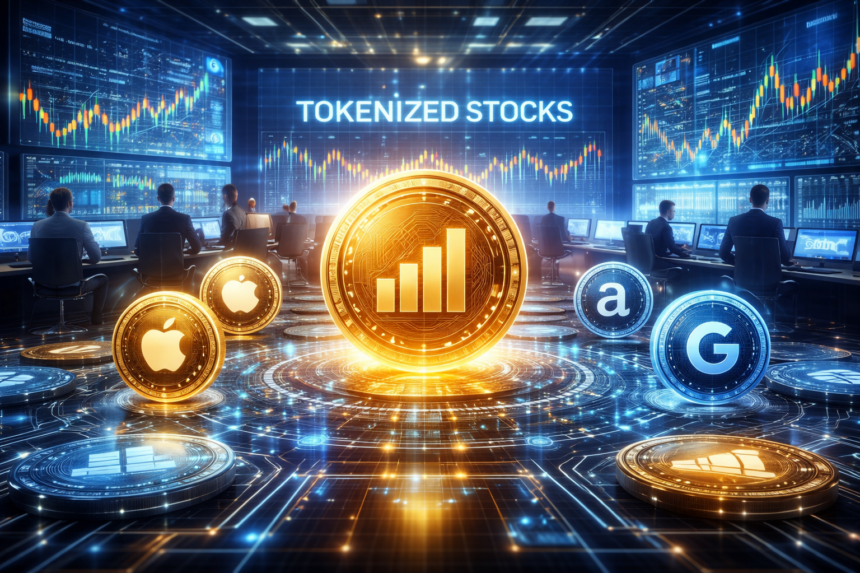
Tokenized equities are digital representations of traditional stocks recorded on a blockchain instead of a conventional exchange. These digital tokens can be traded, settled, and accessed around the clock using decentralized financial technology. In early 2026 the market for tokenized stocks has surged dramatically, approaching a valuation of close to $1 billion a near 30 fold increase compared with just a year earlier. This rapid acceleration reflects strong investor demand and the emergence of infrastructure geared toward institutional participation and broader accessibility.
The idea behind tokenized equities is to take a familiar financial instrument company stock and represent it in a digital form that lives on blockchain networks such as Ethereum, Solana, and Algorand. These tokens are designed to reflect the price and performance of the underlying shares but with some key differences. Unlike traditional equities, they can be traded 24 hours a day, seven days a week with settlement happening nearly instantly on-chain, reducing the need for overnight or multi day reconciliations.
This structural change has appeal for both retail and institutional investors. For retail traders, tokenized equities can offer broader access, more flexible trading hours, and digital interoperability with decentralized financial services. For institutional players, tokenization opens opportunities to use stocks as collateral, employ automated settlement tools, and integrate equities into decentralized finance (DeFi) strategies.
Market Growth and Institutional Infrastructure
In January 2026, data showed the market for tokenized equities at approximately $963 million in value a dramatic 2 878 percent increase compared with January 2025. This explosive growth highlights how quickly the concept has moved from niche experiments to a recognized asset class gaining real capital.
Three platforms Ondo Global Markets, Backed/Kraken, and Securitize together control around 93 percent of the tokenized equities market. Securitize, for example, is a financial technology firm that issues and manages digital tokens representing stocks and other securities on blockchains under regulatory oversight.
This concentration suggests that institutional rails are starting to form. Rather than tokenized equities being a fringe or purely speculative product, they are becoming part of organized financial infrastructure. Regulatory clarity, especially in late 2025, with pilot programs and guidance for broker-dealer custody and settlement, has played a role in boosting confidence.
Moreover, legacy financial institutions are beginning to experiment with blockchain systems that support tokenized securities. The parent company of the New York Stock Exchange, Intercontinental Exchange (ICE), is developing a digital trading platform designed to support 24/7 market access and instantaneous on-chain settlements using stablecoins as funding instruments. This trend signals that traditional markets see tokenization as a meaningful advancement rather than a passing trend.
How Tokenization Changes Traditional Equity Markets
Tokenized equities differ from conventional stocks in several important ways. Most traditional stocks trade on exchanges such as the NYSE or NASDAQ and generally operate within limited market hours. After a trade is executed, it typically takes several days to clear and settle across custodians, broker-dealers, and clearinghouses.
Tokenized equities bypass much of this legacy infrastructure by recording ownership and transfers directly on the blockchain. Settlement can occur within minutes instead of days, reducing counterparty risk and operational friction. This speed and efficiency appeal to investors who are accustomed to near-instant settlement in crypto markets.
Additionally, tokenized equities can serve new functions within the broader decentralized finance ecosystem. For example, they can act as collateral in DeFi lending protocols, enabling users to borrow assets against stock tokens without selling their equity positions. This opens up new capital efficiency opportunities that do not exist in traditional markets.
However, it is important to note that tokenization still exists within the regulatory frameworks that govern securities. In the United States and many other jurisdictions, tokenized stocks must comply with securities laws and the oversight of regulatory bodies such as the Securities and Exchange Commission (SEC). This regulatory alignment can slow development but also increases confidence among institutional participants that the asset class is viable and legally compliant.
Retail Participation and Accessibility
Beyond institutional players, retail investors have shown interest in tokenized equities as well. Some crypto exchanges and brokerage platforms have begun to offer tokenized versions of popular stocks and exchange-traded funds directly to users. These tokenized stocks can trade outside of traditional market hours and often with lower fees or commission structures.
Yet not all tokenized equity products are the same. Some offerings, like Robinhood’s tokenized representations of stocks, have faced criticism because they do not confer actual shareholder rights and instead operate as synthetic or derivative products. Major companies such as OpenAI have clarified that these tokens are not equivalent to true equity ownership. This highlights an important distinction between different tokenized products and why regulatory clarity and investor education remain crucial.
Despite these caveats, tokenized equities represent a novel way for retail investors to engage with global markets using blockchain technology. For many, this offers an easier on-ramp into diversified portfolios without the need for traditional brokerage accounts and settlement systems.
Challenges Facing Tokenized Equity Markets
While the rapid growth of tokenized equities is promising, several challenges remain. Liquidity is one key concern: although the market’s overall value has increased dramatically, trading volumes for many tokenized stocks can still be thin compared with traditional markets. Without robust liquidity, price discovery and efficient trading become harder, especially during periods of market stress.
Another major challenge is regulatory uncertainty. Different jurisdictions vary widely in how they define and regulate tokenized assets. While regulatory clarity has improved in some regions, inconsistencies across borders can complicate issuance, custody, and secondary trading. Ensuring compliance with securities laws while harnessing blockchain innovation is a careful balance that regulators and industry participants continue to navigate.
Custody and legal recognition of tokenized securities also matter. Traditional market participants are familiar with custodians and transfer agents that handle securities ownership. In tokenized markets, ensuring secure custody solutions and legal enforceability of token ownership requires both technological and legal frameworks to be firmly established.
Furthermore, technological risks such as smart contract vulnerabilities, blockchain congestion, and interoperability issues can affect the functionality of tokenized markets. While mature blockchains offer reliability, emerging technologies must continue to develop robust safeguards for large-scale financial use.
The Broader Context: Tokenization Across Assets
The emergence of tokenized equities fits within a larger trend of real-world asset tokenization. Beyond stocks, other financial assets such as government treasuries, funds, and even real estate are being represented on blockchain networks, showing the broad potential of tokenization to modernize financial markets.
In 2026, real-world asset tokenization is no longer fringe experimentation; it is becoming core infrastructure for money markets, asset managers, and institutional innovation. Faster settlement, broader investor access, and programmable financial instruments are drawing interest from Wall Street and traditional finance leaders alike.
This broader adoption suggests that tokenized equities are not a standalone phenomenon but part of a sweeping transformation in how markets operate. As institutions, regulatory frameworks, and technology converge, the tokenization of financial assets could redefine global capital flows and investment strategies for years to come.
Looking Toward the Future
The tokenized equity market’s rapid growth to nearly $1 billion in value marks a significant milestone. It demonstrates that blockchain-based financial instruments are gaining serious traction among both institutional and retail investors. With clear regulatory developments, advancing infrastructure, and evolving market practices, tokenized stocks may soon become a mainstream part of the financial system.
However, challenges around liquidity, legal recognition, and technological robustness remain. Overcoming these hurdles will require continued cooperation between regulators, financial institutions, technology developers, and investors. As these pieces fall into place, tokenized equities could offer a more efficient, accessible, and borderless version of traditional stock markets.
For investors paying attention to the future of finance, tokenized equities represent one of the most exciting intersections of blockchain technology and traditional capital markets. The market may be young, but its trajectory suggests that digital stocks could play a pivotal role in how markets evolve over the next decade.