

How a critical vulnerability shook confidence in one of crypto’s fastest chains
A Wake Up Call for Solana
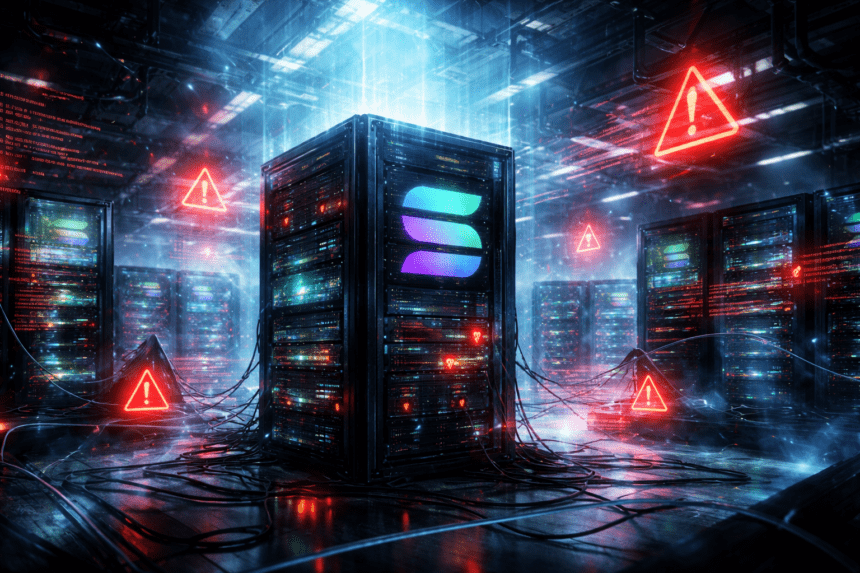
Solana has gained fame as one of the fastest and lowest cost blockchains in the crypto world. It powers decentralized finance applications, decentralized exchanges, NFTs, and fast global transfers with high throughput designed to beat rival networks. But a recent discovery has served as a stark reminder that even the most ambitious blockchain designs are vulnerable. A terrifying flaw was exposed showing how easily the “always on” Solana network could have been stalled by hackers if it were exploited at scale.
This flaw was revealed alongside a security patch released in the Agave v3.0.14 update, which was tagged urgent by Solana maintainers and validators. The urgency stemmed not just from minor improvements but from the closure of plausible attack vectors that, if left unpatched, could have enabled coordinated actions to disrupt network operation.
While Solana is known for speed, its decentralized nature depends on thousands of independent validators running compatible software. When critical updates lag in adoption, the window of vulnerability widens. Early reports showed that only about 18 percent of staked economic weight had upgraded to the patched version when the advisory was issued, illustrating how hard it can be for a fully decentralized network to respond quickly.
What Was the Flaw Really About
At its core, the recently disclosed problems involved how certain network messages were handled and how validators verify vote messages in the consensus process. One issue related to Solana’s gossip system, which validators use to share messages even when block production faces disruptions. If an attacker manipulated that system or crafted messages a certain way, it could have caused validators to crash or become inconsistent, reducing overall network availability.
Another potential attack path involved a missing verification step for vote messages, which play a central role in the proof of stake consensus process. In the worst case, an attacker flooding the network with invalid vote messages could have interfered with how blocks are confirmed and, at scale, potentially stopped consensus.
The Agave v3.0.14 patch closed these holes, strengthening message handling and vote verification. But the episode highlighted how intricate the layers of blockchain security are and how critical it is for the ecosystem to adopt fixes quickly.
Why Coordination in a Decentralized Network Matters
In a blockchain like Solana, validators maintain the ledger and process transactions by running compatible client software. Unlike a centralized service that can push updates instantly, decentralized networks rely on independent operators. These operators must choose when to build, test, and deploy changes in their own environments.
This decentralization is part of what makes blockchains resilient and censorship resistant. But it also introduces practical challenges when a critical security update is needed. Validators that delay or skip updates not by malice, just by operational timing can leave parts of the network exposed to threats.
In the case of the recent Solana flaw, the network’s distributed nature meant that validators running older software could have been targeted or overwhelmed before fixes were widely adopted. The risk wasn’t just about the code; it was about how quickly the community of operators could respond.
Beyond the Flaw: Solana’s Security Track Record
This latest incident is not the first time Solana’s security has been tested. Historical outages and exploits have raised questions about network stability and resilience. For instance, past issues with how offline transactions were processed led to hours-long network outages, and bot-driven transaction spam overwhelmed the system in earlier years.
Furthermore, security breaches have occurred at the wallet and application layer, such as theft from wallets due to compromised keys or vulnerabilities in wallet software. Although these incidents are usually tied to third party services rather than the core protocol, they add to perceptions of risk for users.
Academic and developer communities have also studied smart contract vulnerabilities and tooling gaps on Solana, suggesting tools for security analysis are still maturing compared with older ecosystems like Ethereum. This research shows there are multiple layers at which security must be addressed to protect users and applications.
What This Means for Users and Developers
For everyday users, the memorable part of this vulnerability is its threat to the network’s uptime. Cryptocurrencies depend on trust in the ledger and the certainty that transactions will settle when expected. A stall in the network would harm decentralized finance protocols, exchanges, and anyone relying on Solana’s fast settlement times.
Developers and validator operators should take this as a reminder of best practices in blockchain security:
Keep server and client software up to date: Ensuring you run the latest client release protects against known vulnerabilities.
Participate in community security advisories: Validator communities often share alerts and coordinate responses.
Build security into testing workflows: Before rolling updates live, validate them in test environments.
Leverage enhanced monitoring: Tools that track performance and strange behaviors can provide early warnings.
Users who interact with Solana through wallets and dApps should also practice good safety habits such as using hardware wallets for key storage and being vigilant against phishing attempts and malicious software.
The Broader Message for Blockchain Security
The Solana flaw and patch event is a case study for all blockchain networks. It illustrates that:
Decentralization brings tradeoffs: Security fixes need rapid community adoption, which is harder in decentralized systems than in centralized ones.
Ecosystem health equals network health: Validators, developers, and end users all play a role in maintaining security.
Security is multilayered: Protocol vulnerabilities, client software, wallets, and smart contracts all require attention.
As blockchain technologies continue to grow and support more financial activity, incidents like this will remind us that speed and cost are important but must be balanced with safety and reliability.
In the end, Solana’s recent vulnerability was addressed before any known exploit occurred. But the scare highlights the importance of coordinated defensive action in crypto and the ongoing need for robust security practices across the whole ecosystem