

Inside the Controversy Over U.S. Claims and the Pushback from Denmark and Greenland
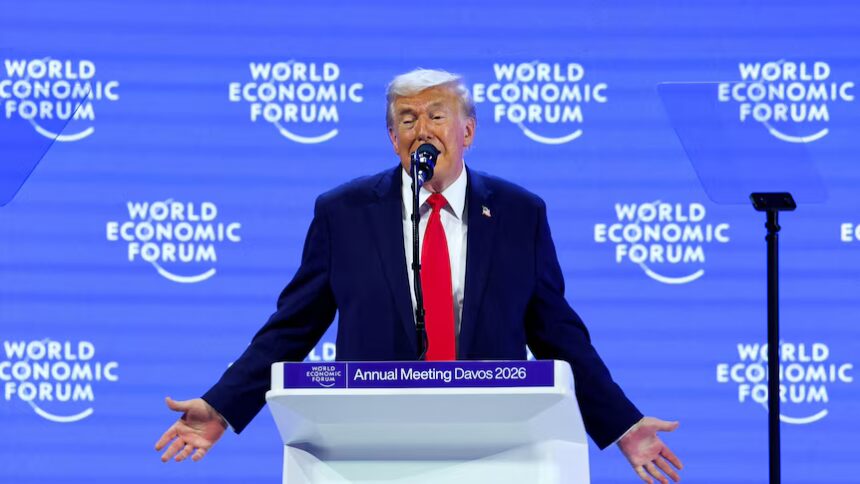
In January 2026 global attention turned toward the Arctic when U.S. President Donald Trump announced what he described as a “framework of a future deal” regarding Greenland, the large semi-autonomous territory of the Kingdom of Denmark. Trump’s comments came during the World Economic Forum in Davos, Switzerland, and sparked intense debate about sovereignty, international alliances, and the strategic importance of the island in a rapidly changing geopolitical environment.
While the U.S. president framed his announcement as a break in tensions and a diplomatic breakthrough, leaders in Greenland and Denmark quickly clarified that no formal agreement exists and that the island’s sovereignty is non-negotiable. In this article we explore what Trump said, how Greenland and Denmark responded, and what this means for global politics and Arctic security.
Why Greenland Matters Strategically
Greenland is the world’s largest island, located between the North Atlantic and Arctic Oceans. Its geographic position gives it enormous strategic value for military, economic, and environmental reasons. Its proximity to the polar region means control or influence over Greenland could play a role in defense readiness against rising Russian and Chinese interests in the Arctic.
The U.S. already maintains a significant presence in Greenland through Pituffik Space Base, its northernmost defense installation, which serves as an early warning and strategic military site. Trump and his administration have repeatedly cited national security as the reason the United States “needs” Greenland arguing that only greater American control could ensure its defense against rival powers.
But for Greenland and Denmark, sovereignty is the central issue. Greenland is a self-governing territory under the Kingdom of Denmark and its people have repeatedly stated they do not want to be sold or absorbed by another nation.
What Trump Announced and What It Actually Means
At the Davos forum Trump claimed that a “framework for a future deal” had been reached following talks with NATO Secretary General Mark Rutte. Trump suggested that this framework would give the U.S. “total access” to Greenland.
However this statement was immediately met with pushback from international leaders and Greenlandic officials. Denmark’s prime minister and Greenland’s own leader both rejected the notion that any agreement giving up sovereignty existed or had been agreed to. They stressed that any negotiations over the island’s future must include Greenland and Denmark, and that neither would allow their territory to be negotiated away by external powers.
The NATO chief Rutte later clarified that discussions were ongoing regarding Arctic security cooperation, not territorial ownership, and that increased efforts were needed among members to strengthen regional defense without undermining national sovereignty.
This contrast between Trump’s framing of a “deal” and the denial of any actual shift in sovereignty has fueled confusion and concern among allies, media, and political analysts.
Tensions and Diplomatic Strain
Trump’s Greenland rhetoric drew strong reactions from European leaders and the region’s governments. At various points during the dispute the U.S. also linked its demands to threatened tariffs on key European allies, a strategy aimed at pressuring them into acquiescence. These tariff threats were later dropped when Trump announced the supposed framework, but the damage to trust among allies had already been done.
European Union officials went further, warning that attempts to pressure Denmark or Greenland on territorial sovereignty could weaken long-standing alliances and even damage the transatlantic relationship. EU leaders also pledged to strengthen Arctic security on their own terms, emphasizing cooperation and respect for international law.
In Denmark and Greenland, resistance to U.S. pressure was visible both politically and socially. Large protests under slogans such as “Greenland is not for sale” erupted in cities including Copenhagen and Nuuk, drawing tens of thousands of people. These demonstrations highlighted deep opposition among ordinary citizens to any notion of foreign control over their land.
The Debate Over Sovereignty and International Law
Central to the controversy is a fundamental principle of international relations: sovereignty. Under international law, a territory’s right to self-determination cannot be overridden by another power without consent. Denmark and Greenland have repeatedly made this clear that control over their territory is for them to decide, not for the United States or NATO to dictate.
In more legalistic terms, any transfer of control or change in status would require formal negotiation and ratification by both Denmark and the Parliament of Greenland not merely an agreement announced by an external government.
Greenland’s leaders have emphasized that their current alliance with Denmark and NATO already secures defense commitments and regional cooperation without surrendering sovereignty. This unity underscores the diplomatic challenge facing the United States, which must balance its own strategic interests with respect for the political autonomy of its allies.
The Impact on NATO and Transatlantic Ties
The Greenland dispute briefly pushed the issue of NATO cooperation and unity to the forefront of global politics. Trump’s public statements, tariff threats, and aggressive diplomatic posture risked splitting support among NATO members.
But NATO officials and allied leaders worked to contain the fallout, reiterating the importance of cohesion and mutual defense especially given broader security concerns in Europe related to Russia’s actions and China’s polar interests.
Part of the response involved reaffirming that discussions about Greenland were about defense cooperation and Arctic strategy, not sovereign territory transfer. This distinction helped refocus the narrative on shared security challenges rather than territorial dispute though debates about leadership, influence, and strategy remain unresolved.
What This Means for the Future
As of early 2026, the dispute over Greenland’s future is far from settled. Trump’s announcement created headlines, but the reality on the ground remains that Greenland is not for sale and its sovereignty is upheld by both Danish and Greenlandic officials.
Looking ahead several key factors will shape the trajectory of this dispute:
Ongoing diplomatic negotiations among the U.S., Denmark, and Greenland focused on security cooperation rather than acquisition.
International law and treaty commitments, which protect territorial integrity and require consent for any transfer of control.
Domestic political pressures in Greenland and Denmark, where resistance to foreign takeover remains strong.
Geopolitical competition in the Arctic, where interests from Russia, China and Western allies intersect.
All of these dynamics ensure that the Greenland question will remain part of broader discussions about Arctic strategy, alliance commitments, and international norms in the coming years.
Conclusion, The controversy over Greenland in early 2026 highlighted the complexities of international diplomacy, national sovereignty, and global security cooperation. What President Trump framed as a “framework of a future deal” was met with clear rejection from Greenland and Denmark, who insisted that sovereignty cannot be bargained away by outside powers.
This episode revealed both the strategic importance of the Arctic and the delicate nature of alliances like NATO when national interests and diplomatic language clash. As world leaders continue talks on Arctic security and cooperation, respect for territorial integrity and international law will remain essential to maintaining trust and collaboration among allies.