

From Greenland disputes to crypto markets the future of value storage is in flux
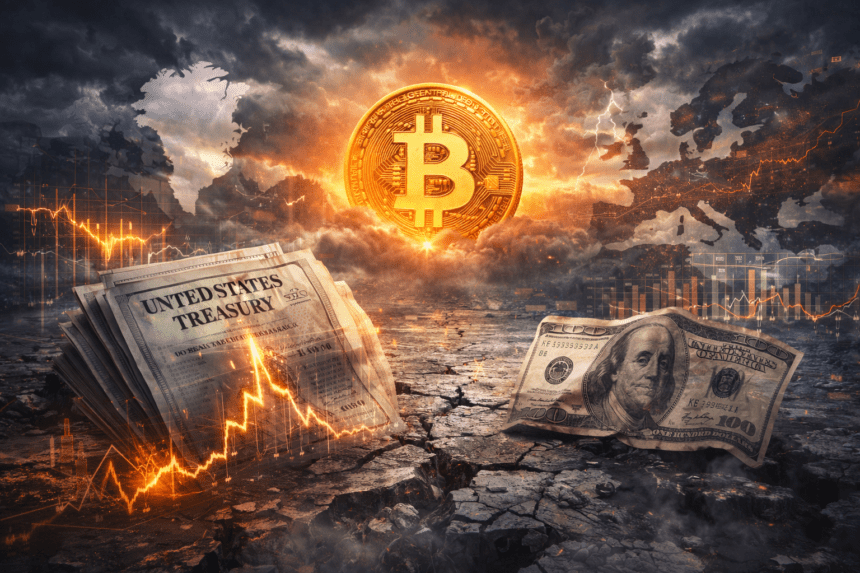
Global markets are breathing uncertainty as tensions around Greenland between the United States and the European Union raise questions not only about geopolitics but also about the financial instruments that have long underpinned the world economy. At the heart of the latest debate is the possibility that Europe could reconsider its enormous holdings of U.S. Treasurys if political pressure from Washington escalates. Though such an extreme scenario is debated among policymakers and analysts it highlights a larger truth: trust in the dollar’s stability and in the financial order that has existed since World War II may be weakening and investors are paying attention. This article explores why these discussions matter and how Bitcoin is emerging in the background as part of a broader conversation about financial resilience and diversification.
For decades U.S. Treasurys have been considered among the safest assets on the planet. Countries and institutions around the world hold them as reserves because of the United States’ deep financial markets and the dollar’s role as the primary global currency. At the end of November 2025 foreign investors held over 9 trillion dollars in U.S. government debt a sum large enough that even partial portfolio moves can affect yields and markets broadly. Yet recent events have shown how political tensions can put this perception under stress. According to recent reporting some analysts have suggested that European leaders could use their significant holdings of Treasurys as leverage in disputes with Washington over Greenland a massive territory in the Arctic. This has sparked market speculation that shifts in these investments could ripple through global capital markets.
It is important to note that policymakers and officials have pushed back against the idea that Europe would dump U.S. assets aggressively. The U.S. Treasury Secretary has dismissed these scenarios as implausible pointing out that aggressive sell offs of U.S. debt would ultimately harm European investors too. He has described such narratives as lacking logic and strongly denied that European governments are planning coordinated Treasurys sell offs in response to disputes. Nonetheless the discussion itself highlights how geopolitical tensions can quickly weave into financial markets and affect perceptions of the dollar’s invincibility.
The tension stems in part from a growing rift between certain European nations and the U.S. over geopolitical decisions such as the American push to acquire Greenland. That move elicited strong reactions from European leaders who called any coercive measures unacceptable and have discussed responses including negotiating trade measures and other economic actions. In this environment markets began to price in political risk and potential capital reallocation which in turn affected stocks bonds and currencies. The U.S. dollar has weakened against major peers and U.S. yields rose as investors reacted to the possibility of reduced foreign demand for Treasury’s and a shift in global risk appetites.
When traditional safe assets like U.S. Treasurys become part of geopolitical bargaining chips investors begin to reexamine assumptions about financial stability. Historically the dollar and U.S. government debt have been the anchors of the global financial system largely because of their liquidity reliability and role in international commerce. But when headlines about diplomatic dispute and threats of tariffs dominate trading floors fund managers take notice. Such narratives can cause increased volatility in bond markets which then filter through to other asset classes and risk assessments.
As this conversation unfolds Bitcoin has occasionally entered the picture as a potential alternative store of value. Bitcoin is not connected to any single government or central bank and operates on a decentralized network that cannot be controlled by foreign policy decisions in the same way that sovereign debt inflows and outflows can be. Advocates argue that in an era of rising geopolitical strain and diminishing confidence in traditional safe assets decentralized digital assets like Bitcoin may play a role in diversifying risk. This does not necessarily mean Bitcoin will replace Treasurys or the dollar but it does suggest some investors are looking for value instruments that are not as tightly bound to state relations or fiscal policy decisions.
The narrative of a possible shift toward Bitcoin reflects broader trends impacting global finance. Increasingly investors are worried about concentrated risk in singular assets or currencies and are exploring alternative tracks such as gold other precious metals and indeed digital assets like Bitcoin. While gold has a long history as a safe haven Bitcoin’s digital scarcity borderless nature and independence from central authorities contribute to its appeal in certain scenarios especially among crypto native participants. For those investors Bitcoin represents a modern counterpart to the age old concept of hedging against instability and uncertainty.
However it is worth stressing that Bitcoin itself is not immune to geopolitical or macroeconomic forces. In fact the cryptocurrency’s price can be highly volatile in times of market stress and often moves in concert with broader risk asset sentiment. Recent market episodes have shown Bitcoin falling alongside stocks and traditional riskier assets during bouts of uncertainty. This suggests that while Bitcoin has unique characteristics it does not yet behave like a pure safe haven in the same way that gold might in times of extreme stress. The dynamics are still evolving and the correlation of Bitcoin with other financial instruments remains complex.
Moreover the role of global institutions in shaping confidence in financial markets cannot be underestimated. Central banks governments and multinational agreements still drive much of the liquidity and capital flows in global markets. Even as decentralized finance grows in prominence traditional financial relationships remain deeply embedded in portfolios around the world. That is why even the prospect of a large sovereign sell off of Treasurys is met with skepticism from policymakers who stress the mutual dependencies that exist between nations in the intertwined global economy.
So what does this all mean for everyday investors and observers? First it highlights that geopolitical disputes are no longer separate from financial markets. Decisions about territory trade and diplomacy can have real effects on the instruments and currencies people use to store value. Second it underscores that diversification is not just about picking different assets but also about understanding how global events can influence perceived safety and demand. And third it reminds us that emerging alternatives such as digital assets are becoming part of mainstream conversations about financial strategy even if their roles are still being defined and tested.
Looking ahead the debate over U.S. Treasurys the dollar and Bitcoin will continue to be shaped by world events policy decisions and investor sentiment. As markets watch diplomatic developments in Europe and the United States and as global capital flows respond to risk assessments the narratives around safe assets may shift further. Whether Bitcoin ultimately plays a significant role in this new landscape depends on a range of factors from regulatory clarity adoption rates macroeconomic conditions and technological maturity. But the conversation itself represents a departure from conventional thinking about where value should be held in times of uncertainty.
In conclusion political tensions and potential shifts in how foreign investors view U.S. debt have put a spotlight on the foundations of global finance. While the idea of a mass sell off of Treasurys remains speculative the very talk of it underlines how sensitive markets can be to geopolitical narratives. In this context Bitcoin exists not just as a price chart but as part of a broader discussion about diversification resilience and the evolving nature of safe assets in a complex and interconnected world.