
When political commentary collides with religious freedom
Introduction, In recent years, the boundaries between political activism, media commentary, and deeply protected civil liberties have become increasingly blurred. One of the clearest examples of this tension has emerged around comments made by Don Lemon, following reports of a protest that disrupted an active church service in the United States.
The incident reignited a long standing debate about where protest rights end and where religious protections begin. While Don Lemon is not accused of organizing or physically participating in the protest, his remarks drew sharp criticism from many who believe he should have known better, given his experience as a national media figure and his reputation as a strongly ideological commentator.
This controversy is not only about one media personality. It reflects a broader national struggle to balance freedom of expression with the right of Americans to worship without interference. It also highlights how easily commentary around sensitive issues can escalate into legal, political, and cultural flashpoints.
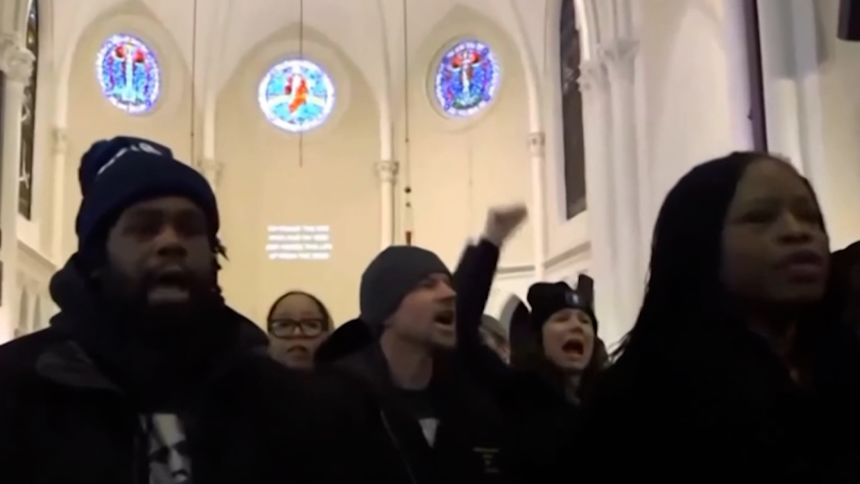
What happened,The controversy centers on a protest that reportedly took place inside a church during an active worship service. According to accounts shared publicly, protesters entered the sanctuary while services were underway and disrupted the proceedings to deliver a political message.
This detail is crucial. In the United States, protests are generally protected under the First Amendment. However, that protection is not unlimited. The law treats houses of worship differently, especially when religious services are actively taking place.
Don Lemon commented on the incident in a way that many viewers interpreted as minimizing the seriousness of disrupting a religious service. Critics argue that his framing blurred a critical legal and moral line, while supporters say he was simply addressing the broader political context surrounding the protest.
Why this matters beyond one protest
Churches occupy a unique place in American law and culture. They are not simply public gathering spaces. They are private property, and worship services are considered protected religious activities.
When a protest occurs inside a church without permission, the issue is no longer just about speech. It becomes a question of interference with religious freedom, trespassing, and public order.
This distinction matters because it shapes how law enforcement responds and why federal authorities may become involved. It also matters because public figures who comment on these events influence how audiences understand the law, their rights, and the limits of protest.
Churches as private property
A church is legally classified as private property. This means the owners or governing body of the church control who may enter and under what conditions.
Unlike a public park or sidewalk, entry into a church during a service is typically for the purpose of worship. When individuals enter with the intent to disrupt, rather than participate, they may be violating property rights.
Trespassing laws apply even if the protest message itself is political or socially motivated. The content of the message does not override the rights of the property owner or congregation.
Worship services as protected religious activity
A worship service is not just a gathering. It is a protected religious exercise under the Constitution. Courts have consistently recognized that individuals and communities have the right to practice their religion without interference.
Interrupting a service can be seen as an infringement on that right. This is why disruptions inside churches are treated differently from protests outside religious buildings.
The law recognizes that religious exercise requires a level of peace, focus, and autonomy that cannot be maintained if political demonstrations are allowed to intrude into sacred spaces.
Legal consequences of church disruptions
When protesters enter a church service without permission and disrupt worship, they may face several legal consequences. These can include trespassing charges, disorderly conduct violations, and in some cases, federal civil rights concerns related to interference with religious exercise.
Because religious freedom is explicitly protected under federal law, these incidents can attract attention beyond local police departments. In some cases, they may be reviewed by the Department of Justice, regardless of the political nature of the protest.
This does not mean every church disruption becomes a federal case. But it does mean the stakes are higher when religious rights are involved.
The First Amendment protects free speech, peaceful assembly, and protest. However, these rights are not absolute. Courts have long held that reasonable restrictions can be placed on the time, place, and manner of expression.
Protesting inside a church during worship crosses several of these boundaries. The location is private. The timing directly interferes with a protected activity. The manner disrupts the ability of others to exercise their constitutional rights.
This legal framework is why many critics believe Don Lemon should have been more careful in how he addressed the incident. As a veteran journalist, he is expected to understand these distinctions.
Did Don Lemon encourage or excuse the protest
There is no evidence that Don Lemon coordinated with the protesters or encouraged them to disrupt a church service. However, critics argue that his commentary appeared to excuse or downplay the seriousness of what occurred.
For many viewers, this raised concerns about media bias. Lemon has long been seen as a far left commentator, and some argue that his ideological alignment influenced how he framed the event.
This perception matters because trust in media depends on the belief that journalists apply legal and ethical standards consistently, regardless of political alignment.
Media responsibility and public trust
Media figures hold significant influence. Their words shape public understanding of events and the law. When commentary appears to blur legal lines, it can confuse audiences and escalate tensions.
In cases involving religious freedom, the responsibility is even greater. Faith communities often feel vulnerable when their spaces are politicized. Media narratives that appear dismissive can deepen feelings of marginalization.
Critics argue that Lemon should have emphasized the legal distinction between lawful protest and unlawful disruption, rather than focusing primarily on the political motivations behind the demonstration.
The public reaction to Lemon’s comments was swift and divided. Some viewers accused him of showing disrespect toward religious communities and excusing behavior that would not be tolerated in other private settings.
Others defended his right to discuss the broader political issues surrounding the protest. They argued that focusing solely on the location of the protest distracts from the underlying cause that motivated the demonstrators.
This divide reflects a larger cultural split over how protest should function in modern America and whether any space should be considered off limits.
One of the most important distinctions in this debate is location.
Protesting outside a church on public sidewalks or streets is usually legal, provided protesters comply with local noise restrictions, permit requirements, and do not block entrances. This form of protest allows activists to express their views without interfering with worship.
Inside a church during a service, however, the situation changes entirely. Disruption is not protected speech and can lead to arrest. The right to protest does not override the right to worship.
This distinction is well established in law, yet often misunderstood in public discourse.
Houses of worship are afforded special legal consideration because of the central role religion plays in many Americans’ lives. The Constitution explicitly protects religious exercise, recognizing it as a foundational freedom.
Allowing political protests to intrude into worship services would undermine this protection. It would also set a precedent that no religious gathering is safe from disruption.
This is why lawmakers and courts have consistently drawn firm boundaries around religious spaces.
Political polarization and sacred spaces, The controversy also highlights how political polarization has seeped into nearly every corner of public life. Even spaces traditionally considered neutral or sacred are now viewed by some activists as fair game.
This shift has alarmed many religious leaders across political lines. They worry that normalizing disruptions in houses of worship will escalate tensions and invite retaliation.
Media commentary that appears to legitimize such actions can unintentionally fuel this trend.
Historical perspective on church disruptions
Historically, churches have played roles in political movements, including the civil rights movement. However, these efforts were typically led by congregations themselves, not imposed on them by external protesters.
There is a significant difference between a church choosing to host political activism and being forcibly disrupted by it. This distinction is often lost in modern debates.
Understanding this history helps explain why many Americans reacted strongly to both the protest and the commentary surrounding it.
The role of the Department of Justice
When religious freedom is potentially infringed, federal authorities may take interest. The Department of Justice has a mandate to protect civil rights, including the free exercise of religion.
This does not mean political speech is being suppressed. Rather, it reflects the government’s responsibility to ensure one group’s expression does not unlawfully interfere with another group’s rights.
The possibility of federal scrutiny underscores why church disruptions are treated seriously under the law.
Commentary versus accountability
Don Lemon’s defenders argue that commentary should not be conflated with endorsement. They say criticizing the protest location does not require dismissing the political grievances that motivated it.
His critics counter that public figures must be held accountable for how they frame events. When commentary appears to excuse unlawful behavior, it risks normalizing it.
This debate goes to the heart of modern media ethics.
Broader implications for free speech debates, This incident is likely to influence future discussions about protest boundaries. As activism becomes more confrontational, questions about acceptable locations and methods will continue to arise.
How media figures address these issues will shape public understanding and potentially affect policy responses.
Clear communication about legal limits is essential to prevent confusion and escalation.
At its core, this controversy reflects a fundamental tension. Activists want their voices heard. Religious communities want to worship in peace.
The Constitution protects both interests, but it does not treat them as interchangeable. When they collide, the law prioritizes preventing interference with religious exercise.
Recognizing this balance is key to maintaining social cohesion.
Lessons for journalists and commentators
For journalists and commentators, the situation offers a cautionary lesson. Experience and platform come with responsibility.
Accurate framing of legal realities is essential, especially when emotions run high. Oversimplifying or politicizing legal boundaries can deepen divisions rather than inform audiences.
Many believe Lemon’s long career should have equipped him to navigate this complexity more carefully.
The ongoing conversation,the discussion sparked by this incident is unlikely to fade quickly. As political activism continues to evolve, similar conflicts will arise.
Whether society can maintain respect for sacred spaces while preserving robust protest rights remains an open question. Media voices will play a central role in shaping that outcome.
Thoughts
The controversy surrounding Don Lemon’s comments on a church protest underscores a recurring tension in American life between free speech and the right to worship without interference. While Lemon is not accused of organizing the protest, the backlash highlights how sensitive and legally complex these situations are.
Churches are private property. Worship services are protected religious activities. Disrupting them is not protected speech. These principles are well established, yet often misunderstood.
As political passions intensify, respecting these boundaries will be critical to preserving both civil liberties and social harmony.