
Why the Justice Department is weighing charges and what it means for free speech and religious freedom
A peaceful Sunday morning in a church in St. Paul, Minnesota turned into a national flashpoint in early 2026. Dozens of demonstrators entered the Cities Church during worship, chanting and disrupting the service. What began as a protest against U.S. Immigration and Customs Enforcement (ICE) actions has become a serious legal matter, drawing in the U.S. Department of Justice (DOJ), civil rights activists, religious leaders, and political figures from across the country.
The protesters allege that a pastor connected to the church also works as an ICE field office director in the area, and they were demanding accountability following a fatal shooting by an ICE agent in Minneapolis earlier in January. Now, the federal government is investigating whether the protesters violated laws designed to protect religious worship. This situation raises questions about the boundaries of peaceful protest, the protection of religious spaces, the role of law enforcement, and the deepening national divide over immigration policy.
A Service Interrupted
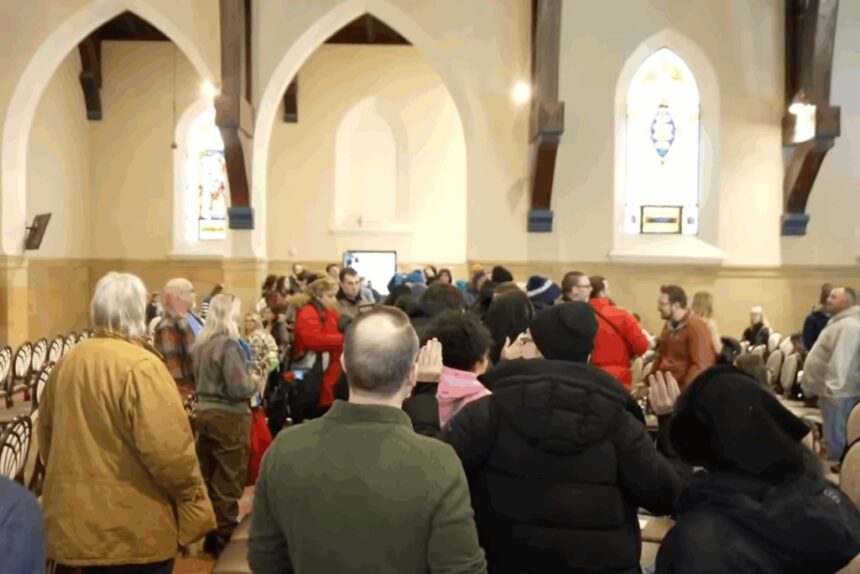
On a Sunday morning service, a group of anti-ICE protesters walked into Cities Church, interrupting the worship gathering with chants such as “ICE out” and “Justice for Renee Good,” referring to the name of a woman fatally shot by an ICE agent in Minneapolis during a federal enforcement operation.
Videos shared online by protest organizers show demonstrators standing inside the sanctuary as the service progressed. They approached worshippers and shouted slogans, drawing shocked looks from church members. Some of the protesters claimed that one of the church pastors, David Easterwood, holds a leadership role in the local ICE office responsible for immigration enforcement. While the pastor listed on the church’s website matches the name of the ICE official, it was not clear if he was present at the church service on the day of the protest.
What began as a demonstration against immigration enforcement tactics quickly turned into a direct clash within a house of worship. Church leaders and congregants described the disruption as unexpected, frightening, and deeply unwelcome in what is typically a solemn, sacred setting. Videos from the event show some churchgoers trying to continue worship while others looked on as the protesters remained in the space, chanting and making statements.
The Federal Response
The Department of Justice quickly announced an investigation into the incident, signaling that prosecutors may pursue criminal charges against those involved in disrupting the church service. Officials have pointed to federal statutes that protect access to places of worship and prohibit interference with religious exercise. This includes the Freedom to Access Clinic Entrances (FACE) Act, which makes it a federal crime to intimidate or physically obstruct people from entering or participating in worship.
Assistant Attorney General Harmeet Dhillon described the protest as “desecrating a house of worship and interfering with Christian worshippers,” and said the DOJ would pursue any federal civil rights violations that occurred. Attorney General Pam Bondi also weighed in, emphasizing that attacks on law enforcement and intimidation of Christians would be met with the full force of federal law.
Local law enforcement, including the Saint Paul Police Department, responded to the scene after multiple calls reporting that a large group of protesters had entered and interrupted the service. By the time police arrived, the group had moved outside the church, and officers monitored the demonstration as it continued in public areas.
Why Protesters Were There
The demonstrators said they were motivated by outrage over recent immigration enforcement operations in Minneapolis and St. Paul, especially after the January shooting of Renée Good, a 37-year-old mother of three who was killed by an ICE agent during a federal raid. The enforcement effort, widely referred to as Operation Metro Surge, has involved thousands of arrests and aggressive tactics that critics say have harmed immigrant communities, sparked fears, and inflamed public anger.
Activists, including representatives from civil rights groups, have accused the pastor associated with the church of having dual roles that link him to federal enforcement activities they see as unjust. Some organizers of the protest compared their actions to historical civil rights demonstrations and argued that forcing conversation about immigration policy was necessary, even if it meant disrupting traditional spaces.
However, critics of the protest argued that interrupting a religious service crossed a line. Many congregants, church leaders, and religious commentators expressed concern that a house of worship should be a refuge from political conflict, not a stage for it. Some said the protest frightened children and disrupted a place meant for reflection and community.
Legal Issues and First Amendment Questions
The clash between protest and worship raises complex legal issues. On the one hand, the First Amendment of the U.S. Constitution protects freedom of speech and the right to petition the government, and peaceful protest is a foundational American right. On the other hand, federal law also protects the free exercise of religion and the right of worshippers to gather without intimidation or obstruction.
Legal experts note that cases like this can be difficult to navigate. If protesters simply stood and spoke inside the building without physically blocking access, they could argue that their actions were symbolic speech protected by the First Amendment. But entering a sanctuary during a service and preventing worship from proceeding could be seen as interference that federal law prohibits, particularly under the FACE Act.
Federal prosecutors must determine whether the actions of the protesters crossed that legal threshold and whether charges should be filed. If they decide to do so, those charges could carry penalties including fines or imprisonment, depending on how events are interpreted under civil rights and religious freedom statutes.
Community and Political Reactions
Responses to the incident have been sharply divided. Some political leaders and government officials condemned the protest, calling for strict enforcement of laws to protect religious freedom. They argue that the disruption of worship should not be tolerated under any circumstances, and that places of worship must remain separate from political confrontation.
Other voices, including some civil rights leaders and religious figures, have defended the motives of the protesters, describing their actions as an expression of deep moral concern. They say that systemic issues in immigration enforcement demand urgent attention, and that even unconventional protest tactics can serve to highlight critical injustices.
Religious leaders outside the St. Paul community have also weighed in, with some condemning the disruption as disrespectful and divisive, while others have emphasized the importance of listening to concerns about social justice. The event has sparked broader discussion nationwide about the role of churches in political discourse and when activism becomes intrusion.
Social media and independent media coverage of the episode further amplified those debates, with clips of the protest circulating widely and prompting commentary from commentators across the political spectrum. Some viewed the incident as a symptom of political polarization in America, where protests increasingly intersect with religion, law enforcement, and civil liberties.
What Happens Next
At the time of this writing, the Department of Justice has publicly affirmed its intent to investigate and potentially pursue charges against individuals involved in the disruption. Prosecutors are reviewing whether federal laws were broken, particularly those that protect access to places of worship.
Officials have stressed that cases involving civil rights violations must be carefully examined, and any decision to charge protesters will hinge on whether their conduct meets the legal criteria for obstruction of worship or intimidation. If charges are filed, they could set a precedent for how similar events are handled in the future, especially in moments when political protest enters sacred or protected spaces.
Thoughts
A Sunday worship service in St. Paul became the center of a complex clash over immigration policy, civil protest, and religious freedom. What started as an anti-ICE demonstration quickly evolved into a federal legal investigation when protesters entered a church and interrupted a service. The U.S. Department of Justice has signaled its intent to pursue charges, reflecting the serious legal protections afforded to houses of worship.
This episode highlights the growing tension in modern America between the right to protest and the right to worship in peace. It shows how deeply political issues such as immigration enforcement can reach into every part of public life, including faith communities. As investigations continue and legal decisions loom, incidents like this may shape how protests and houses of worship intersect in the years ahead.
In the United States, churches and other houses of worship are treated differently under the law. A church is private property, and a worship service is considered a protected religious activity. When protesters enter a church without permission and interrupt or disrupt a service, they may face arrest or federal charges. These can include trespassing, disorderly conduct, and violations of federal civil rights laws that protect the free exercise of religion. This is why the Department of Justice can investigate disruptions inside churches even when the protest message itself is political.
Outside a church, the rules change. Protesting on public sidewalks or streets is usually legal, as long as demonstrators follow local noise limits and permit requirements. However, blocking entrances or interfering with people trying to attend services is not allowed. The key legal distinction is that political protest cannot be forced inside a worship service, even if the cause itself is protected speech.
The law treats these situations differently because the U.S. Constitution protects both free speech and the free exercise of religion. The government attempts to balance these rights by allowing protest in public spaces while protecting access to medical care and religious worship from interference. The rule is not that people cannot protest, but that they cannot interfere with protected activities.
Whether these rules are applied evenly remains a point of debate. Critics argue that enforcement can be inconsistent, influenced by political context, and harsher toward certain causes. Supporters counter that these laws exist to protect safety and civil rights, are content neutral, and apply regardless of political viewpoint. Courts regularly review how these laws are enforced to ensure constitutional balance.
In simple terms, people in the United States can protest abortion, religion, or government policy, but they cannot block or intimidate individuals at abortion clinics, disrupt church services, or interfere with protected activities on private property. Public sidewalks are generally acceptable spaces for protest, while private property and protected religious or medical settings are not. In the U.S., speech is protected, but interference is not.