
A comprehensive look at the Minneapolis protests after the fatal ICE shooting that sparked nationwide
In early January 2026, Minneapolis, Minnesota became the center of intense national attention after a U.S. Immigration and Customs Enforcement (ICE) agent fatally shot 37-year old Renee Good, a U.S. citizen. This incident, which occurred on January 7, ignited widespread outrage, vigils and protests across Minnesota and other American cities. The killing was followed by another non-fatal shooting of a Venezuelan national by a federal officer further inflaming tensions.
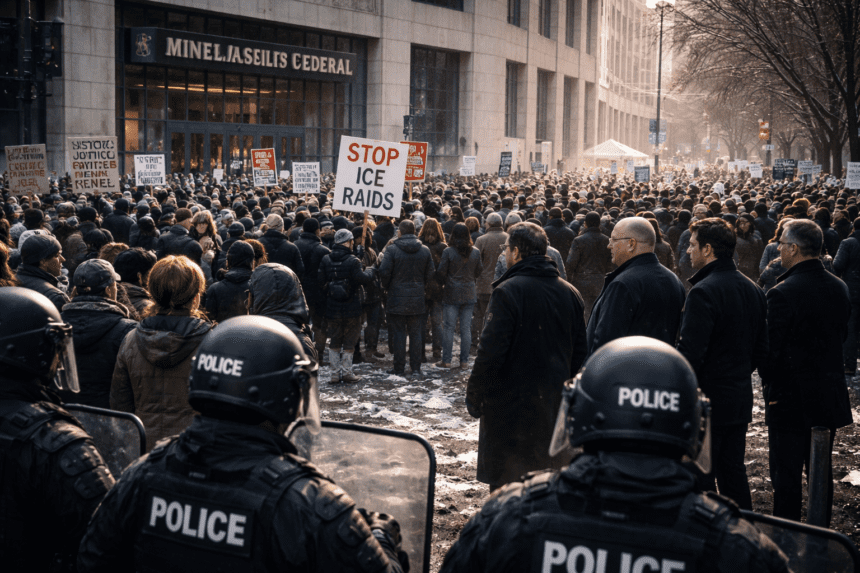
The scenes in Minneapolis quickly shifted from street vigils to large public demonstrations focused both on the fatal shooting and on broader concerns about federal immigration enforcement practices. Activists and community members took to the streets to demand accountability for the killing and to oppose what they saw as an aggressive federal surge of ICE, Customs and Border Protection and Homeland Security agents.
What Triggered the Protests
The central catalyst for the unrest was the shooting death of Renee Good, a 37-year-old Minneapolis resident. According to local authorities and media reports, Good was shot at least three times by an ICE officer during an enforcement action an encounter that has raised deep concerns over uses of force, transparency and accountability.
Following the tragedy, local officials including Minnesota Governor Tim Walz and Minneapolis Mayor Jacob Frey publicly criticized the federal operation and called for transparency and restraint. They urged protesters to express their anger peacefully while also highlighting community fears about aggressive federal presence.
Escalation of Tensions
As protests continued, the federal response grew more robust. The Trump administration mobilized roughly 3,000 federal agents from ICE, Customs and Border Protection and other agencies under what has been referred to as “Operation Metro Surge.” This deployment included controversial raids, arrests and confrontations, which in many cases drew crowds of residents and protesters.
In response to the surge and escalating confrontations, President Donald Trump publicly threatened to invoke the rarely used Insurrection Act to deploy U.S. troops to Minnesota if local officials did not quell unrest. Although Trump later walked back immediate plans to invoke the law, the threat underscored the strain between federal and state authorities.
At the same time, a federal judge issued a court order restricting the tactics that federal agents can use against peaceful protesters and bystanders in Minneapolis. The order bans detaining drivers and passengers without reasonable suspicion and prohibits the use of pepper spray and other crowd control measures on peaceful protest participants.
The DOJ Investigation Into Walz and Local Leaders
Amid this political and social unrest, the U.S. Justice Department opened a criminal investigation into Minnesota Governor Tim Walz and Minneapolis Mayor Jacob Frey, as well as other officials, over allegations that they may have impeded federal immigration law enforcement through their public statements and conduct.
Federal prosecutors have reportedly issued grand jury subpoenas to Walz, Frey and other top Minnesota officials to examine whether they conspired to obstruct ICE operations. These subpoenas seek communications and records related to federal protests and public commentary made by state and local leaders.
Walz and Frey have both characterized the investigation as political intimidation. Walz has called the use of federal power against him and other officials a weaponization of the justice system, while Frey has framed his criticism of federal operations as advocacy for public safety and community accountability.
It is important to note that neither Walz nor any other Minnesota official has been arrested or publicly charged with a crime at this time. A federal investigation and the issuance of subpoenas do not necessarily lead to criminal charges or arrests they represent an inquiry phase to determine whether evidence exists to support prosecutable offenses.
Broader Impact on the Community
The protests in Minnesota have not been confined to a single neighborhood or moment. Demonstrations have spread across Minneapolis, St. Paul and other cities, with thousands of people participating. Labor unions and community groups have planned economic actions and days of protest to oppose federal enforcement tactics and honor victims of the shootings.
In one notable incident, anti-ICE protesters entered a church service in St. Paul to confront an ICE official who also serves as a pastor there an event that drew criticism from religious communities and further complicated the narrative around protest tactics and rights. Federal authorities have signaled they will pursue legal action against some activists, though there are ongoing debates about free speech and assembly protections.
The social dynamics remain tense, with hundreds of arrests reported and daily rallies continuing. Discussions over whether federal immigration enforcement practices respect civil liberties have gained national attention, prompting congressional hearings and legal challenges.
What This Means Going Forward
At this stage, the situation in Minnesota is still evolving. Key points to keep in mind include:
The shooting of Renee Good and subsequent federal actions have triggered one of the most sustained protest movements seen in the city in years.
Minnesota officials, including Walz and Frey, are under federal investigation, but no arrest or criminal charge has been made public.
The use of federal crowd control tactics and the possible invocation of the Insurrection Act remain contentious and politically charged topics.
Legal challenges have begun to shape how federal agents can interact with peaceful demonstrators and bystanders.
Observers are watching closely to see whether prosecutors decide to bring criminal charges, whether the protests continue to grow, and how the political dynamics between state and federal leaders will unfold in the coming weeks.
Thoughts
The protests in Minnesota reflect broader questions about immigration enforcement, civil liberties, public safety, accountability for the use of force by federal agents and the complex relationship between state and federal authority. The death of Renee Good after she was shot by a federal immigration agent sparked outrage and became the catalyst for sustained demonstrations across Minneapolis and beyond. These protests have drawn national attention and raised deep concerns about how enforcement and justice systems operate during times of tension.
Across the Twin Cities, residents have described an atmosphere of fear and uncertainty, with many everyday activities disrupted by the heavy presence of federal agents and the heightened risk of confrontations. Some individuals have reported aggressive detentions by immigration officers, including cases where people were stopped or threatened even when they were not alleged to be violating the law. Civil rights advocates and community members argue that these actions make neighborhoods feel less safe, not more.
In this environment, some voices have raised the idea that reducing reliance on incarceration particularly for people held on minor offenses or immigration related holds might help reduce tensions and improve overall safety. Supporters of such approaches argue that communities often feel more secure when police and federal agents focus on serious public safety threats rather than detaining large numbers of people for low-level violations or immigration status alone. They also contend that policies emphasizing de-escalation, community support and alternatives to detention can reduce the cycle of fear and confrontation. While this perspective has gained traction in some reform circles, it remains deeply debated among policymakers, law enforcement leaders and community advocates.
Opponents of releasing people from custody often argue that law enforcement needs the ability to detain individuals who pose real threats to public safety and that too broad a release policy could undermine the rule of law or endanger communities. They claim that jails and detention facilities exist to ensure that people accused of crimes are held until they can be legally processed and that removing this tool entirely could lead to more disorder or risk. This is a common tension in debates about criminal justice reform.
At the moment in Minnesota, authorities have not adopted wholesale releases from the jail system as a response to the protests and federal enforcement actions. Instead, legal challenges such as a federal judge’s injunction that limits federal agents’ ability to detain peaceful demonstrators and ban certain crowd control tactics have focused on protecting constitutional rights while still attempting to maintain order.
Overall, whether a move toward releasing more people from detention would make communities safer is not a simple yes or no. It depends on how such policies are designed, the types of offenses involved, community resources, and broader efforts to build trust between law enforcement and the public. What is clear from the Minnesota situation is that trust in institutions and perceived fairness in how people are treated whether in protests or in custody plays a major role in how safe communities feel. That underlying trust is at the heart of many of the debates around policing, enforcement and civil liberties that the Minneapolis protests have brought into focus.
Summary
Yes, the public rhetoric by Governor Tim Walz and Mayor Jacob Frey has been part of a broader atmosphere of heightened tension and fear in the community. Even though they have also called for peace and de-escalation at times, their strong criticism of ICE and the federal response has been interpreted by many both supporters and opponents as increasing the emotional stakes of the situation. This has not just reflected tension but, in some ways, contributed to it because different segments of the community hear their words very differently.
Supporters of Walz and Frey say their criticism reflects legitimate concern about federal overreach, the use of force, and the need for accountability. They see the leaders as amplifying community voices and protecting civil rights.
Opponents, including some federal officials and commentators, argue that labeling federal agents as aggressors and aggressively calling out the federal response has inflamed tensions, encouraged stronger protest actions, and made some residents and law enforcement personnel feel unsafe or under attack.