
Exploring the Claims and the Facts About Maduro, Money, and U.S. Politics
In early January of 2026, the United States was thrust into a dramatic and deeply controversial international incident when American special forces captured Venezuelan President Nicolás Maduro and brought him to the United States to face federal charges. The event sparked global reactions, from praise among some American leaders to fierce criticism from others who warned that the sudden military action risked dragging the United States into an unnecessary conflict. Amid the political uproar, unsubstantiated assertions began circulating in some corners of the internet and partisan media that Democratic senators had taken millions of dollars from Maduro or his regime. A careful look at the record, however, shows no credible evidence supporting those claims.
To understand how such a claim emerged, it is important to unpack the actual policy disputes at play. In late 2025 and early 2026, the Trump administration intensified pressure on Venezuela, citing concerns about narco-terrorism, corruption, and threats to U.S. national security. This pressure built over months of strikes on alleged smuggling boats and culminated in what the administration called a targeted operation to capture Maduro based on longstanding law enforcement indictments. Critics immediately questioned both the legality and the wisdom of this strategy.
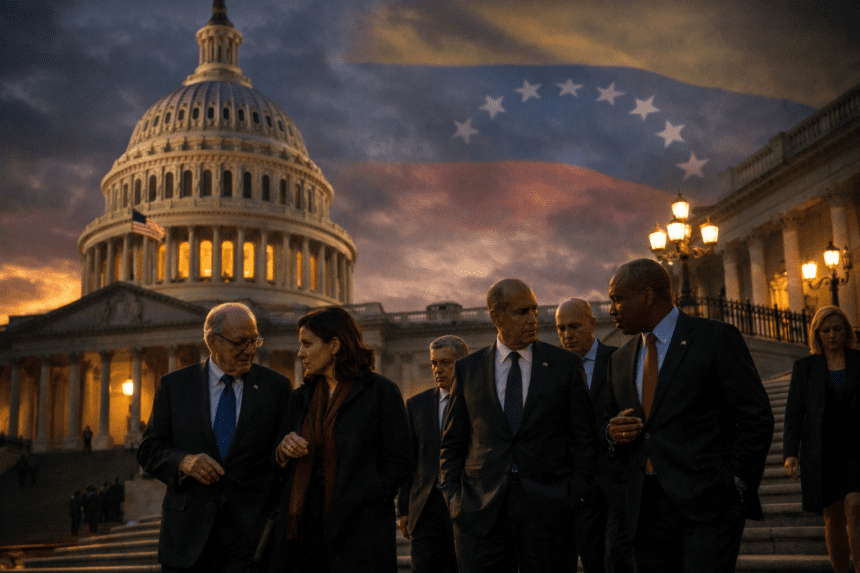
Democratic lawmakers, including influential senators, were vocal in their critique of the administration’s actions, especially the way the mission was conducted without broad congressional authorization. They argued the Constitution gives Congress, not the executive branch alone, the exclusive authority to authorize hostilities or actions that could be interpreted as acts of war. Those concerns were shared by some Republicans as well and led the Senate to advance a procedural measure aimed at limiting the president’s war powers over further military escalation in Venezuela.
At the heart of the disagreement was not alleged financial corruption involving U.S. elected officials, but a substantive constitutional and strategic conflict: how the United States should address the Maduro government, which the U.S. has long designated as illegitimate, sanctioned for various crimes, and accused of complicity in drug trafficking through networks like the Cartel of the Suns. Even so, Democrats consistently condemned Maduro’s human rights abuses and the ongoing humanitarian crisis in Venezuela. Their opposition was toward the method of the United States’ actions and a perceived lack of oversight, not toward holding that regime accountable.
In public statements, Senate Democratic leaders did not claim any financial entanglement with Maduro. Instead, they emphasized the need for congressional oversight, transparency, and adherence to constitutional principles. Senator Chuck Schumer, for example, said that senior White House officials had misled Democratic lawmakers about the administration’s real intentions, a charge grounded in classified briefings that Democrats felt were incomplete or deceptive.
Misinformation and political spin often flourish in times of crisis, especially in an era where social media accelerates unfounded rumors. Allegations that Democratic senators “took millions” from Maduro appear to stem not from verifiable reporting but from politically charged narratives intended to inflame partisan divisions. These narratives misrepresent legitimate foreign policy disagreements as scandals lacking factual foundation. Responsible, fact-based journalism has found no evidence of payments or illicit financial transactions from the Venezuelan regime to Democratic senators.
The broader context, however, is real and multifaceted. Maduro’s regime has faced extensive U.S. sanctions for over a decade. These sanctions target his government and close allies, restricting financial flows and punishing corruption and human rights abuses. The Venezuelan leader himself has been indicted in U.S. courts on allegations of drug trafficking and conspiracy charges he denies. U.S. policy toward Venezuela has traditionally been bipartisan in its condemnation of Maduro’s authoritarian conduct, even as strategic disagreements persist about how best to promote democratic reform and protect human rights in the region.
The controversy also highlights how foreign policy debates within the United States can quickly morph into domestic political battles. Politicians and commentators on all sides sometimes inflate, distort, or mischaracterize complex situations to serve their narrative goals. The assertion that Democratic senators accepted money from a foreign authoritarian regime is a classic example of this phenomenon a claim more useful as a political cudgel than as an accurate reflection of reality.
At its core, the disagreement among U.S. lawmakers is about process, not personal gain. Democrats have consistently said they support high standards for accountability and lawful engagement with foreign governments, including holding leaders like Maduro responsible. Their criticism of the recent Venezuela operation focused on constitutional authority, oversight, and the potential strategic consequences of unilateral military actions. Republicans, for their part, have framed the episode as a necessary step to confront narco-terrorism and secure American interests. These are policy disagreements, not evidence of secret financial transactions.
As the situation continues to evolve, with ongoing debate over oil revenues, future governance in Venezuela, and international response, it remains essential for public discourse to be anchored in facts. Misleading claims about political corruption distract from substantive issues the United States faces in shaping its foreign policy toward Latin America.
Opinion Summary
This feels like just the start of something bigger. There are plenty of loose threads, and honestly, I am just as curious as anyone else to see where they lead. Whatever comes out next could be surprising, and I will be keeping an eye on how it all unfolds.