


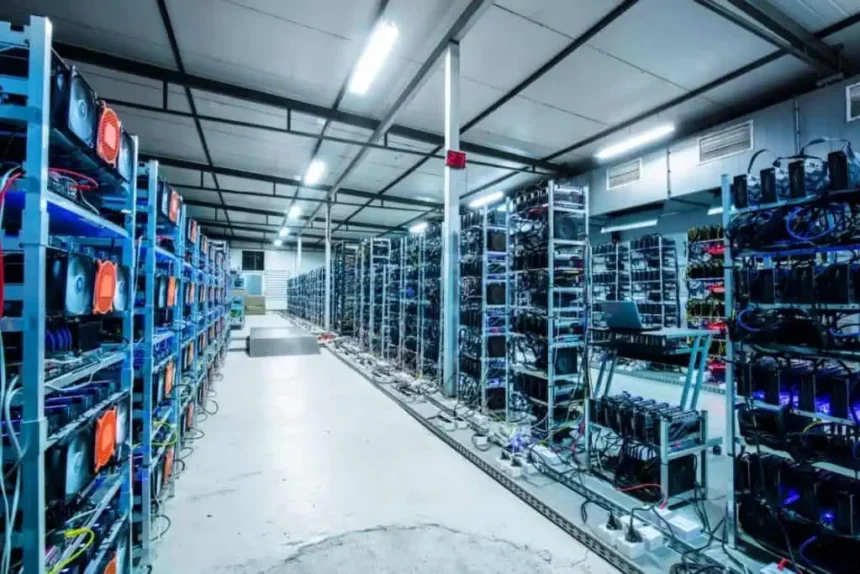
How Falling Hardware Costs Are Redefining Bitcoin Mining Profitability and Competition
In a surprising turn of events in late 2025, Bitmain the world’s largest manufacturer of Bitcoin mining hardware announced a substantial price cut on its latest series of mining rigs, marking a sharp departure from the long-standing trend of steadily rising equipment costs. For over a decade, Bitcoin miners have operated under the assumption that higher hash rates and tougher difficulty led to ever-higher hardware prices, driven by the relentless demand for more computational power. Bitmain’s move reducing prices on flagship units by as much as 30 percent or more effectively signals that the “oldest rule” of Bitcoin mining economics is dead, ushering in a new era where capital efficiency, energy cost management, and strategic deployment matter more than simply buying the most powerful gear.
The price reduction isn’t merely a sales tactic; it has major implications for the mining industry’s cost structure. In past cycles, miners were locked in a race to acquire the fastest, most efficient rigs as difficulty increased and block rewards became scarcer. This dynamic often pushed smaller or marginal operations out of the market, concentrating hash power among larger players able to front heavy capital expenditures. But with prices trending downward, the barrier to entry lowers, and operational profitability becomes more accessible across a broader range of participants. This is a pivotal shift particularly at a time when Bitcoin’s block subsidy will continue to halve and when energy pricing remains a central determinant of miner success.
Bitmain’s announcement came alongside broader industry signals pointing to changing economics. Global hash rate growth while still robust has shown periods of plateau in 2025, suggesting that miners are becoming more strategic rather than simply scaling up hardware deployments. As miners evaluate electricity costs, cooling infrastructure, and long-term ROI, hardware pricing becomes a critical lever in their financial planning. The new pricing model also potentially accelerates hardware refresh cycles, allowing operators to chase efficiency gains while locking in lower unit costs, reducing the net investment required to stay competitive.
Perhaps one of the most salient effects of the price cut is how it reshapes competitive dynamics within the mining sector. Smaller and mid-sized miners who previously struggled to compete with large-scale operations backed by cheap electricity or deep capital now have a clearer path to acquiring modern rigs without as high a capital burden. That can increase hash rate decentralization over time, spreading validation power across a more diverse set of nodes. In turn, this can strengthen the overall health and security of the Bitcoin network by reducing concentration in a few large mining pools or facilities with disproportionate influence over block production.
From a financial perspective, Bitmain’s price cuts align with broader macro conditions affecting the crypto ecosystem. Bitcoin’s price volatility, changes in energy market pricing, and shifts in demand for mining equipment have all created a landscape where hardware sales no longer move in strictly upward cost trajectories. Manufacturers like Bitmain have been forced to adapt to slower growth in revenue from hardware alone, pushing them to compete not just on performance, but on price per terahash and operational cost efficiency. The result is a more balanced mining hardware market where value and throughput matter as much as raw power.
Industry analysts also point to the role of secondary markets and used-equipment flows in shaping pricing strategy. As miners refresh their fleets, a growing inventory of lightly used, high-performance machines enters resale channels putting downward pressure on prices for new units. Bitmain’s adjustment acknowledges these market realities, positioning its latest rigs as accessible, cost-efficient options in a landscape where miners can source hardware in multiple ways.
The broader impact of cheaper mining rigs could extend beyond individual operations to influence network security economics. Lower capital costs can reduce the likelihood of sudden hash rate drawdowns if Bitcoin prices adjust downward, because miners with lower hardware expenses can sustain operations longer. As a result, the network may enjoy a more stable hash rate curve, even during periods of price volatility a factor that enhances confidence among investors and builders alike.
Critics, however, caution that lower prices alone do not guarantee profitability energy costs remain king in mining economics. Cheap rigs still require low-cost electricity, efficient cooling, and sound site management to generate returns. Moreover, a proliferation of new miners could temporarily crowd the market, driving up difficulty faster than hash growth, which can diminish short-term rewards. Nonetheless, the symbolic shift away from ever-rising hardware costs is already reshaping miner strategy and expectations.
For Bitcoin itself, this evolution reflects a broader maturation of the ecosystem one where capital efficiency, innovation, and flexible strategy matter more than brute force computing power alone. As the network continues to evolve through protocol upgrades, adoption trends, and shifting macro conditions, miners find themselves navigating an environment where adaptability may matter as much as raw hash rate dominance. On this new terrain, Bitmain’s price cuts represent not just a nod to market conditions, but a pivot in how mining economics are understood and executed.
In summary, Bitmain’s decision to slash mining rig prices in 2025 signals that the traditional rule of ever-increasing hardware costs is no longer a given. By lowering barriers to entry, aligning with changing macroeconomics, and emphasizing cost-effective performance, the market is entering a new phase of mining competition. This shift could democratize participation, strengthen decentralization, and bring fresh momentum to Bitcoin’s global mining community all while rewriting a long-standing belief about the economics of proof-of-work.