


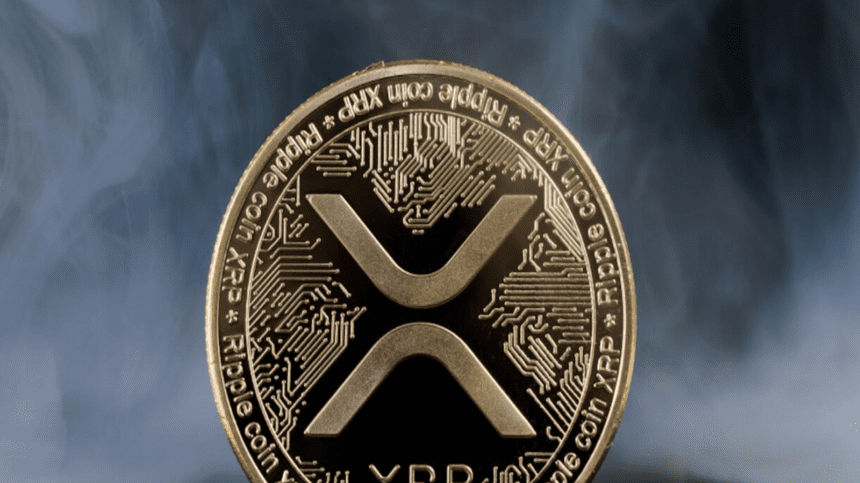
Why Institutional ETF Momentum and Real Payment Activity Tell Two Very Different Stories for XRP
In late 2025, the cryptocurrency world witnessed a remarkable surge in interest around XRP exchange-traded funds (ETFs) in the United States. In just under two months since launch, four XRP spot ETFs including products from Grayscale, Canary Capital, Franklin Templeton, and Bitwise amassed almost $1 billion in combined assets under management.
This rapid capital inflow reflects significant institutional appetite for regulated exposure to the token and marks a milestone in how Wall Street is engaging with a major altcoin. Yet beneath the surface of capital markets excitement lies a broader and potentially more important narrative: the underlying payment infrastructure and on-chain activity that gives XRP its real economic utility.
While ETF flows are measurable and headline-grabbing, they represent only a “wrapper” around the token’s price exposure. The booming ETF layer which grew from roughly $336 million at launch to over $940 million in mid-December is relatively thin compared with the deep transactional flows running through Ripple’s payment network.
In 2024 alone, Ripple’s On-Demand Liquidity (ODL) payment service processed more than $15 billion in cross-border payment volume, driven by corridor usage especially across the Asia-Pacific region.
That level of actual economic flow dwarfing ETF assets highlights a core question facing the XRP ecosystem: Is long-term demand for XRP anchored in infrastructure utility or in speculation and investment vehicles?
XRP’s infrastructure narrative stands in contrast to the capital markets narrative. ETFs simply give investors an easier way to gain regulated exposure to price movements without holding the tokens directly. They do not necessarily reflect the real-world usage of XRP as a bridge currency in cross-border settlements or as settlement liquidity in institutional flows. The deeper story is about payment corridors, liquidity optimization, and practical cost reduction in moving value across jurisdictions. RippleNet the network that facilitates many of these transactions has onboarded 300+ financial institutions across 55+ countries, with roughly 40 percent actively using XRP for ODL rather than merely messaging and fiat settlement.
One of the primary use cases for XRP in the payment layer is its role as a liquidity bridge that reduces the need for pre-funding in cross-border corridors. Traditional systems such as SWIFT require pre-funded accounts in every currency pair, locking up capital and increasing cost. By contrast, XRP’s fast settlement times often within seconds allow liquidity to be deployed more dynamically and with less capital tied up in multiple fiat accounts. These transactional flows, visible in on-chain data, tell a story of utility and demand that isn’t captured by ETF holdings alone.
Daily activity metrics on the XRP Ledger further illuminate this foundational strength. In early 2025, the average number of daily transactions hovered around 1.8 million, and the number of active addresses surged significantly compared to previous quarters signaling that economic activity on the network is driven by usage, not just price speculation.
Payment transactions consistently made up more than half of total activity, and weekly payment counts were rising sharply compared with 2023 levels. This trend suggests that XRP’s real adoption is happening in the background, where billions of dollars in value move through RippleNet each year, even if price charts do not reflect dramatic upside.
Moreover, this “plumbing” layer the infrastructure that supports real payments — includes stablecoins and tokenized real-world assets that expand XRPL’s reach beyond pure value transfer. XRPL’s tokenized RWA (real-world assets) segment grew substantially in 2025, with tokenized funds like U.S. Treasury representations and commercial paper contributing to a burgeoning marketplace. These developments hint at a future where XRP’s utility extends beyond fiat conversion and speculative trading into institutional liquidity management and treasury operations.
The contrast between ETF enthusiasm and payment flow activity raises important questions about investor psychology. Many investors are drawn to ETFs because they provide a regulated on-ramp to the token’s price performance. Institutional allocators view ETFs as a familiar structure that fits within existing frameworks for portfolio exposure, fiduciary risk management, and compliance. Yet this layer might also amplify short-term price effects that don’t necessarily reflect the depth or sustainability of underlying economic demand.
In contrast, the payment and corridor demand the real usage of XRP for cross-border value movement points toward a more structural and durable form of adoption. If ETF flows plateau or even stagnate, the question of whether XRP can maintain demand hinges on whether payments infrastructure continues to grow, corridors expand, and liquidity usage scales. In this sense, the long-term health of XRP’s ecosystem is less about ticker prices and more about real flows and network utility.
This distinction has parallels in traditional finance. For example, the value of a currency or payment system is not solely determined by how widely it is traded on investment platforms, but by how widely it is used in commerce, remittances, and institutional settlement. Just as SWIFT’s value comes from its adoption by banks and corporations, RippleNet’s value lies in its ability to move value efficiently across borders with lower cost and faster settlement. The ETF layer though beneficial for price discovery and regulated capital entry does not, by itself, guarantee long-term adoption or network robustness.
Indeed, the real test for XRP will be whether the utility layer expands beyond its current corridors into broader global remittance lanes, deeper institutional usage, and stable liquidity across major currency pairs. The ODL volume, while already impressive at $15 billion, represents a fraction of the global cross-border payment market that ranges in the hundreds of trillions annually. Growth in XRPL usage, corridor expansion, and utility-driven demand will likely determine XRP’s long-term trajectory not ETF tickers alone.
In summary, while the rise of XRP ETFs is an important milestone signaling institutional interest and regulated capital flows, the quieter but larger movement of value through Ripple’s payment rails could matter far more in the long run. The true narrative of XRP’s adoption is being written not just in capital markets, but in the plumbing of global payments, liquidity management, and real-world settlement use cases. Investors and ecosystem participants would do well to look beyond ETFs and consider how utilization, corridor depth, and real economic activity align with their long-term expectations for XRP.